

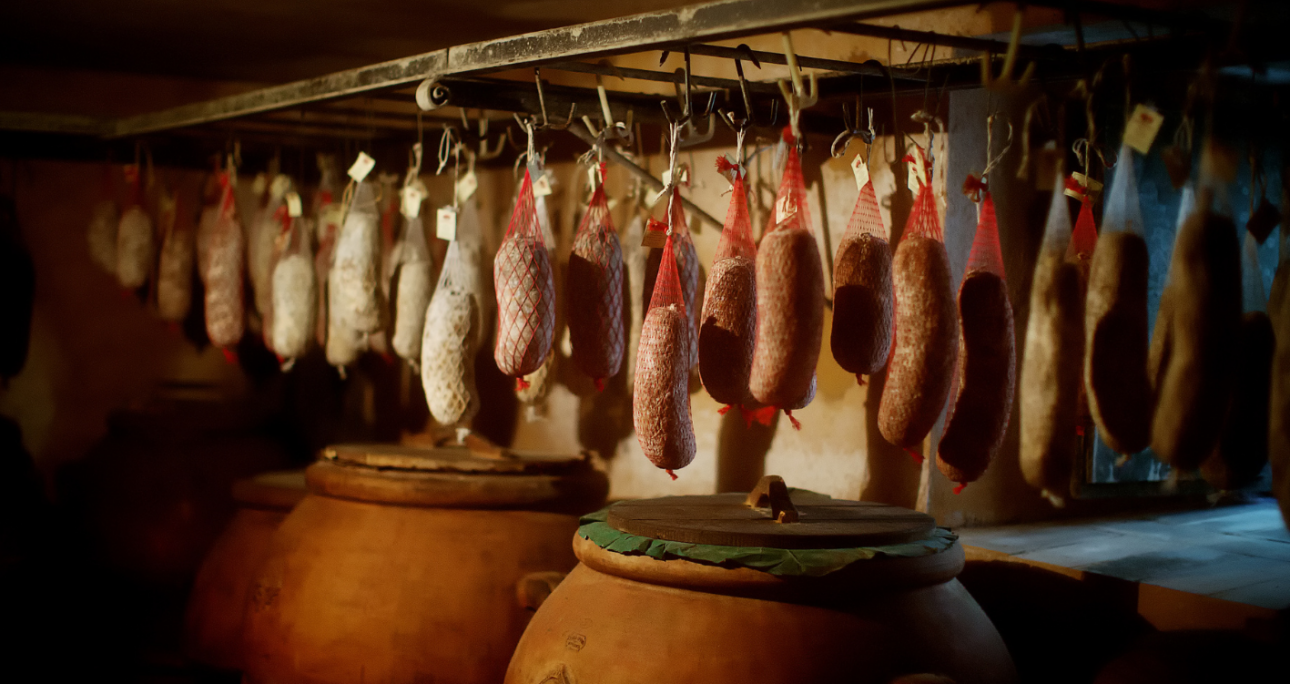
Anyone encountering traditional country ham for the first time usually notices the texture before anything else. The slices feel dense. Sometimes the edges look slightly rigid compared with the soft deli-style ham people see in grocery stores.
That difference comes from the curing method itself.
Country curing traditions developed long before modern refrigeration. Pork had to last through long periods without spoiling. Farmers depended on salt, cool winter air, and long aging times to make that possible. Those steps slowly changed the structure of the meat.
The dryness people notice today is the visible result of that older preservation system.
Salt Begins the Drying Process
The first stage begins with heavy salting. Fresh hams are coated and packed with curing salt soon after the animal is processed.
Within a short time, moisture starts leaving the meat.
Salt naturally pulls water outward through the muscle fibers. Anyone curing meat will notice liquid gathering along the outer surface of the ham. The meat that once felt soft slowly becomes firmer as water moves toward the exterior.
This early change is subtle, but it sets the entire process in motion.
Over time the salt continues drawing moisture outward while slowly moving deeper into the meat.
Lower Moisture Helped Prevent Spoilage
The drying effect was not accidental. Earlier curing traditions depended on moisture reduction to protect the meat from spoilage.
Bacteria multiply more easily in wet environments.
By removing water from the ham, salt made it harder for microbes to grow. Pork preserved this way could last much longer than untreated meat.
Farmers understood this through experience, even before food science explained why it worked.
The same drying effect that preserved the ham also shaped its final texture.
Curing Time Strengthens the Effect
Country hams rarely leave the salt quickly. In traditional curing houses across Virginia, hams often sit under salt for several weeks.
During that time two things happen at once.
Salt gradually spreads deeper into the muscle while moisture continues leaving the meat. The outer layers dry first, and the interior slowly follows as the cure works its way inward.
The ham becomes progressively denser.
By the end of the curing stage, the texture already resembles what people associate with Virginia salted ham. Much of the moisture loss occurs before smoking or aging even begins.
Airflow and Aging Continue the Transformation
Once curing finishes, the ham usually moves into a smokehouse or aging room. These spaces allow steady airflow around the hanging meat.
Air circulation slowly removes additional moisture.
Smoke may add flavor, but the long aging period also encourages gradual drying. The ham hangs for months while natural enzymes inside the meat begin breaking down fats and proteins.
This stage deepens flavor and reinforces the firm texture that curing started.
The process moves slowly, which allows the meat to change without spoiling.
Dry Texture Concentrates Flavor
While dryness might sound like a drawback, it plays a large role in the flavor people expect from country ham.
As moisture leaves the meat, the remaining flavors become more concentrated.
Natural pork flavor grows stronger. Salt distributes more evenly throughout the muscle. Aging reactions inside the meat begin producing the rich, savory taste that defines traditional country ham.
If the ham held more water, those flavors would appear milder.
The drier structure intensifies the taste.
Traditional Methods Reflect Older Food Needs
Modern pork products usually emphasize tenderness and moisture. Refrigeration allows producers to store meat without relying heavily on curing.
Country ham comes from a different tradition.
Farmers needed meat that would remain safe long after the hog was processed. Salt, air, and patience created that stability.
The firm, dry texture people notice today is simply the record of that process. Months of curing and aging slowly remove moisture while building the concentrated flavor that has defined Southern country ham for generations.