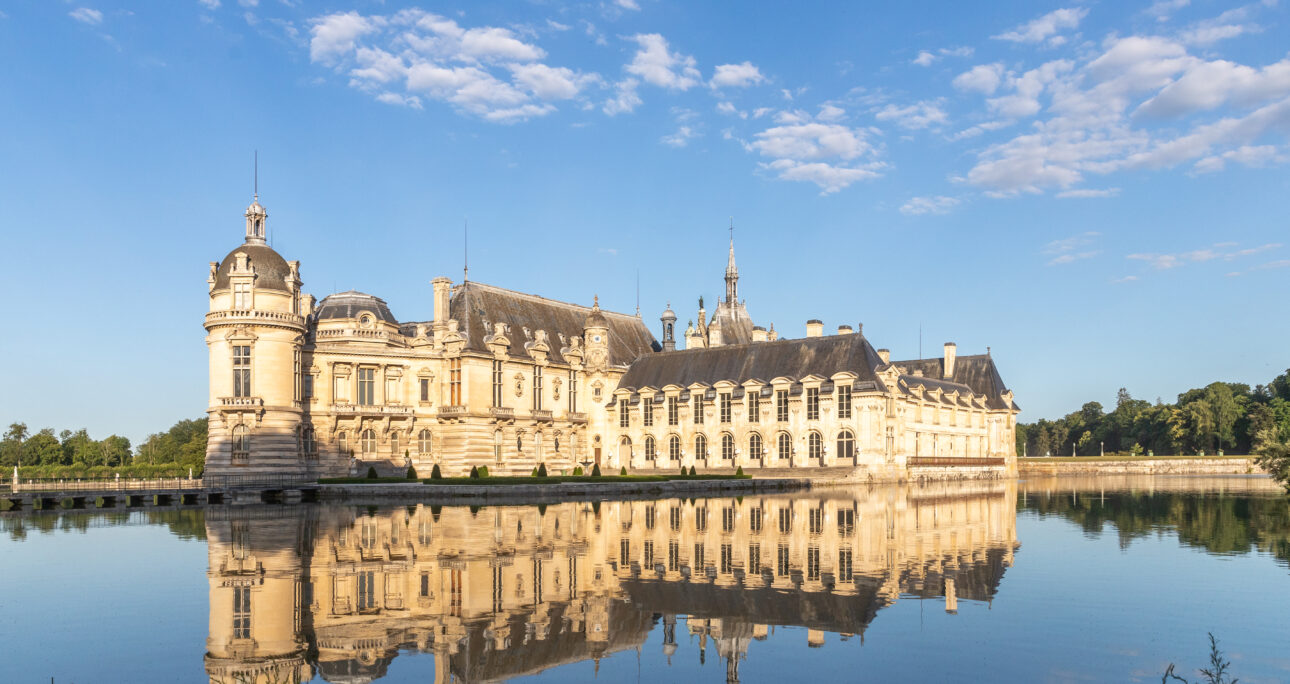
Chantilly, a picturesque town in Northern France with a grand, historically important château, is one of the best day trips from Paris, reachable by train in as little as 25 minutes. The Châteaude Chantilly is considered an alternative to Versailles without the crowds, and, in 2025, was voted the country’s favorite heritage monument by the French people.
Château de Chantilly
The château houses collections of furniture, porcelain, and gems, and contains a museum, the Condé, for its artworks. This is France’s second largest assemblage of Old Master paintings after the Louvre. The setting itself is an attraction, on 285 acres comprising a formal French garden, an English garden, and extensive water features. The grounds are so large that many visitors use golf carts for a tour.
Living Horse Museum
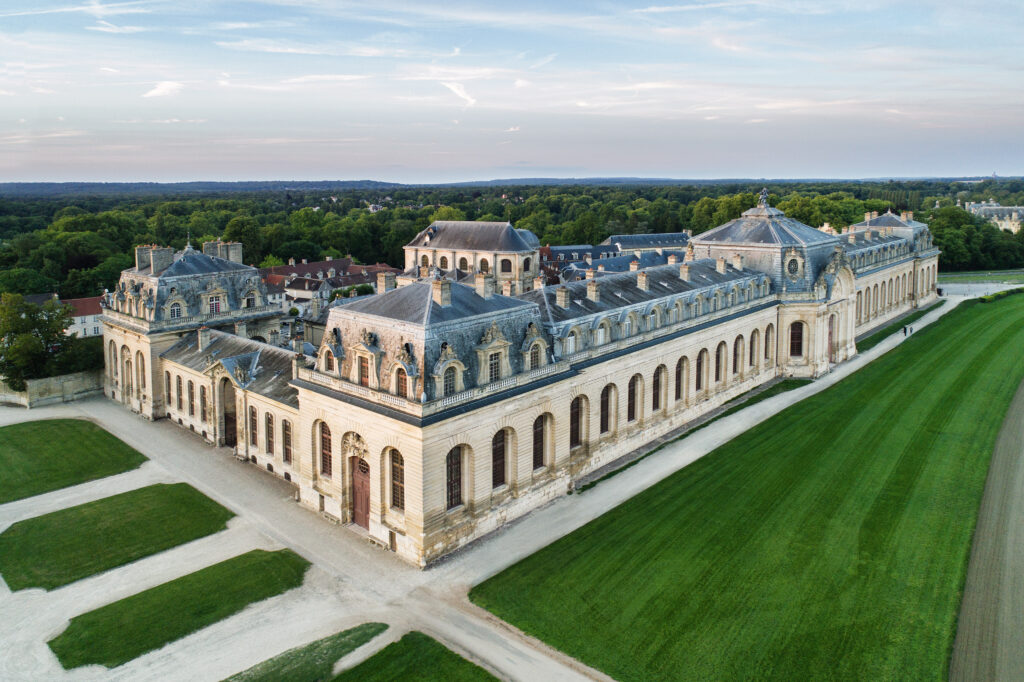
A visit to the famed stables and its museum, with artifacts dedicated to the historical links between human beings and horses, is a must. “It’s very popular for families with children because Chantilly, the region, is the horse capital of France,” says Mathieu Deldicque, director of the Living Horse and Condé museums. “It’s a long, long history, a long tradition.”
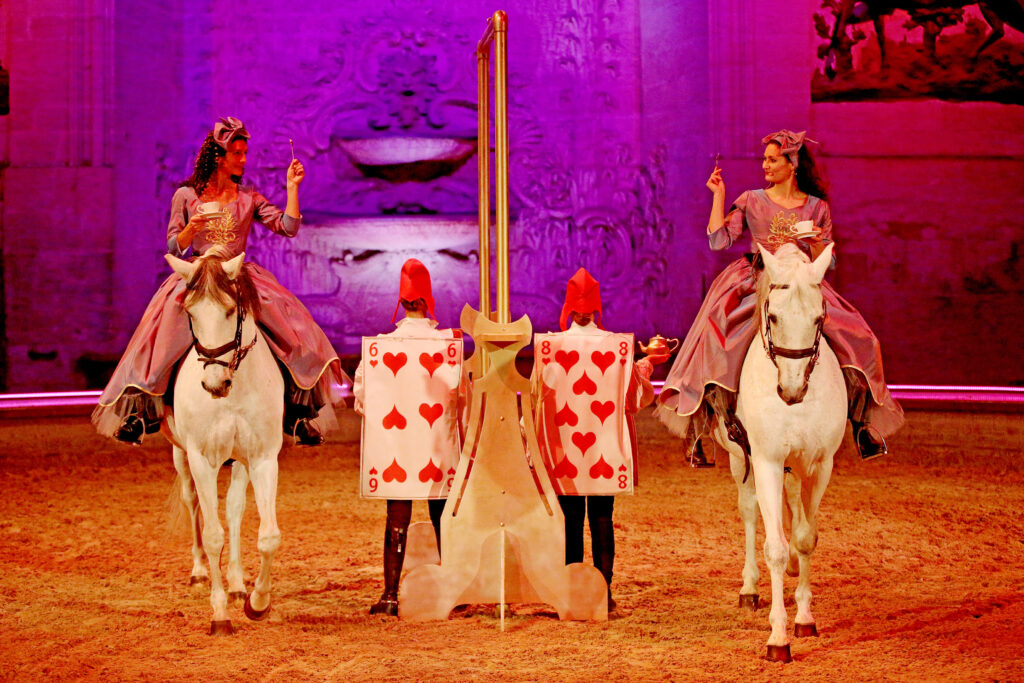
At the château, horses are not relics but partners, hence the “Living Horse” designation. Visitors can take in dressage demonstrations, equestrian performances, and daily training exercises with 40 horses, donkeys, and ponies, part of a centuries-old relationship between humans and horses that remains central to Chantilly’s identity.
The Musée Condé
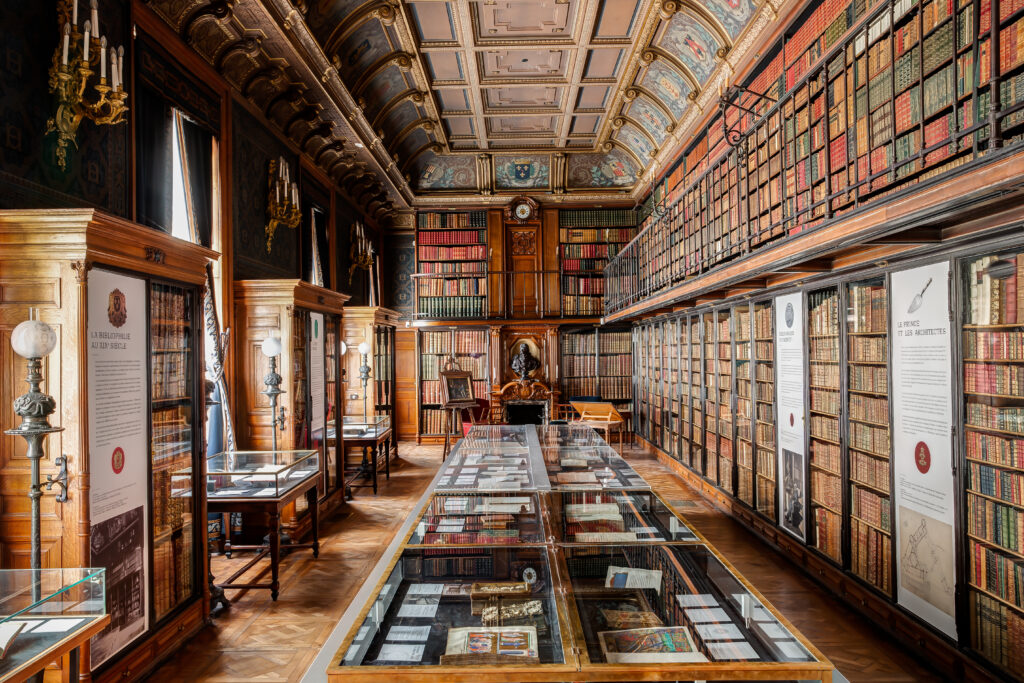
Housed within the château, the Musée Condé feels worlds away from the modern museum experience. Its presentation remains intentionally 19th-century, with paintings densely hung and galleries arranged as princely apartments rather than neutral exhibition halls.
The collection includes major works by Raphael, Poussin, Ingres and other masters, with exceptional holdings in early French painting and Renaissance manuscript illumination. The Cabinet des Livres houses tens of thousands of rare volumes, includingLes Très Riches Heures du Duc de Berry, one of the most important illuminated manuscripts in existence.
Its collections include not just paintings, but also drawings, books, and manuscripts, a rarity to find all together in one château. “Actually, it’s not a very large collection in terms of quantity,” says Deldicque, but the quality is incredible. The 850 paintings, 4,000 drawings, and 60,000books and manuscripts are among the best of the best. “All the great masters are united here; we have Botticelli, Fra Angelico, Titian, Delacroix, Van Dyck, and so on and so on. So this is quite unique, actually, in that scale.” The whole collection was purchased during the 19thcentury by the last owner of Chantilly, the Duke of Aumale, who was the son of King Louis-Philippe, the last king of France
Gardens by Versailles’ landscaper Le Nôtre
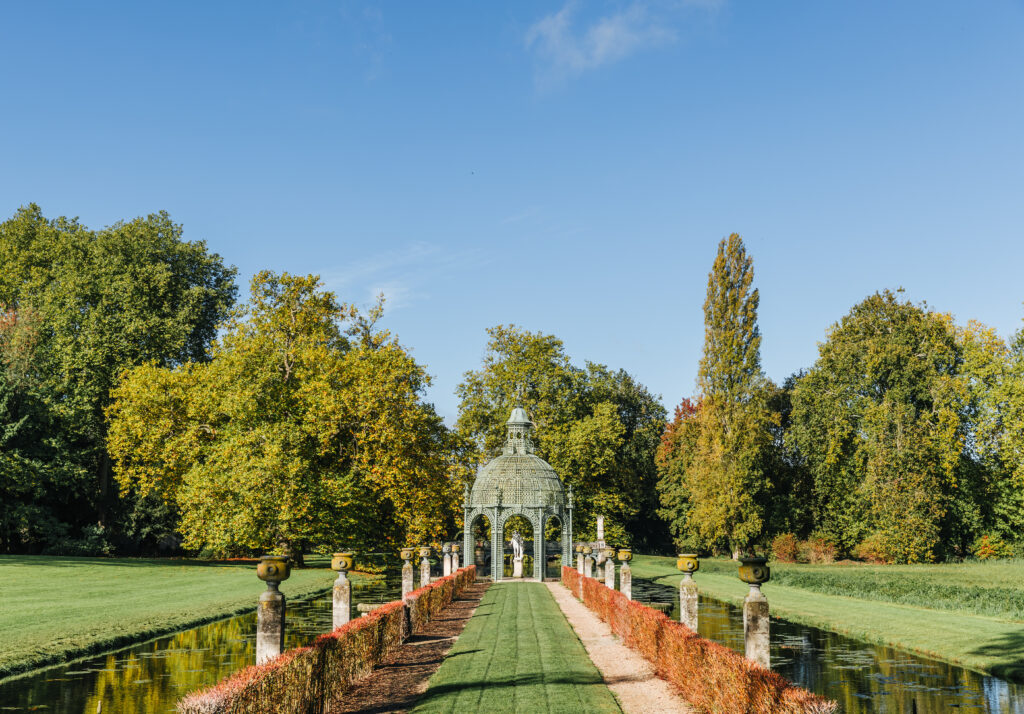
The vast grounds of the Château de Chantilly make for a memorable amble on a sunny day. André Le Nôtre, the legendary landscape architect behind the gardens of Versailles, designed Chantilly’s formal French gardens, complete with geometric parterres, and the striking Grand Canal. There is also a rustic Anglo-Chinese garden, offering changing moods as you wander from manicured elegance to romantic nature scenes. The estate is also surrounded by forests for a total of almost 20,000 acres; it is truly amazing that this much open land has remained intact so close to Paris.
A Long History
The story of Château de Chantilly stretches back to the Middle Ages, when a fortified castle guarded the Nonette valley. Over the centuries, the estate passed through some of France’s most influential families, including the Montmorency and Condé dynasties, each leaving a distinct architectural and cultural imprint. The original Grand Château was destroyed during the French Revolution, leaving only the smaller, elegant Petit Château, built in the 16th century. In the late 19th century, Henri d’Orléans, Duke of Aumale, commissioned a complete reconstruction of the Grand Château in neo-Renaissance style, restoring Chantilly to its former grandeur.
One Man’s Vision
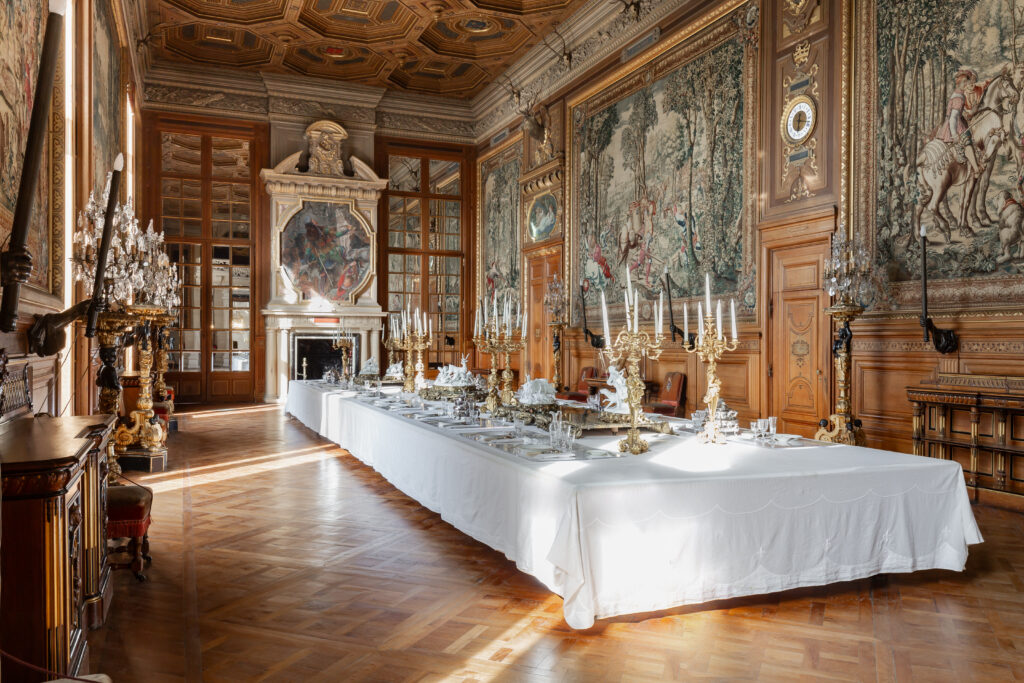
The Duke of Aumale’s will stipulated that the estate remain as is in every detail, hence why the artwork is still hung as he placed it when it was his home. The duke was one of the most passionate art collectors of the 19th century. Exiled for decades after the French Revolution dethroned his father, the duke spent his life assembling one of the greatest private art collections in Europe. In his will, he bequeathed the entire estate, château, library, and artworks to the Institut de France, with one condition: nothing was ever to be sold or modernized.
When visitors enter the château and the Musée Condé today, they experience the collection exactly as it was displayed in 1898, the year the museum opened. Paintings are hung from floor to ceiling, offering a rare glimpse into how art was once collected and admired.
Friends of the Domaine de Chantilly
In 2015, the late Prince Karim Aga Khan founded the Friends of the Domaine de Chantilly (FODC), which brings together renowned art collectors, philanthropists, and cultural enthusiasts from around the world to raise awareness and maintain the Château de Chantilly.
Over the past 10 years, FODC, now chaired by Prince Karim Aga Khan’s brother, Prince Amyn Aga Khan, has made substantial contributions to projects at Chantilly, including major exhibitions and their catalogues, the conservation of precious artworks, the creation of the Gallery of Prints and Drawings, and the renovation of historic galleries in the castle as well as the Great Stables.
FODC’s work has proved invaluable to this historic property. Deldicque works with them almost every day. “They’re based in the United States, and the board is very international with Americans, English, French, Swiss, Italians, and so on,” he says. “It’s a very kind and generous group of sponsors, art collectors, art lovers, and they all fell in love with Chantilly, with all the treasures and diversity of art. And they help us a lot for exhibitions and restoration.” Actually, he adds, without them, it would be almost impossible to do some of the things the château does to maintain the collections and put on activities. “So they’re very precious, and very dynamic,” says Deldicque.
He notes that the château is financially independent. “We are not funded by the French government like Versailles or other châteaus, or other museums like the Louvre. So we rely on ourselves, and that’s it.” And therefore, the property also relies on the generosity of sponsors, art lovers, and companies. The estate is very large, with architecturally significant historical buildings that require restoration. They launch fundraising campaigns for various projects, like maintaining the glass ceiling in the painting galleries. The ceiling restoration also protects the masterpieces below. Other campaigns are earmarked for the restoration of the gardens and water features.
Friends of the Domaine de Chantilly Annual Gala Dinner
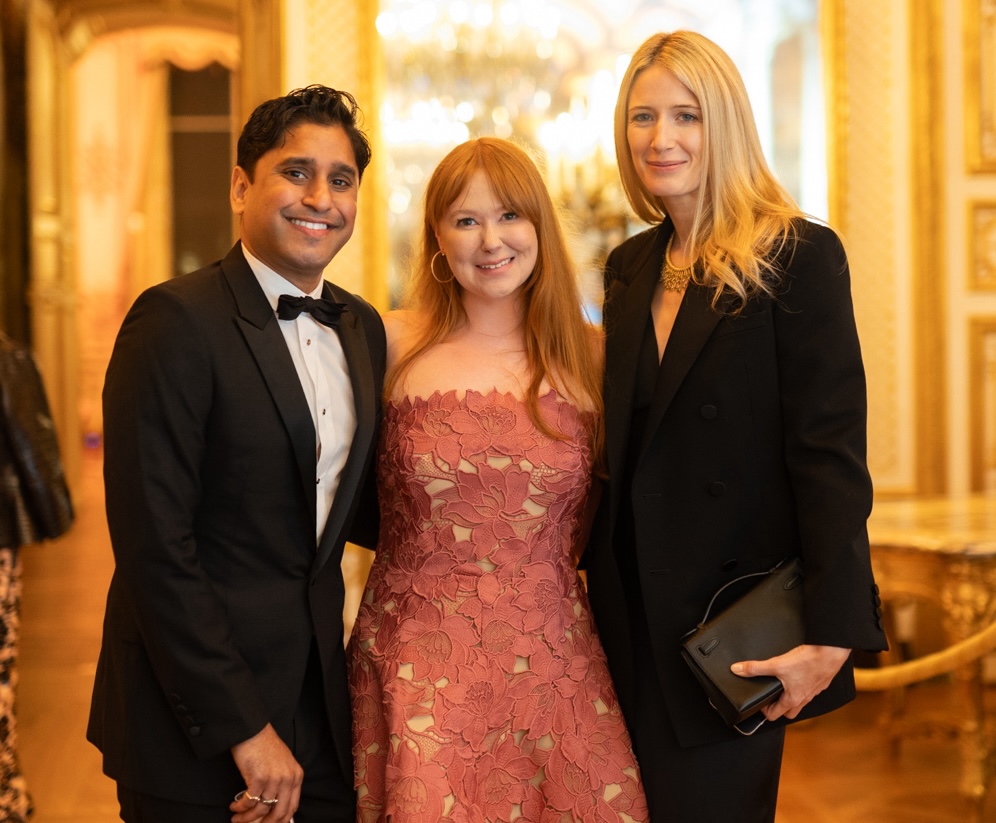
One of FODC’s signature fundraisers is its annual gala dinner. This year marked theorganization’s tenth anniversary, with the gala held at the château on September 30.
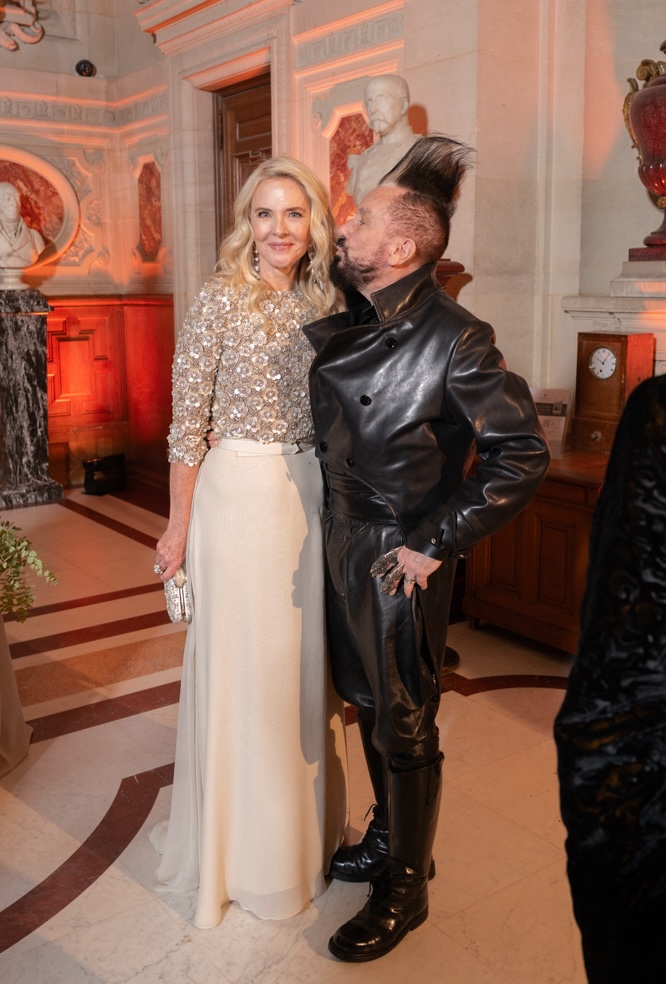
Guests included HRH Prince Foulques d’Orléans, the current Duke d’Aumale; Count and Countess Olivier de Dampierre; Prince and Princess Alexander Otto de Windisch-Graetz; HRH Prince Michael of Yugoslavia; and many other counts, countesses, dukes and duchesses, plus executives from Chanel, Hermès, Sotheby’s, Christie’s, and Laurent-Perrier, and also yours truly and my friends, Cornelia Guest, Eugenia Bullock, Barbara Tober, Jonathan Marder, and Tom Knapp.
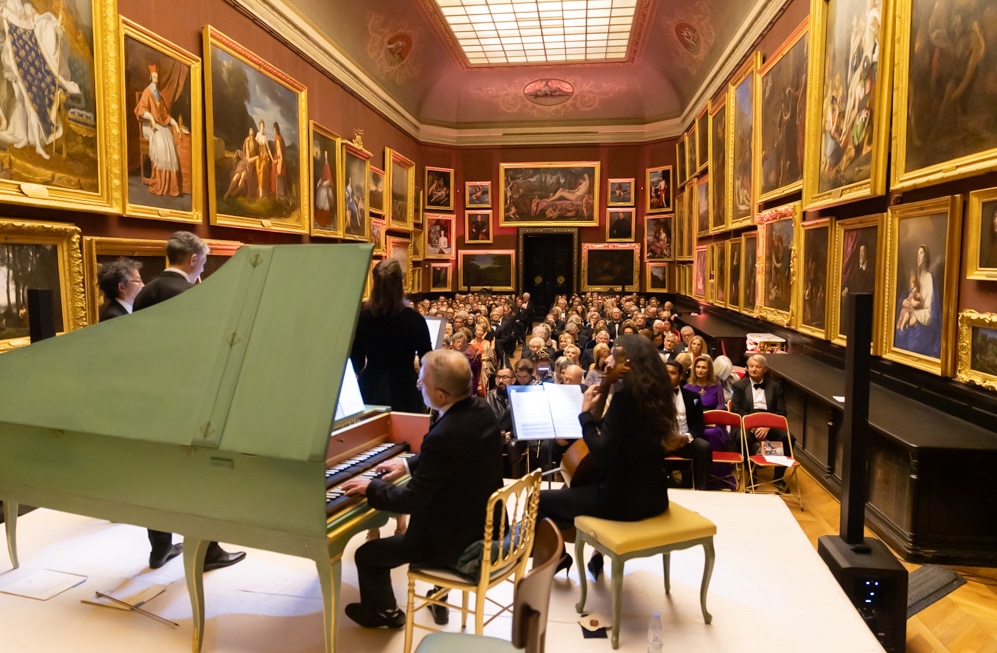
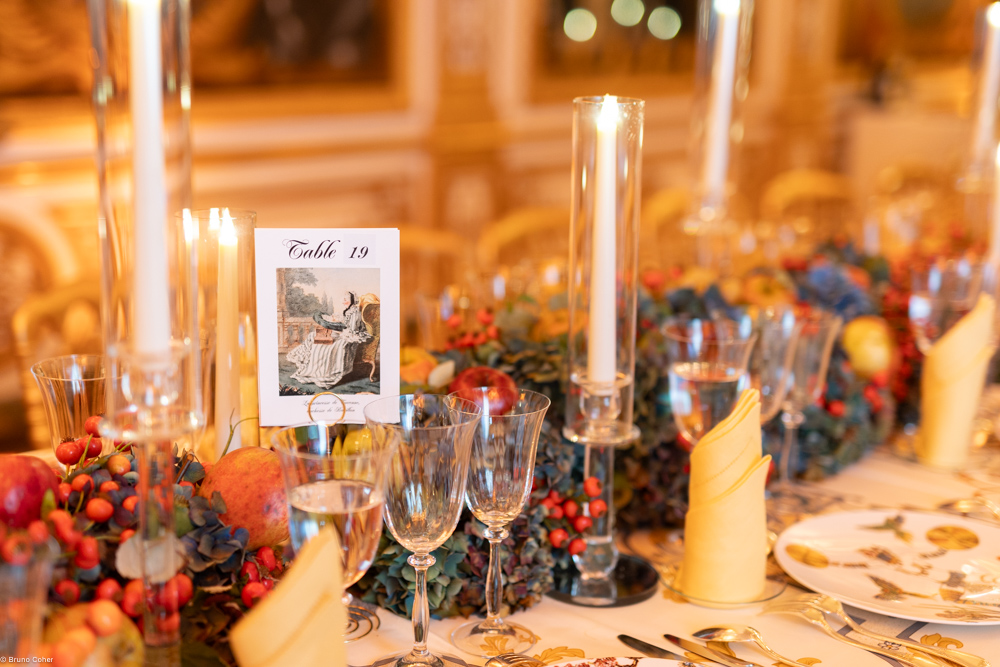
We were treated to a sublime concert in the beautiful Gallery of Paintings by Les Talens Lyriques, an ensemble specializing in Baroque, Classical, and early Romantic repertoire. Afterward, we were seated in two rooms, the Grands Appartements des princes de Condé, with decorations dating from the 18th century, and the Tribune Room, where the museum’s most important Italian paintings are displayed, for a delectable dinner by Jean-Baptiste Lavergne-Morazzani, Michelin-starred chef of the Versailles restaurant La Table du 11. Wines were from Château Canon and Domaine William Fèvre, and the splendid table settings and floral arrangements were selected by Peter Marino, who served as chair of the gala dinner.
Marino, the famed architect and renowned art collector, is a huge supporter of FODC, and, in fact, mounted an exhibition of rare porcelain at the château in 2020-2021. The major exhibition, “The Making of Extravagance. Porcelain from Meissen and Chantilly”, in the château’s Grands Appartements, marked the first time a large-scale exhibition was dedicated to the study of Meissen and Chantilly porcelain, which influenced the decorative arts during the Age of Enlightenment. For the occasion, exceptional loans from the Porzellansammlung in Dresden were brought together with private and public collections in the United States and Europe. Many of these artworks had never been presented in France or outside of Germany.fodchantilly.org
Exhibition & Events
With such an extensive collection, the museum holds rotating exhibitions to showcase its highlights. “There is a wide variety in the collections, and in each field the quality is exceptional,” says Deldicque. “In each field, art, architecture, the gardens, manuscripts, this is a matter of excellence.”
“For instance, we have a diamond collection, which is in storage, and we organize exhibitions about them,” he says. This year will bring an exhibition of the Condé Museum’s pink diamond, which is over 9 carats and has been in the collection since the 18th century. The exhibition, in partnership with Van Cleef & Arpel’s L’Ecole School of Jewelry Arts, is remarkable because the diamond has not been publicly shown since 1926. There’s a reason for this: in October 1926, the pink stone was stolen from the museum. Luckily, it was found shortly after, having been hidden in an apple by the thieves, who were apparently unable to sell it, and has been locked away for 100 years!
While the château’s permanent collections remain in place, the estate does host an array of visiting exhibitions, so there’s always a reason to come back. From June 6 through October 4, 2026, the exhibit “From Naples to Chantilly: The Collection of the Queen Caroline Murat” will display the collections of the Queen of Naples, née Caroline Bonapart, the youngest sister of Napoleon. She was nicknamed the ‘Queen of the Arts’ for her passion for the Bay of Naples and the ancient sites of Pompeii and Herculaneum, and remarkable collection that included major artists, such as Ingres, Rebell, and Canova.
They also host exhibits around books, drawings, and of course, horses. The estate goes all out for holidays like Halloween, Christmas, and Easter, and holds concerts throughout the year, from classical music to techno. Twice yearly Château de Chantilly is home to the biggest flower show in continental Europe.
Musée Condé Director Mathieu Deldicque: A Lifelong Passion
Château de Chantilly has been threaded throughout Mathieu Deldicque’s life. He even did an internship there while pursuing his education. After earning a degree as an archivist-paleographer as class valedictorian, Deldicque then studied museum curation, with internships at the British Museum, the Louvre Lens, and the Art Institute of Chicago, as well as at the Condé. He went on to earn a doctorate in art history in 2018. He started his career as a curator within the Museums of France service of the French Ministry of Culture, where he was responsible for relations between the ministry and the castle museums of France, later heading up the Condé Museum at Château de Chantilly.
Chantilly, The Town: Cream, Thoroughbreds & Lace
The town of Chantilly sits on land that was once part of the Château, remember, the nobles were forced out and the mansion was destroyed during the French Revolution. Today, it’s a very pretty, cobbled town, and quite posh, what with the horsey set and within commuting distance to Paris.
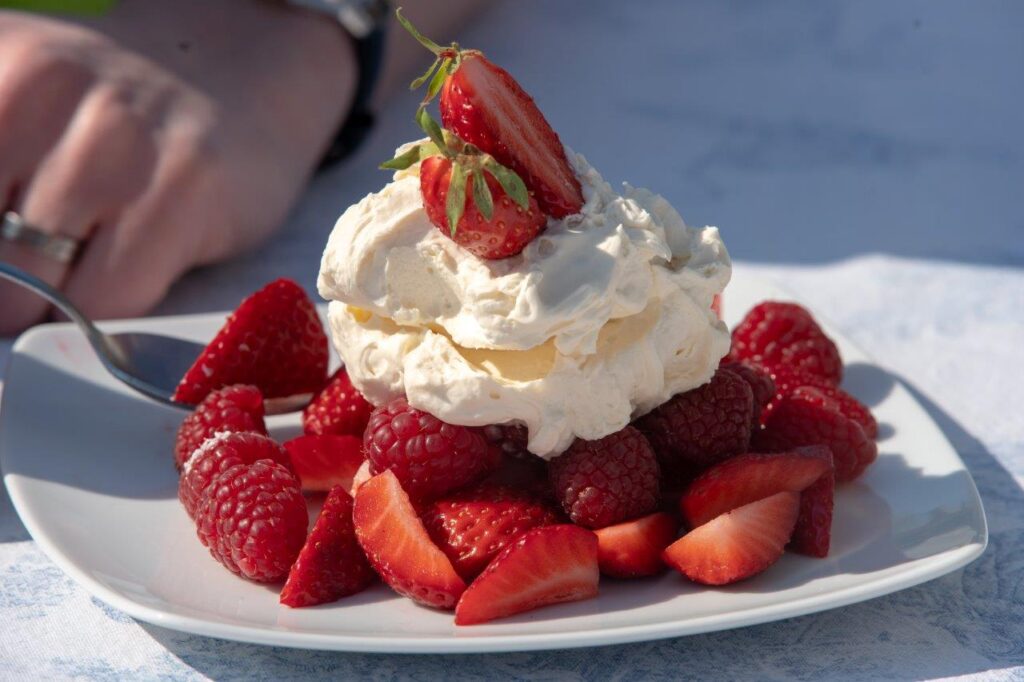
Chantilly’s most famous export isn’t architectural or artistic, it’s edible. Crème Chantilly, the lightly sweetened whipped cream that appears on menus across France and far beyond, takes its name from the town. Chantilly proudly embraces the connection, and you’ll find the cream served simply, traditionally, and without excess in pâtisseries, cafés, and tearooms along thetown’s main streets. Crème Chantilly is often paired with fresh strawberries, spooned beside a tart, or served at the end of a leisurely lunch, always with simplicity, fitting for a town that favors refinement over spectacle.
French Capital of the Horse
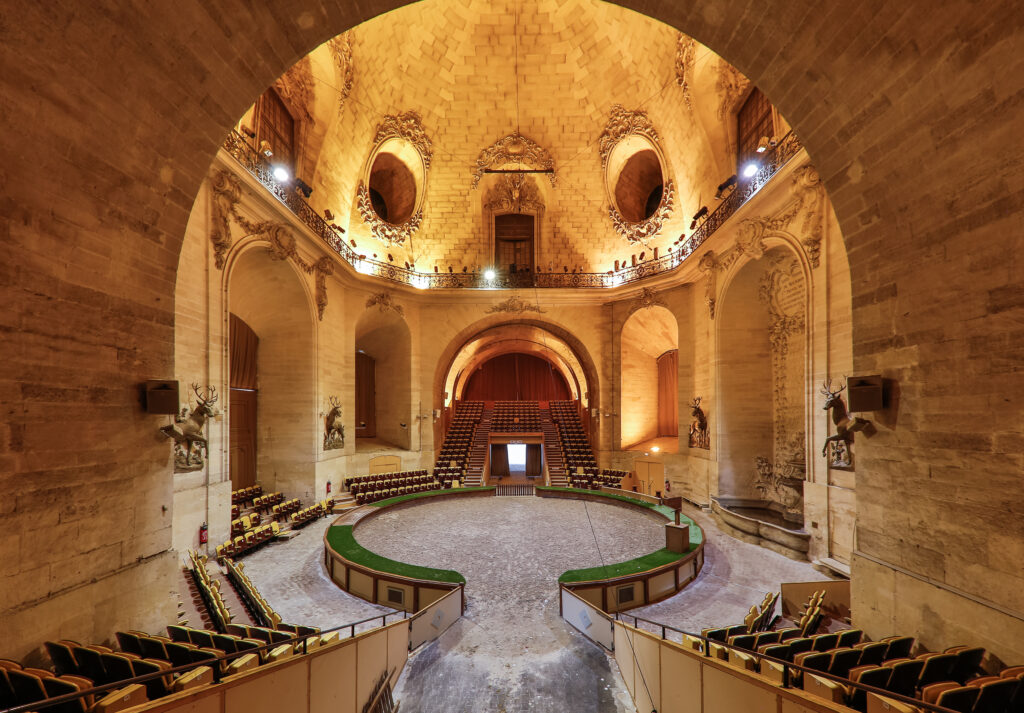
Chantilly is widely known as France’s capital of the horse, a title earned through centuries of breeding, training, and equestrian ceremony. This identity is impossible to miss. The chateau’s monumental Grandes Stables, built in the 18th century, are bigger than the house itself, stretching across the edge of the grounds. They remain among the most impressive stables in Europe, and house the Living Museum of the Horse, where exhibitions explain the cultural and sporting role of horses in France, plus live equestrian demonstrations.
Just beyond the stables is the Chantilly racecourse, still an active center for French racing. On race days, the town picks up its pace as locals and visitors alike gather to enjoy a tradition that blends sport, social ritual, and heritage in equal measure. Even outside racing season, the equestrian presence remains visible, from training tracks near the forest to riders clopping gently right through town.
Lace Museum
The other thing Chantilly was famous for in olden times, other than horses and whipped cream, was lace. Chantilly lace, in its heyday of the 17th and 18th centuries, was handmade, very high-quality bobbin lace, typically black in color, and often used for mourning attire. The best Chantilly laces were in silk, sometimes linen, and some were white in color.
The Lace Museum (it sounds more elegant in French: Le Musée de la Dentelle) is amidst a heritage corner of the town that includes a library, a cultural center, and artworks depicting horses wearing lace masks. Yes, even French horses are chic!