

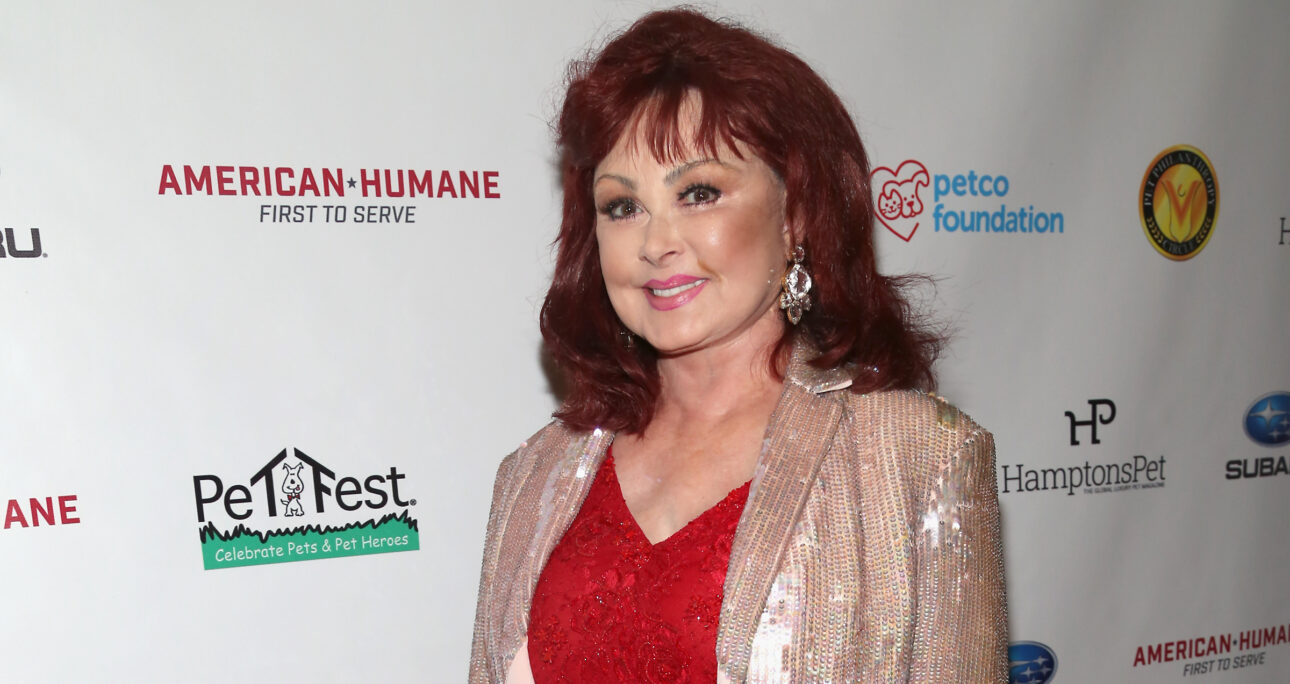
Many people want to know how did Naomi Judd die — and the answer is both heartbreaking and important.
Here is the quick answer:
| Detail | Information |
|---|---|
| Date of death | April 30, 2022 |
| Cause of death | Suicide by self-inflicted gunshot wound |
| Location | Her home in Leiper’s Fork, Tennessee |
| Age | 76 |
| Mental health context | Long battle with PTSD, bipolar disorder, depression, and anxiety |
| Confirmed by | Official autopsy report, obtained by the Associated Press |
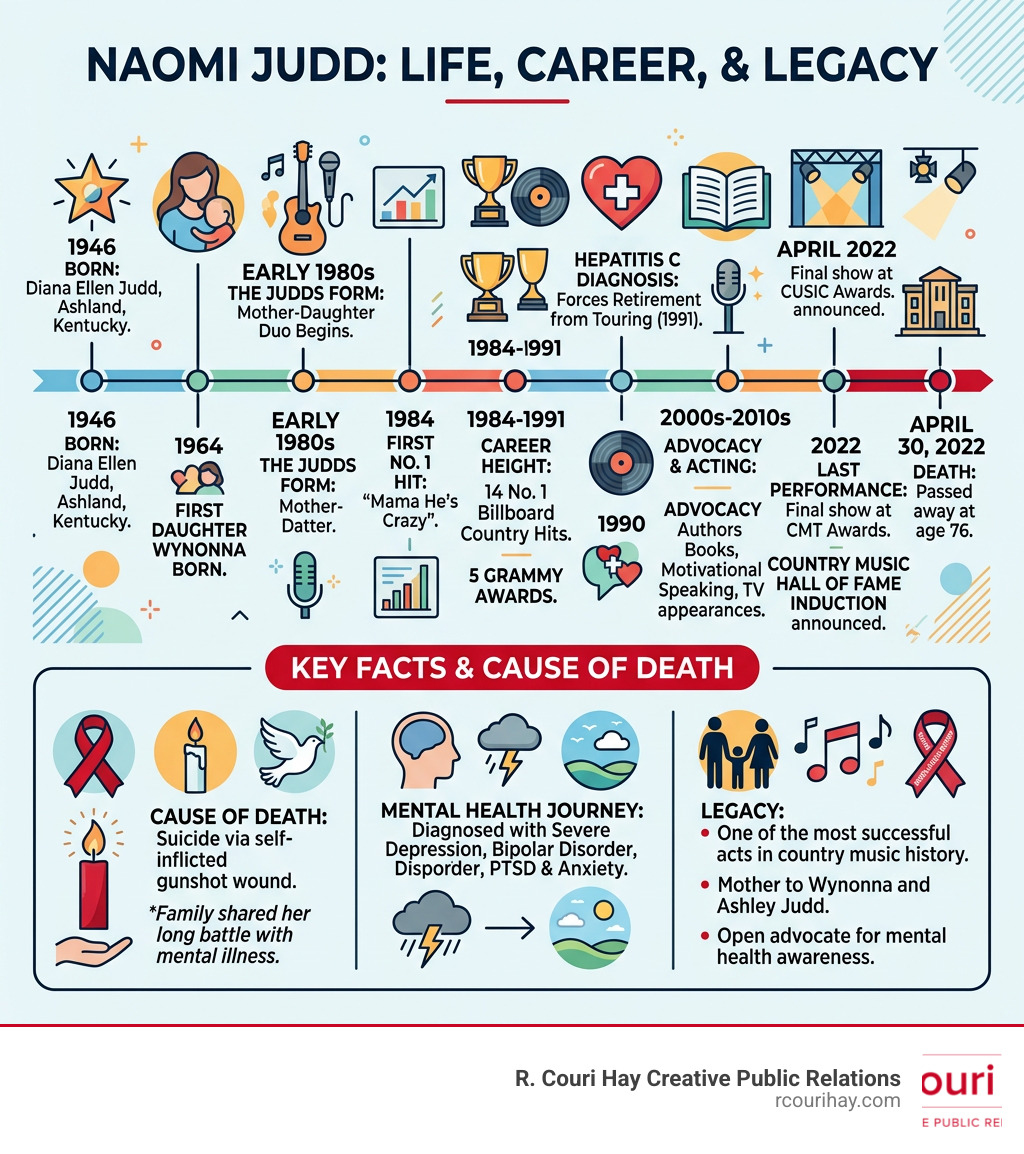
Naomi Judd — one half of the legendary country duo The Judds — died just one day before she and her daughter Wynonna were set to be inducted into the Country Music Hall of Fame. She had scored 14 No. 1 hits across nearly three decades.
Her husband, Larry Strickland, later described her final months as “a very chaotic, hectic time.” He had been her primary caregiver, managing her medications and rarely leaving her side.
The autopsy confirmed what her family had already shared publicly — and opened a wider conversation about mental health, privacy, and how we support people in crisis.
If you or someone you know is in crisis, call or text 988 to reach the Suicide and Crisis Lifeline, or visit 988lifeline.org for online chat support.
The Official Autopsy: How Did Naomi Judd Die?

When news first broke of Naomi Judd’s passing on April 30, 2022, her daughters, Ashley and Wynonna, released a statement attributing her death to “the disease of mental illness.” However, as public interest grew, further details were confirmed through official channels. The release of her autopsy report by the Davidson County Medical Examiner’s Office in Tennessee provided concrete medical confirmation of the tragedy.
According to the official autopsy report, Naomi Judd died from a self-inflicted gunshot wound to the head. The report, which quickly became a matter of public record under Tennessee law, confirmed that the 76-year-old country star was found at her residence in Leiper’s Fork, Tennessee. The manner of death was officially ruled a suicide.
To understand the full context of this tragic event, the Naomi Judd autopsy details shed light on the physical and psychological battles she was fighting behind closed doors.
Understanding the Medical Findings and How Did Naomi Judd Die
The medical examiner’s report went beyond the physical cause of death, offering a detailed toxicology screening that illuminated Naomi’s ongoing battle with severe mental illness. The toxicology report confirmed the presence of several prescription medications in her system at the time of her death.
These medications included:
- Lithium: A primary mood stabilizer commonly prescribed to manage bipolar disorder. The autopsy noted that the lithium was found at therapeutic levels.
- Other Prescription Drugs: Medications used to treat post-traumatic stress disorder (PTSD), severe anxiety, and bipolar disorder.
These findings aligned with what Naomi had documented in her 2016 memoir, River of Time: My Descent into Depression and How I Emerged with Hope. For decades, Naomi had been incredibly open about her struggles with severe treatment-resistant depression, panic attacks, and suicidal ideation.
To learn more about her life, her rise from a single mother and nurse to an international superstar, and her extensive advocacy work, you can read about Naomi Judd’s life and career.
The Timeline of Events on April 30, 2022
The events of April 30, 2022, paint a devastating picture of a family in crisis. Naomi’s daughter, actress Ashley Judd, was visiting her mother at her Tennessee home on that fateful morning.
According to accounts shared by the family and investigative records, the timeline developed as follows:
- Morning Visits: Ashley spent time with her mother, noticing that Naomi was experiencing an acute mental health crisis, appearing highly anxious and agitated.
- The Discovery: Ashley briefly stepped away to let a family friend into the house. Upon returning upstairs to her mother’s bedroom, she discovered Naomi with a self-inflicted gunshot wound.
- The 911 Call: A frantic call was made to emergency services. Ashley remained by her mother’s side for roughly 30 minutes, holding and comforting her until emergency responders arrived on the scene.
- The Passing: Naomi was transported to a local medical facility, where she was pronounced dead.
This sudden loss occurred on the eve of what was supposed to be one of the proudest moments of Naomi’s career. The very next day, May 1, 2022, The Judds were scheduled to be inducted into the Country Music Hall of Fame in Nashville. Wynonna and Ashley ultimately attended the ceremony, tearfully accepting the honor while mourning their mother’s passing.
The Legal Battle Over Investigative Records and Privacy
In the wake of Naomi Judd’s death, her family faced a painful secondary struggle: protecting their private grief from the public eye. Under Tennessee’s public records laws, police investigative files — including 911 call audio, crime scene photos, video footage, and interviews conducted by law enforcement — are typically subject to public release once an investigation is closed.
In response, the Judd family filed a petition in the Williamson County Chancery Court to prevent the sheriff’s office from releasing these sensitive records. They argued that the release of graphic crime scene photographs and highly personal audio recordings would cause “significant trauma and irreparable harm” to the family.
Public Interest vs. Family Privacy in Celebrity Deaths
The petition filed by the Judds sparked a intense legal and ethical debate regarding the boundaries of public records laws. On one side, open-records advocates and media organizations argued that public transparency is vital to ensure that government agencies and emergency dispatchers perform their duties correctly.
For instance, legal scholars pointed out that reviewing 911 dispatch records can verify if there were any delays in the emergency response. Under similar laws in other states, such as Kentucky, a balance is struck where administrative details of public agency performance are released, while highly graphic or deeply personal family moments are kept private.
Ashley Judd even penned a powerful guest essay for The New York Times, arguing that the law should protect grieving families from having their worst moments turned into public spectacles. The family’s legal battle highlighted a critical question: Should the public’s right to know outweigh a family’s right to private mourning in the aftermath of a suicide?
Mental Health Advocacy and Naomi Judd’s Legacy
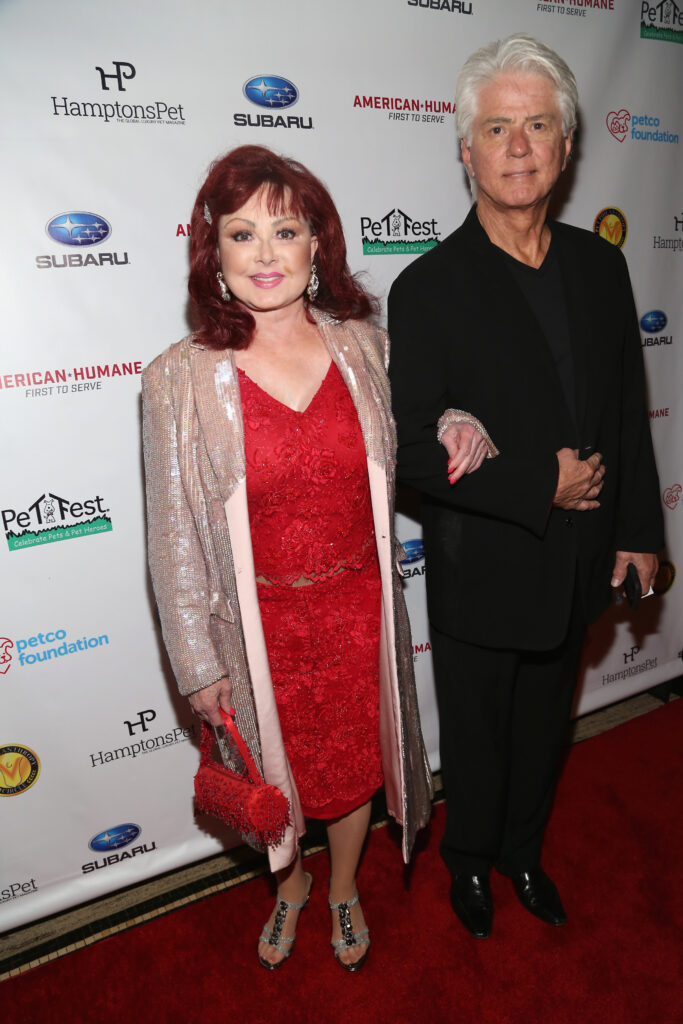
While the circumstances of how did Naomi Judd die are tragic, her family has worked tirelessly to ensure her death is not the final word on her legacy. Throughout her life, Naomi was a passionate mental health advocate. She spoke candidly about caregiver burnout, the trial-and-error nature of psychiatric medications, and the profound isolation that depression can bring.
Her husband, Larry Strickland, later shared the heavy emotional toll of caregiving. Having spent over 13 years managing Naomi’s daily care, he reflected on the exhausting nature of watching a loved one suffer from severe depression. Strickland expressed a poignant regret common among caregivers, wishing he had spent more time simply comforting and holding Naomi rather than pushing her to eat, exercise, or get out of bed.
To help families recognize when a loved one may be in crisis, mental health experts emphasize watching for key warning signs.
Mental Health Warning Signs to Watch For
- Expressing hopelessness: Talking about feeling trapped, having no reason to live, or being a burden to others.
- Extreme mood swings: Sudden shifts from deep sadness to absolute calmness or anger.
- Withdrawing from loved ones: Isolating oneself from friends, family, and activities they once enjoyed.
- Increased substance use: Using alcohol or drugs more frequently as a coping mechanism.
- Giving away possessions: Making arrangements, saying goodbye to people unexpectedly, or giving away cherished items.
Suicide Prevention Resources and How Did Naomi Judd Die in the Public Eye
The public nature of Naomi Judd’s death cast a bright light on the critical need for accessible mental health resources. In the years following her passing, mental health organizations have continuously pointed to her story to break down the stigma surrounding mental illness. Even those who seem to have achieved immense wealth, fame, and success can struggle with debilitating psychological pain.
If you or someone you care about is experiencing thoughts of self-harm, please know that you do not have to carry this burden alone.
- The 988 Suicide & Crisis Lifeline: You can call or text 988 at any time, day or night, to speak with a trained counselor. This service is free, confidential, and available 24/7.
- The Crisis Text Line: Text STRENGTH to 741741 to connect with a crisis counselor via text message.
- International Support: If you are outside the United States, please contact your local emergency services or visit findahelpline.com to find support in your area.
Frequently Asked Questions About Naomi Judd’s Passing
What was Naomi Judd’s official cause of death?
Naomi Judd’s official cause of death was a gunshot wound to the head, and the manner of death was ruled a suicide. This was confirmed by her family’s initial statements and later verified by the official autopsy report released in August 2022.
When did Naomi Judd die?
Naomi Judd passed away on April 30, 2022, at the age of 76. Her tragic death occurred just one day before she and her daughter Wynonna were inducted into the Country Music Hall of Fame.
What medications were found in her system?
The toxicology report from Naomi Judd’s autopsy revealed therapeutic levels of lithium, a mood stabilizer commonly used to treat bipolar disorder. The report also detected other prescription medications used to manage PTSD and severe anxiety.
Conclusion
The loss of Naomi Judd remains a deeply felt tragedy in country music and beyond. As one-half of The Judds, her vibrant spirit, rich vocals, and unforgettable stage presence left an indelible mark on American culture. Yet, her willingness to speak openly about her mental health struggles is perhaps just as powerful a legacy as her 14 No. 1 hits.
At R. Couri Hay Creative Public Relations, we understand the delicate balance between public interest and personal privacy. In our work across major cultural hubs like New York City, Los Angeles, and London, we frequently see how public figures shape vital societal conversations. Naomi Judd’s story is a painful but necessary reminder that mental illness requires our deepest empathy, active support, and open dialogue.
For the latest updates on celebrity news, cultural legacies, and public interest stories, explore our coverage at rcourihay.com/gossip/.