

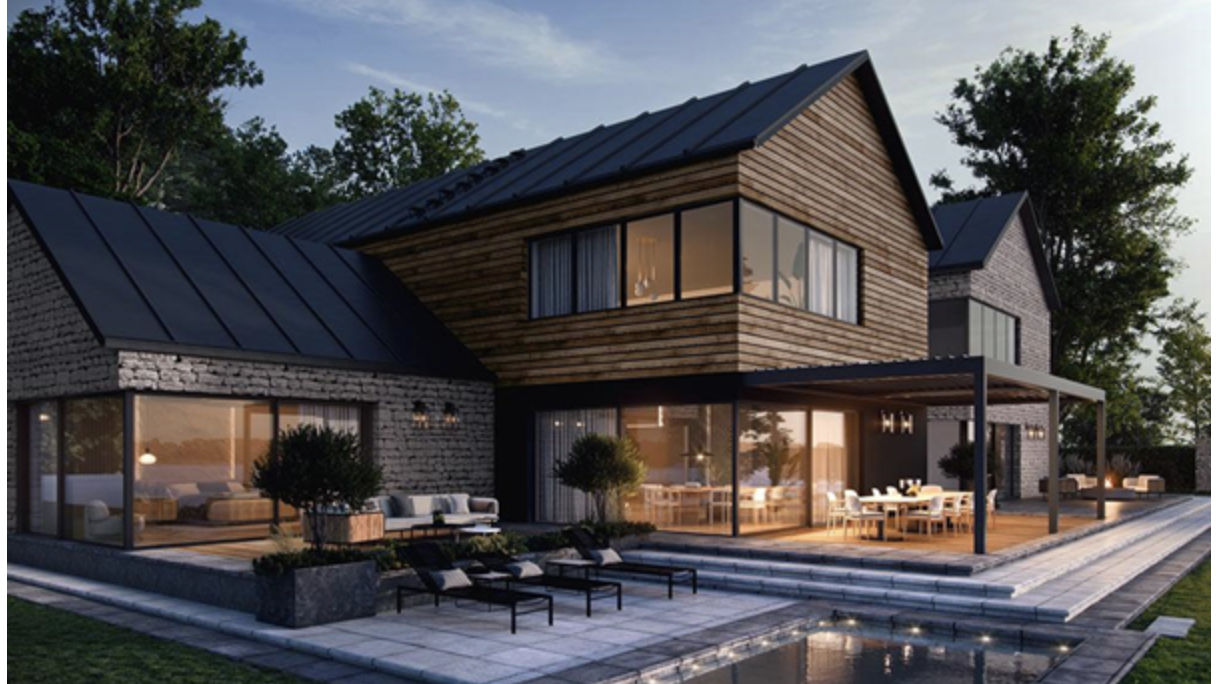
Ask any interior designer where they start when they take on a new home project, and most will give you the same answer: the windows. Not the sofa, not the kitchen, not the paint colors. The windows. Because everything else – how a room reads, how its colors look, how its materials photograph, how it feels at eight in the morning and at six in the evening – flows from whatever light those windows let in and how that light lands.
Most homeowners get this instinctively when they walk into a beautifully renovated space and can’t quite identify why it looks so good. The furniture might be simple. The palette might be restrained. But the light is exceptional, and the windows – whether floor-to-ceiling, black-framed, or just deeply well-proportioned – are doing almost all of the work. Yet when the same homeowners plan their own renovations, windows are almost always the last item on the list. Kitchen first. Bathrooms second. Maybe new flooring. Windows, if there’s any budget left.
That sequencing is backwards – and understanding why changes how you approach every renovation decision that follows.
Why Do the Most Beautiful Interiors Always Start With the Windows?
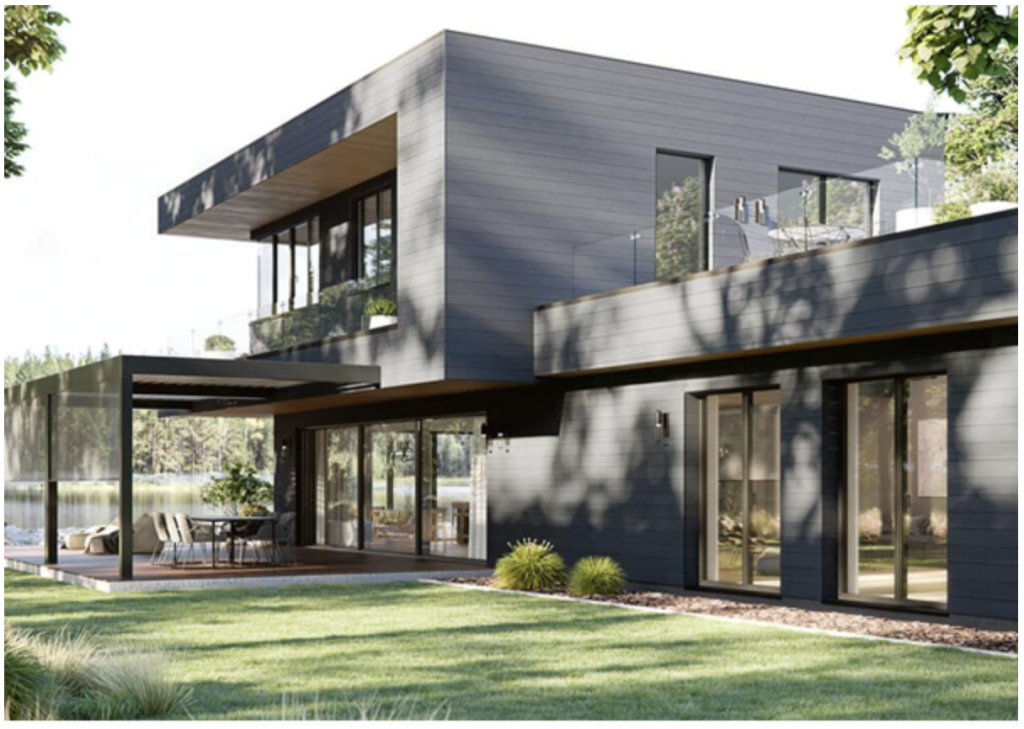
The answer is light, but the full answer is more precise than that. Light entering a room has a direction, a color temperature, a diffusion quality, and a rhythm across the day and across seasons. Windows are the only variable in a home that controls all four simultaneously. A room with high-quality, well-positioned glazing has a baseline visual quality that no amount of expensive furniture or carefully sourced textiles can replicate – because all of those choices are read through the light that falls on them.
Interior photography has made this relationship more visible. The spaces that work on Instagram and in shelter magazines – the ones with the oblique morning light, the deep shadow detail, the colors that look exactly right – almost universally feature windows that prioritize maximum glass area and minimal frame intrusion. The frame is either invisible or made into a deliberate graphic element. The glass is large. The light is the design.
The Light Is the Design
A textile designer choosing fabric for a room will typically ask to see samples in the actual room they’re going for – because the same swatch looks entirely different in a north-facing room with standard double-hung windows versus a south-facing room with floor-to-ceiling glazing. Paint color specifiers know the same phenomenon. Benjamin Moore’s Color of the Year can look grey, warm, or almost blue depending on the glass it’s viewed through and the quantity of natural light reaching it. The window isn’t background context for these decisions – it’s the first decision, from which everything else derives.
This is why renovation sequencing matters more than most people realize. Choosing your paint colors before you’ve upgraded your windows is like choosing your accessories before you’ve decided on the outfit. You can get lucky. You can also end up redoing it.
What ‘Quiet Luxury’ Interiors Actually Have in Common
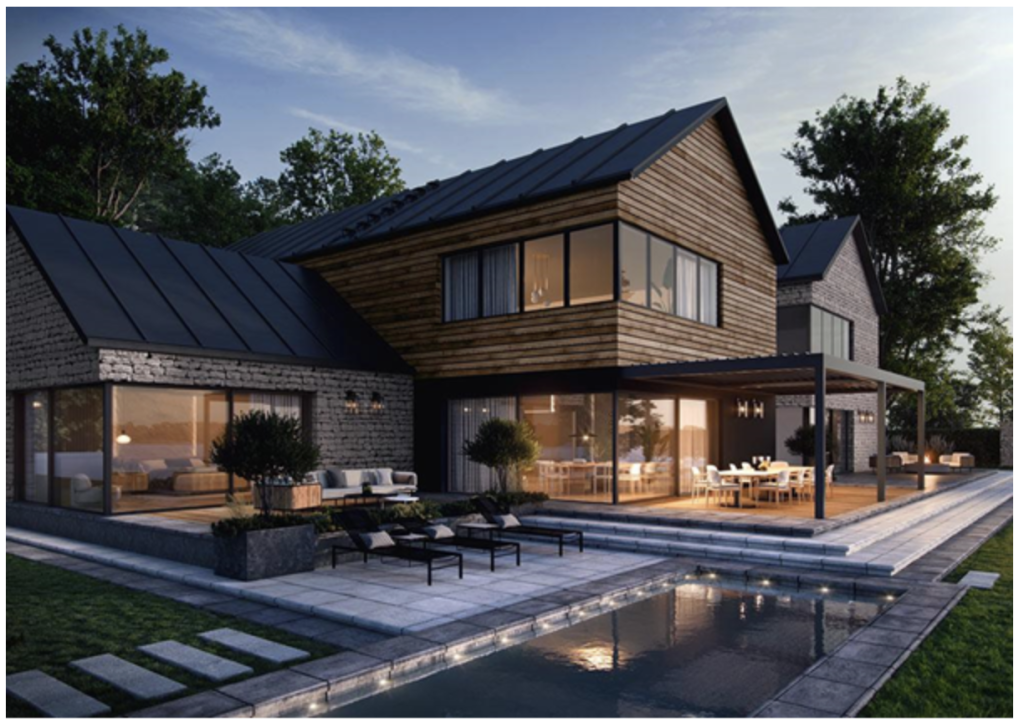
The quiet luxury aesthetic – the Loro Piana-inflected, The Row-influenced approach to interiors that has dominated design coverage for the past three years – is usually described in terms of materials: linen, stone, walnut, unlacquered brass. But the images that define the look share something more structural: exceptional windows. Slim profiles in anthracite or warm matte finishes. Glass that extends to the floor or close to it. Light that looks unmanaged and natural because the glazing is doing the heavy lifting quietly, without calling attention to itself.
Slim-profile aluminum frames with minimal visual weight are the fenestration equivalent of a perfectly cut cashmere coat. They don’t announce themselves – they just make everything around them look considered. That effect is achievable on a renovation budget, and it starts with treating the window decision with the same seriousness as any other design choice.
What Does Window Replacement Actually Do for Your Home’s Value?
Window replacement increases home resale value by 7–11%, according to NAHB data – a whole-home lift, not a single-room improvement. That distinction matters enormously when you compare it to other renovations by cost recouped at resale. A major kitchen remodel returns 52–59% of its investment. A mid-range bathroom remodel returns 60–67%. Premium window replacement, by contrast, creates value across every room in the house – and does it with substantially lower disruption, shorter timelines, and no structural alteration.
The math shifts further when you factor in energy savings. The Department of Energy estimates 12–25% annual reduction in heating and cooling costs for homes that replace single-pane windows with ENERGY STAR-qualified products. In a Northeast home paying $3,000–$4,000 annually in energy costs, that’s $360–$1,000 back per year – compounding over the years of ownership before any resale calculation applies. And then there are the federal tax credits: up to $600 per qualifying window under IRC §25C, capped at $1,200 per year across all qualifying improvements.
The Math Designers Don’t Advertise – But Should
The comparison most renovation planning conversations never make explicit is this: a major kitchen remodel costs $40,000–$70,000, returns roughly $25,000–$40,000 at resale, and takes your kitchen out of service for months. Premium window replacement for a typical home runs $8,000–$20,000, generates a 7–11% whole-home value increase on a property worth, say, $500,000 – that’s $35,000–$55,000 in value creation – while improving every room’s light, thermal performance, noise reduction, and aesthetic quality simultaneously.
Put differently: window replacement is the rare renovation where the financial return can plausibly exceed the investment, especially when energy savings and tax credits are included in the calculation. The kitchen remodel, for all its visual impact, typically does not clear that bar. That’s not an argument against updating a kitchen – it’s an argument for doing the windows first, while the budget is intact.
Table 1 – Home Renovation ROI Comparison 2026
| Renovation | Avg. Cost | Resale Value Return | Disruption Level | Visual Impact |
| Window Replacement (premium) | $8,000–$20,000 | 7–11% home value increase (NAHB) | Low – no structural work | High – affects every room’s light and look |
| Kitchen Remodel (major) | $40,000–$70,000 | 52–59% cost recouped (Remodeling Magazine 2024 Cost vs. Value) | Very High – months of disruption | High – single room only |
| Bathroom Remodel (mid-range) | $15,000–$30,000 | 60–67% cost recouped | High – 2–4 weeks out of service | Medium – one room only |
| Hardwood Flooring (new) | $12,000–$22,000 | 70–80% cost recouped | Medium – room-by-room | Medium – floor-level only |
| Deck Addition | $18,000–$35,000 | 50–65% cost recouped | Medium – exterior only | Medium – exterior only |
| Siding Replacement | $12,000–$25,000 | 67–80% cost recouped | Low – exterior | Medium – curb appeal only |
Which Window Designs Are Actually Trending Right Now?
Window design trends in 2026 are being driven by the same forces shaping the broader interior design conversation: a move toward graphic simplicity, natural material aesthetics, and architectural elements that look considered rather than default. The shift away from white vinyl frames and standard aluminum sliders isn’t just aesthetic preference – it reflects a broader understanding that windows are a design decision with permanent visual consequences, and should be treated like one.
Six directions are defining high-end residential specification right now, from loft-style steel-look profiles to concealed-hardware minimalist systems. The common thread is intentionality: these are windows chosen for what they contribute to a space’s visual language, not just what they exclude in terms of cold air and noise.
Table 2 – Window Design Trends 2026: What Designers Are Specifying
| Trend | Description | Best Architectural Context | Design Keywords |
| Steel-Look Aluminum | Slim black frames mimicking industrial steel, with structural aluminum strength and full thermal performance | Loft conversions, modern farmhouse, Japandi, luxury residential | Industrial chic, editorial, monochrome, graphic |
| Oversized Glazing / Floor-to-Ceiling | Maximized glass area with minimal frame intrusion – lets the view and light become the design | Open-plan living, spaces with outdoor views, high-ceiling homes | Biophilic, expansive, resort-style, architectural |
| Matte Black & Anthracite Frames | Shift from white/brown defaults to bold frame colors that anchor a room’s palette | Contemporary, industrial, monochromatic, mid-century | Graphic, curated, editorial, intentional |
| Concealed Hardware (Hidden sash) | Hardware and hinges fully integrated into the frame – the window becomes a pure glass rectangle | Minimalist, Scandinavian, luxury residential | Minimal, quiet luxury, uninterrupted, clean-lined |
| Wood-Look & Dual-Color Finishes | Interior in warm wood-look finish, exterior in weather-resistant neutral – one window, two aesthetics | Traditional homes, Scandinavian interiors, transitional style | Warm minimalism, curated contrast, natural texture |
| Tilt & Turn in Urban Residential | European dual-function sash entering mainstream U.S. residential design as a style + performance statement | City apartments, townhouses, modern builds | European, considered, functional luxury |
The Steel-Look Window – and Why Every Designer Is Specifying It
The Crittal window – the original steel-framed industrial window from early 20th-century Britain – has been a coveted design element in high-end residential projects for years, for one simple reason: nothing else produces that particular combination of graphic black grid, maximum glass area, and architectural precision. The problem with original steel windows is everything else: they’re heavy, thermally catastrophic, expensive to maintain, and difficult to source for new construction.
The steel-look aluminum window solves all of that. Slim aluminum profiles in matte black or dark anthracite deliver the aesthetic with structural aluminum’s performance advantages – proper thermal breaks, multi-point locking, triple glazing compatibility, powder-coat finishes that hold color for 20+ years without repainting. The steel-look profile has moved from loft conversions to luxury residential to high-end new builds precisely because it works across virtually every architectural style: industrial, Japandi, modern farmhouse, contemporary minimalist, even transitional. OKNOPLAST’s MIRU EVO Steel system is one example of this category now available in the U.S. market – a slim-profile aluminum tilt & turn window with the steel-look aesthetic and full NFRC certification for American building code compliance.
Color and Finish: The Decision That Makes (or Breaks) the Aesthetic
For most of American residential history, window frames came in three non-choices: white, tan, and brown. Those defaults still dominate builder-grade installations, which is precisely why replacing them with a considered frame color transforms a space so immediately and completely. Matte black is the most transformative choice – it reads as graphic and deliberate in the same way a well-chosen fixture or a piece of furniture with strong silhouette does. Anthracite grey is softer and works in more contexts. Sage green and slate are gaining ground in markets where the natural material trend is strongest.
Wood-look interior finishes – a foil or laminate applied to the interior face of a uPVC or aluminum frame to suggest the warmth of timber – offer another angle: the clean exterior line of a contemporary frame, with a warm natural material aesthetic facing into the room. For homes mixing modern architecture with soft furnishings and natural materials, that dual-finish option resolves what would otherwise be a tension between the window’s exterior and interior roles. Premium manufacturers like OKNOPLAST offer 50+ color and finish combinations, which means frame color can be specified with the same granularity as paint – not chosen from a catalogue of three.
How Do You Choose Windows That Work for Both Look and Performance?
The mistake most people make when upgrading windows is optimizing for one dimension while ignoring the other. Some homeowners specify entirely on aesthetics – choosing slim black frames because they look right, without verifying the thermal performance or glazing specification. Others do the opposite: choosing windows purely on U-Factor and ENERGY STAR ratings without considering how the profile width, frame color, or opening mechanism will interact with the space they’re designing. The result is either a beautiful window that underperforms thermally or an energy-efficient window that looks like it belongs in a contractor special.
The six-parameter checklist below covers both dimensions. European manufacturers like OKNOPLAST address the aesthetic-performance tension directly – offering slim-profile aluminum systems like the MIRU EVO Steel and MIRU EVO Hidden alongside high-performance uPVC systems like the PAVA (U-Factor 0.20, 82mm frame depth, 7-chamber construction) and the design-forward PIXEL series with its contemporary slim profiles. Both lines are NFRC-certified and available through the U.S. dealer network in 50+ finishes, which means the frame color conversation can happen alongside the performance spec conversation rather than after it.
Table 3 – Design + Performance Checklist: What to Look For
| Parameter | What It Means | Design Impact | Performance Impact |
| Frame Profile Width | How wide the visible frame is around the glass | Slim profiles (< 80mm) maximize glass area and create a cleaner, more architectural look | Narrower profiles require stronger materials (aluminum or steel-reinforced uPVC) to maintain structural integrity |
| Frame Color / Finish | RAL color, texture (matte/gloss), and single vs. dual-color options | Frame color anchors a room’s palette – choose before wall color, not after | Powder-coated aluminum and foil-finish uPVC offer 20+ year color durability without repainting |
| Glazing Type | Double vs. triple glazed; glass coatings; gas fill | Triple glazing with high VT rating maximizes daylight while eliminating cold-spot condensation that fogs glass | U-Factor determines heat loss; SHGC determines solar gain – both affect comfort and energy costs year-round |
| Opening Mechanism | How the window operates: single-hung, casement, tilt & turn, lift & slide | Tilt & turn offers a cleaner closed appearance than casement (no visible crank hardware); matches European architectural aesthetic | Tilt mode enables ventilation at all times without security or weather compromise – a functionality gap in standard American window types |
| U-Factor (NFRC rated) | Measures heat transfer through the window assembly – lower = better insulated | Higher-performance windows stay warmer – eliminating interior condensation that fogs glass and damages sills and frames | ENERGY STAR Northern Zone requires U-Factor ≤ 0.27; triple-glazed systems reach 0.20 and below |
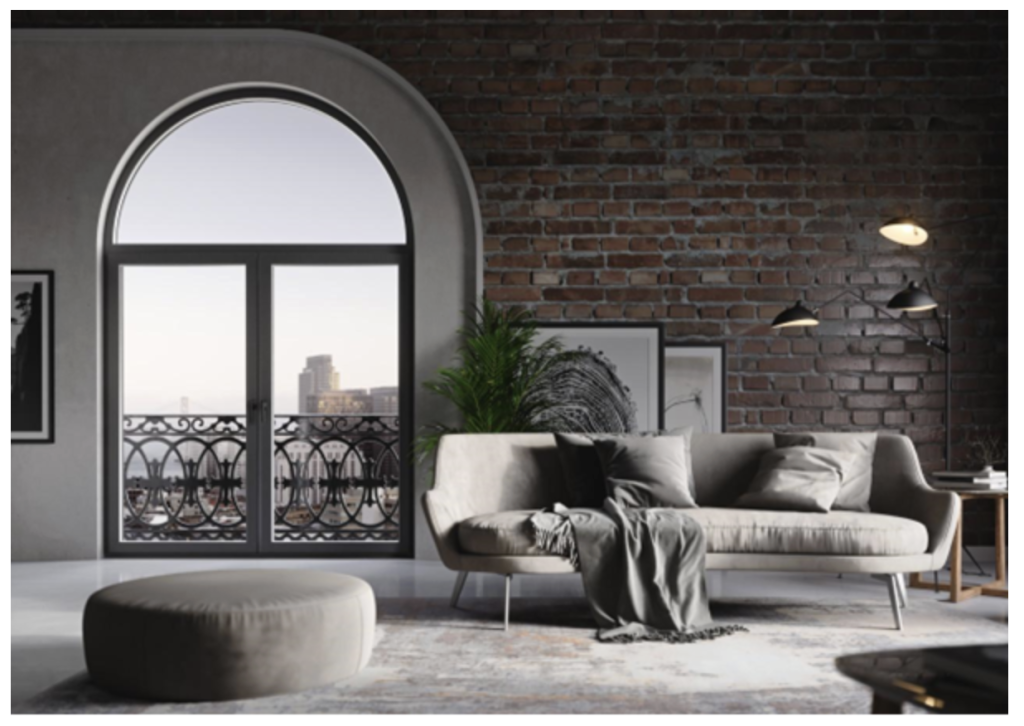
| Custom Shape Availability | Arched, round, trapezoidal, geometric formats beyond rectangle | Allows architectural continuity – matching existing opening shapes without sacrificing performance | Non-rectangular windows require manufacturer-level customization; not all suppliers offer it at production quality |
The Four Questions to Ask Before You Decide
Before specifying any window, four questions determine whether the product is right for the space. First: what profile width am I comfortable with, and what material delivers that width at the structural performance level this opening needs? Slim profiles below 80mm in aluminum, wider profiles in steel-reinforced uPVC for larger spans. Second: what frame color works with my exterior palette and my interior palette – and are they the same answer, or do I need a dual-color option? Third: what glazing does my climate zone require, and does triple glazing make sense given my heating costs and noise environment? Fourth: what opening mechanism serves this window’s ventilation role – and is standard American casement or single-hung adequate, or is the tilt-mode ventilation of a European system worth specifying?
That fourth question is worth examining more carefully than it typically receives, particularly for bedrooms and living rooms in urban environments where ventilation without full noise exposure matters.
Why European Windows Look Different – and Function That Way Too
The visual difference between European-style windows (https://oknoplast.us/tilt-and-turn-windows/)and standard American products comes down to two things: frame depth and hardware integration. European uPVC and aluminum systems run 70–90mm deep versus the 50–65mm typical of American vinyl products – that additional depth is where the multi-chamber construction, thermal breaks, and multi-point locking hardware live. More depth means better performance, but also means the manufacturer can run slimmer visible profiles on the room-facing side because the structural work is happening inside the frame. The resulting aesthetic is a window that appears slim and clean because it is, while hiding the engineering that makes the performance numbers possible.
Tilt & turn operation adds another dimension. The single-handle system produces a cleaner closed-window appearance than casement hardware – there’s no crank, no handle that projects into the room, no mechanism that catches the eye. When closed, a well-specified tilt & turn window looks like a fixed pane of glass with a discrete handle. That visual restraint is part of why the format has become the default in European residential design, and part of why it’s gaining ground in American projects where the aesthetic standard is being set by architecture and fashion media rather than builder convention.
What About the Financial Side – Are There Tax Incentives?
The Energy Efficient Home Improvement Credit (IRC §25C, updated by the Inflation Reduction Act) covers up to $600 per qualifying window, with a $1,200 annual cap across all qualifying home improvements for the tax year. Windows must hold ENERGY STAR Most Efficient certification – a higher performance tier than standard ENERGY STAR, requiring U-Factor of 0.20 or lower in Northern Zone states including New York, New Jersey, Connecticut, Pennsylvania, and Massachusetts. The credit applies to your primary residence and is claimed on IRS Form 5695. Consult a tax professional to confirm your eligibility. State and utility rebate programs can add $50–$400 per window on top of the federal credit – check dsireusa.org for current programs in your state.
OKNOPLAST’s triple-glazed systems, including the PAVA series with a U-Factor of 0.20, are certified to meet ENERGY STAR Most Efficient requirements, with NFRC documentation available for tax credit filings. Their U.S. operations run 8–10 week lead times from the Northeast – a practical consideration for homeowners timing a spring or fall installation to align with tax year strategy.
Table 4 – Federal Tax Credits for Window Upgrades (2025)
| Program | Max Credit | Annual Cap | Key Requirement | Notes |
| Energy Efficient Home Improvement Credit (IRC §25C) | Up to $600 per window | $1,200/year across all improvements | ENERGY STAR Most Efficient certification required | Applies to primary residence; claim on IRS Form 5695 |
| ENERGY STAR Most Efficient – Northern Zone (NY, NJ, PA, MA, CT) | Included in §25C | – | U-Factor ≤ 0.20 | SHGC ≤ 0.40 | Strictest tier; triple glazing typically required |
| ENERGY STAR North-Central Zone (OH, IL, CO, NJ) | Included in §25C | – | U-Factor ≤ 0.22 | SHGC ≤ 0.40 | Covers most Midwest states |
| State & Utility Rebates (varies by state) | $50–$400 per window additional | Varies by program | Check dsireusa.org for your state | Stackable with federal credit – combined savings can be substantial |
Federal Tax Credits, Energy Savings, and the Real Cost of Waiting
A useful way to frame the financial case: every year you spend in a home with underperforming windows is a year of energy cost overpayment, a year without the tax credit, and a year without the home value premium. For a homeowner planning a window upgrade in year three of a seven-year ownership horizon, doing it in year one rather than year three captures an additional $400–$900 in annual energy savings (DOE estimates) plus a compound return on the value uplift across four additional years. The windows don’t depreciate – unlike most interior renovations, their performance holds across the product’s 20–30 year lifespan.
The cost-of-waiting calculation also applies to the design question. Every year spent in a home where the windows are limiting the quality of natural light is a year of interior design choices made against the wrong light baseline – choices that may need revisiting once the windows change what the room actually looks like.
Where Do You Start? A Practical Framework for the Renovation-Ready
The correct renovation sequence for a home where windows are a variable is: windows, then paint, then soft furnishings and decor. The reason is hierarchy – windows determine light, light determines how colors render, colors anchor every textile, finish, and material decision that follows. If you paint before you upgrade the windows, you may be choosing wall colors under conditions that won’t exist once the glazing changes. If you source textiles and rugs before the windows are in, you’re building a scheme around a light quality that may shift significantly.
The practical starting point is a glazing audit: stand in each room at different times of day and identify which spaces feel light-limited, which feel acoustically exposed, and which have cold spots near windows in winter. Those are the rooms to prioritize. A conversation with a window specialist – rather than a showroom visit – will quickly clarify which product categories (slim-profile aluminum for design-led spaces, high-performance uPVC for rooms where thermal insulation is the priority) apply to which openings.
From there, the color and finish conversation happens alongside the performance specification – because these are not separate decisions. A matte black aluminum frame on a bedroom window is both a thermal upgrade and a design decision that will influence everything from curtain fabric to furniture selection. Treating it as purely technical, or purely aesthetic, misses half the value on both sides. Get that right, and the rest of the renovation has a foundation to build from rather than a compromise to work around.
Also Read: 10 Benefits of Installing Retractable Window Fly Screens