


Few packaged foods have captured global attention quite like buldak ramen. Also known as Buldak Bokkeummyeon or Hot Chicken Flavor Ramen, these intensely spicy Korean instant noodles have moved far beyond convenience-store shelves to become a full-blown cultural phenomenon. Whether you discovered them through a viral Fire Noodle Challenge video or simply spotted the bold cartoon chicken packaging at the grocery store, buldak ramen delivers a combination of heat, flavor, and addictive chew that keeps people coming back for more.
This guide covers everything you need to know: the origin story, spice levels, popular flavors, proper cooking method, customization ideas, and why this product continues to dominate the spicy instant noodle category years after its launch.
What Exactly Is Buldak Ramen?
Buldak ramen is a line of dry-style instant noodles produced by South Korean company Samyang Foods. The name comes from the Korean words “bul” (fire) and “dak” (chicken), translating to “fire chicken.” Unlike traditional soup-style ramen that stays submerged in broth, these noodles are boiled, drained, and then vigorously mixed with a thick, glossy, ultra-spicy sauce. The result is a stir-fried texture that clings to every strand.
The original version clocks in at approximately 4,404 Scoville Heat Units (SHU). For context, that sits in a similar range to a hot jalapeño, but the oil-based sauce delivers a lingering, building burn that many people find more intense than the number suggests. Higher-intensity versions push the heat even further.
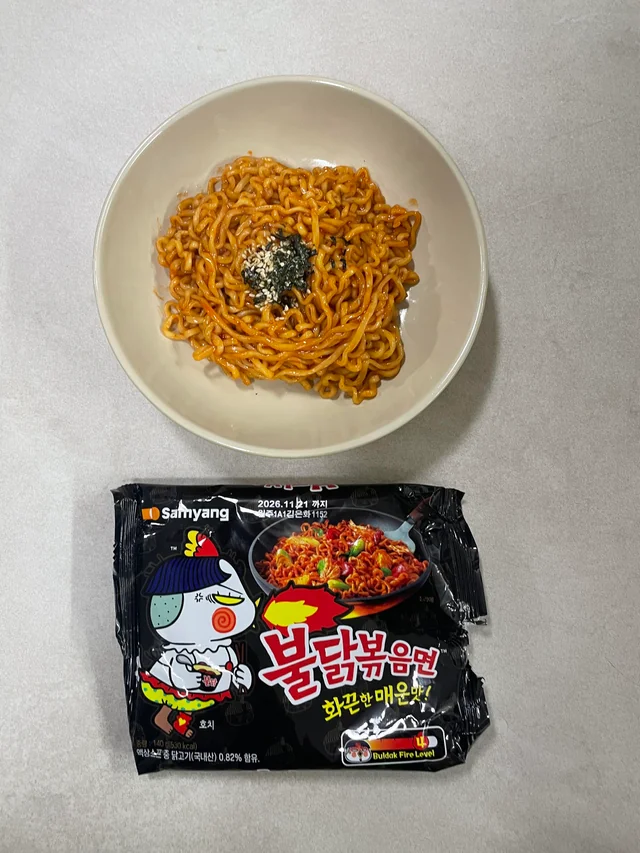
Each pack typically contains three components: a block of chewy wheat noodles, a liquid sauce packet packed with chili and seasonings, and a small packet of dried flakes (usually sesame seeds and seaweed). The noodles themselves have a satisfying springy texture that holds up well to the aggressive sauce.
The Origin Story of Buldak Ramen
Samyang Foods has a long history in the Korean instant noodle industry, dating back to 1961 when founder Chun Joong-yoon created one of the country’s first commercial ramen products during a time of food scarcity. Decades later, the company faced increasing competition in a crowded market.
The breakthrough idea for buldak ramen came in 2010. Kim Jung-soo, then working in Samyang’s sales department (and later a key figure in the company’s leadership), was eating lunch at a restaurant known for spicy stir-fried chicken. She watched customers sweating and fanning their mouths yet continuing to eat with clear enjoyment. That mix of pleasure and pain inspired her. When the product development team created early prototypes, she repeatedly pushed them to increase the heat.
Buldak ramen officially launched in April 2012. Early sales in Korea were modest, many found it simply too spicy. Everything changed in 2014 when the “Fire Noodle Challenge” went viral. A YouTube video by the channel Korean Englishman showed friends attempting to finish a pack without drinking water or milk. The intense reactions spread rapidly. Competitive eater Matt Stonie later posted a video consuming multiple packs, racking up tens of millions of views. Suddenly, people around the world were seeking out the bright packaging with the fire-breathing cartoon chicken.
The viral moment transformed buldak ramen from a niche Korean product into a global bestseller. By the mid-2020s, cumulative sales had reached into the billions of packs, with strong demand in the United States, Europe, Southeast Asia, and beyond. Overseas sales now form a major portion of Samyang’s revenue.
Spice Levels and Popular Flavors
One of the smartest moves Samyang made was expanding beyond pure heat. While the original remains the benchmark, the brand now offers a wide range of flavors that balance spice with creaminess, cheese, or other complementary tastes.
Common options include:
- Original Hot Chicken – The classic at roughly 4,404 SHU. Pure, aggressive heat with a savory-sweet undertone.
- 2x Spicy – Approximately double the heat (around 8,808 SHU). Reserved for serious spice fans.
- 3x Spicy – Even more extreme for those who treat heat as a challenge.
- Carbonara – Creamy and slightly milder. Often ranked among the most approachable and popular variants.
- Cheese – Melty, savory notes that help temper the burn.
- Rosé – A creamy tomato-chili hybrid that has gained strong followings.
- Habanero Lime, Kimchi, Curry, Jjajang, and limited or regional flavors that appear periodically.
The milder creamy versions still deliver noticeable heat, but the dairy elements make them more accessible for people who enjoy spice without wanting full fire-breathing intensity.
How to Cook Buldak Ramen the Right Way
Cooking buldak ramen properly makes a significant difference in texture and sauce coverage. The key is treating it more like a stir-fry than a soup.
- Bring about 2 to 2½ cups of water to a boil in a small pot.
- Add the noodle block and cook for 3 to 5 minutes, stirring occasionally so the strands separate.
- Drain most of the water, but leave roughly 3 to 8 tablespoons of the starchy cooking liquid in the pot. This residual water helps the sauce emulsify and coat the noodles evenly.
- Return the pot to medium heat. Squeeze in the entire liquid sauce packet and stir vigorously for 30 to 60 seconds until the sauce becomes glossy and thickens slightly.
- Sprinkle in the dried flake packet and mix once more.
- Transfer to a bowl and add any toppings.
Some people prefer to finish the noodles in a separate pan for better control over the sauce reduction. Others cook the noodles fully, drain completely, and toss with sauce in a bowl. Experiment to find your preferred consistency.
Tips to Enjoy Buldak Ramen (and Survive the Heat)
The heat from buldak ramen builds. The first few bites may taste more sweet and savory than explosive, but the burn intensifies as you continue. Here are practical ways to manage and enhance the experience:
- Start with half the sauce if you are new to the product or have lower spice tolerance. You can always add more.
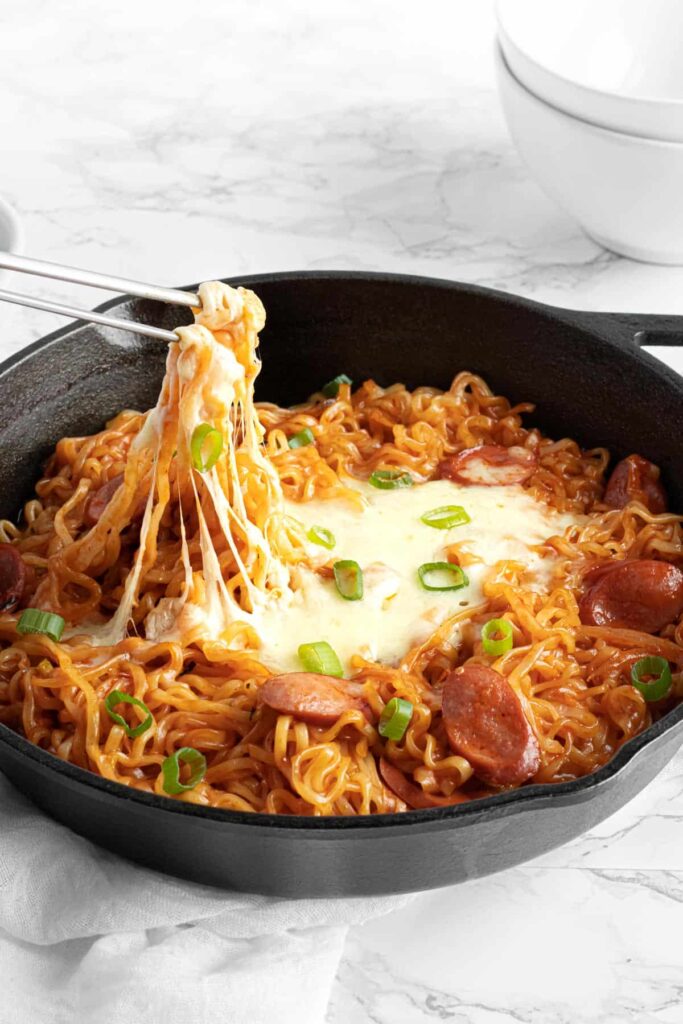
- Dairy is your friend. A slice of American cheese, shredded mozzarella, a splash of milk or cream, or a spoonful of Kewpie mayonnaise dramatically softens the heat while adding richness.
- Add protein and texture. Soft-boiled or fried eggs, sliced spam, leftover chicken, or tofu turn the noodles into a more substantial meal. Green onions, sesame seeds, seaweed sheets, and a drizzle of sesame oil are classic finishing touches.
- Balance with something cool. Cucumber slices, a side of plain rice, or cold milk on the side help reset the palate between bites.
- Customize freely. Many fans mix flavors (for example, half original and half carbonara) or add extra gochujang, chili crisp, or lime juice for personal variation.
Why Buldak Ramen Continues to Dominate
Several factors explain the lasting success of buldak ramen. The product delivers a clear sensory experience- heat, chew, and bold flavor- that is hard to replicate with milder instant noodles. Social media amplified its reach through challenge videos and mukbang-style content. The expanding flavor lineup keeps the brand relevant for both heat-seekers and those who prefer creamier profiles. Finally, the packaging is instantly recognizable, and the product is widely available in Asian markets, major grocery chains, and online retailers.
For many people, eating buldak ramen has become a shared ritual, whether as a late-night snack, a dare among friends, or a comforting (if intense) solo meal after a long day.
Final Thoughts
Buldak ramen is more than just another instant noodle. It is a product that turned extreme spice into mainstream entertainment and then into everyday pantry staple status for millions. From its origins as a bold experiment inspired by a restaurant dish to its current position as a global sales leader, the brand has proven that people will happily chase the burn when the flavor and texture deliver.
Whether you prefer the original fire, a creamy carbonara version, or something in between, the key is cooking it properly and customizing to your tolerance. Keep water or milk nearby the first few times, respect the heat, and enjoy the ride. Once you find your preferred style and toppings, buldak ramen is likely to become a regular craving.