


Living Spaces has grown from a single California showroom into one of the most recognizable furniture retailers in the western United States, known for pairing affordable pricing with same-day delivery and a genuinely enjoyable in-store shopping experience. As the brand continues its national expansion and furniture trends evolve heading through 2026, here’s a complete look at what makes Living Spaces stand out, and what to know before your next visit.
The History of Living Spaces
Living Spaces was founded in August 2003 in Rancho Cucamonga, California, by Grover Geiselman and Sharm Scheuerman. The pair drew inspiration from Jim McIngvale’s Gallery Furniture company in Texas, even working there for several months before returning to California to launch their own venture. Their first store was set up inside a former Costco building, laying the groundwork for the large-format, warehouse-style showrooms that would come to define the brand.
Since then, Living Spaces has grown into a major furniture retail chain, headquartered in La Mirada, California, with dozens of showrooms spanning multiple states across the western and southern United States. The company has continued a steady pace of national expansion in recent years, opening new stores in markets including Texas, Arizona, Colorado, and Kansas, extending its reach well beyond its original Southern California roots.
What Sets Living Spaces Apart
Living Spaces has built its reputation around a few key differentiators that set it apart from many traditional furniture retailers. The company carries more than 35 furniture brands under one roof, giving customers access to a wide range of styles and price points without needing to shop multiple stores.
One of the brand’s most distinctive features is its focus on speed and convenience, encapsulated in its long-standing motto: “Buy it today, enjoy it tonight.” Living Spaces is one of the few major furniture retailers to offer same-day delivery in many of its markets, a significant differentiator in an industry where furniture delivery windows can often stretch into weeks. The company also offers in-store pickup options, flexible financing, and design assistance to help customers plan out their spaces before making a purchase.
The In-Store Experience
Beyond its product selection, Living Spaces has also worked to differentiate its physical showrooms from typical big-box furniture stores. Many locations include dedicated kids’ play areas, allowing parents to shop more comfortably with young children in tow. Select stores also feature a Living Spaces Café, giving shoppers a place to relax and recharge during longer furniture-shopping trips, along with outlet centers at some locations offering discounted pricing on clearance and overstock items.
The company has also invested in tools like virtual 3D room design and detailed product dimension listings on its website, helping customers plan furniture layouts and ensure proper fit before committing to a purchase, whether shopping online or preparing for an in-store visit.
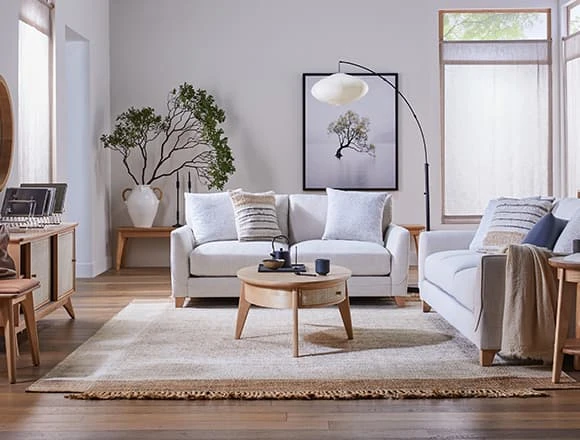
Living Spaces Product Categories
Living Spaces offers furniture and decor for nearly every room in the home, including:
- Living Room: Sofas, sectionals, accent chairs, and coffee tables across a range of styles from contemporary to traditional.
- Bedroom: Bedroom sets, mattresses, and a dedicated Sleep Center at many locations to help customers find the right mattress for their needs.
- Dining Room: Dining tables, chairs, and storage pieces suited for both everyday use and entertaining.
- Kids and Teens: A dedicated kids’ furniture category, including loft beds and room ideas tailored to younger customers.
- Home Decor: Rugs, lighting, and wall art to help customers complete a room’s overall look.
- Outdoor Furniture: Furniture designed for patios and outdoor living spaces, an increasingly popular category as more homeowners invest in outdoor entertaining areas.
2026 Furniture Trends Shaping Living Spaces’ Offerings
Heading through 2026, several broader furniture trends have shaped what shoppers are looking for, and what retailers like Living Spaces have leaned into as a result. Designers and industry trend reports have pointed to a clear move away from sharp, overly formal furniture silhouettes in favor of softer, more rounded profiles, including curved sofa arms, gently sculpted chair frames, and richly textured upholstery fabrics.
Modular and flexible seating has also continued to gain popularity in 2026, as more households look for furniture that can adapt to different uses, from hosting guests to everyday family lounging. Industry researchers have also pointed to a continued rise in outdoor living investment, with homeowners increasingly treating patios and backyard spaces as extensions of their primary living areas, often incorporating lounge-style seating and more professional design planning into outdoor furniture purchases.
These broader shifts reflect a growing consumer preference for furniture that balances comfort, durability, and everyday livability over purely trend-driven design choices, a preference that retailers like Living Spaces have continued to reflect in their evolving product assortments.
Finding a Living Spaces Near You
With showrooms spread across states including California, Texas, Arizona, Nevada, and Colorado, finding a nearby Living Spaces has become increasingly convenient as the company continues its expansion. The company’s website features a store locator that allows customers to search by location and view store-specific amenities, such as whether a given location includes an outlet center, a Sleep Center, a kids’ play area, or a Living Spaces Café.
Store hours are generally consistent across locations, though customers are encouraged to check individual store listings for exact hours and any location-specific services before planning a visit.
Why Living Spaces Continues to Grow
Living Spaces’ continued expansion reflects broader demand for furniture retailers that combine affordability, style variety, and fast delivery in a single shopping experience. By maintaining a large in-stock inventory across dozens of brands and continuing to invest in same-day delivery infrastructure, the company has differentiated itself in a competitive furniture retail market where delivery timelines and overall shopping convenience have become increasingly important factors in where consumers choose to shop.
Final Thoughts
From its origins in a converted Costco building in Rancho Cucamonga to becoming a major multi-state furniture retailer, Living Spaces has built its identity around convenience, value, and a shopping experience designed to make furnishing a home feel less overwhelming. With continued national expansion and product offerings that reflect the latest 2026 furniture trends, from softer silhouettes to flexible, modular seating, Living Spaces remains a strong option for shoppers looking to furnish their homes without long wait times or compromising on style.