


What Is Etsy? The Global Marketplace for Unique, Handmade, and Vintage Finds

Etsy is a global online marketplace connecting independent creators with buyers who want something more personal than what big-box retail offers. Think handmade jewelry, vintage home decor, custom gifts, and one-of-a-kind items — all made or curated by real people.
Quick answer for searchers:
| What you want to know | The short answer |
|---|---|
| What is Etsy? | A global marketplace for handmade, vintage, and unique items |
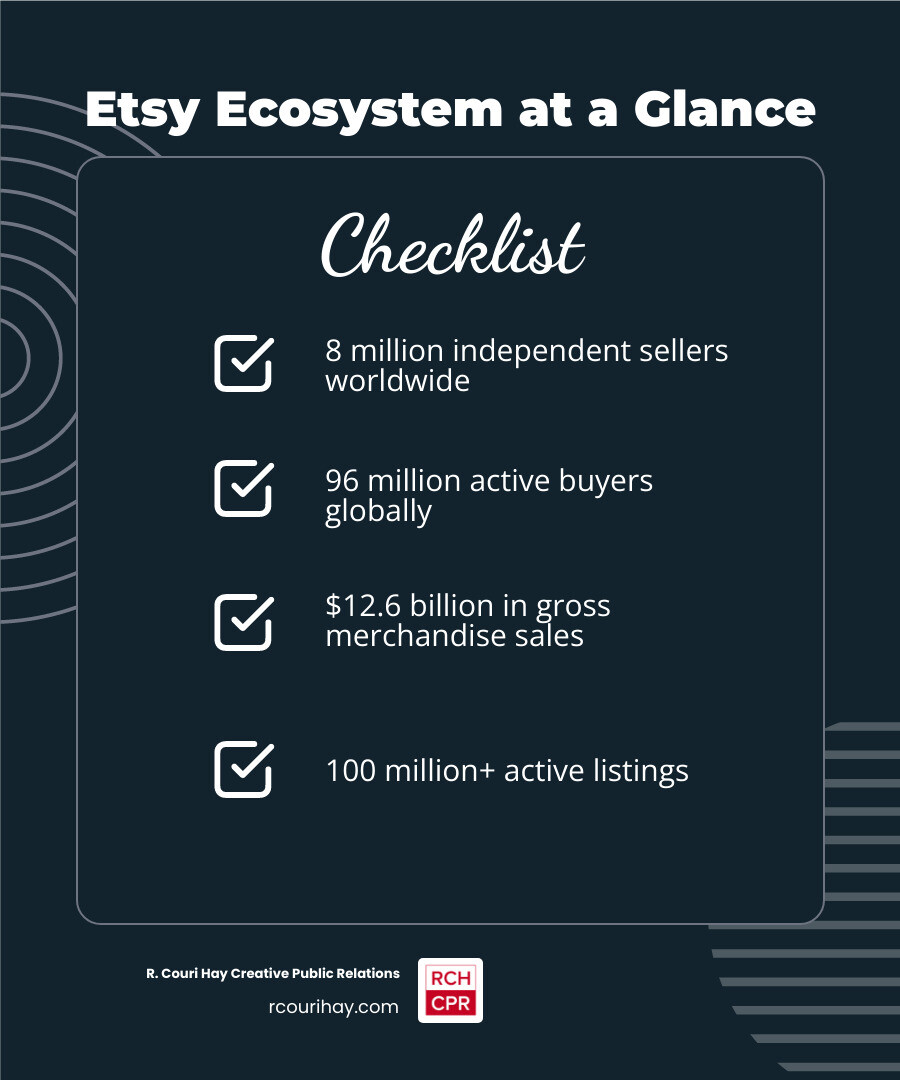
| Who sells on Etsy? | 8 million independent sellers worldwide |
| Who buys on Etsy? | 96 million active buyers globally |
| How big is it? | $12.6 billion in gross merchandise sales in 2024 |
| Is it free to sell? | No — there are listing fees, transaction fees, and optional paid services |
| Is there an app? | Yes — rated 4.8 stars with 50M+ downloads on Google Play |
Unlike Amazon or Walmart, Etsy has no central warehouse. Every purchase goes directly from maker to buyer. That model has generated nearly $4 billion in income for small businesses in 2020 alone — and the platform has only grown since.
With over 100 million active listings as of late 2024, Etsy has become the go-to destination for shoppers seeking something genuinely special — whether that’s a hand-thrown ceramic mug, a vintage leather bag, or a custom wedding invitation.
This guide covers everything: how the platform works, what it costs, how it’s evolving, and what challenges it faces.
What is Etsy and How Does the Global Marketplace Function?
At its core, Etsy functions as a bridge between the creative entrepreneur and the discerning consumer. It is a community-driven platform where the value lies in the “human touch.” When you browse the site, you aren’t looking at mass-produced items sitting on a shelf in a distribution center; you are looking at the inventory of millions of individual “shops” run by artists, collectors, and makers.
The marketplace is divided into three primary categories:
- Handmade Goods: Items that are made or designed by the seller.
- Vintage Items: Goods that must be at least 20 years old to qualify.
- Craft Supplies: Tools, ingredients, or materials used to create new items.
For us at R. Couri Hay, we often see how these unique pieces define a luxury lifestyle. Whether it’s a bespoke piece of art for a New York City penthouse or a vintage find for a home in the Hamptons, Etsy provides access to a level of personalization that is hard to find elsewhere. The platform empowers sellers to handle everything from production to shipping, while Etsy provides the digital infrastructure, payment processing, and marketing reach.

The Evolution of the Etsy Business Model
Since its founding in 2005 in a Brooklyn loft, Etsy has undergone significant transformations. Originally, the site had a very strict “handmade only” policy, where the person selling the item had to be the one who physically made it. However, as the platform grew, so did the needs of its most successful creators.
In 2013, Etsy redefined its “handmade” policy. This was a pivotal moment. The company began allowing sellers to use outside manufacturing assistance, provided the seller designed the items and was transparent about their production partners. While this move allowed many small businesses to scale, it also sparked a long-standing debate within the community about the soul of the marketplace. Today, the platform balances high-volume designer collaborations with grassroots artisans, ensuring a diverse range of price points and styles for the 96 million buyers active on the site. Etsy UK and other international branches have adopted these same standards, allowing the brand to scale globally while maintaining its focus on independent creativity.
Global Reach from London to Los Angeles
Etsy is truly a borderless marketplace. While it started in the United States, its footprint is now firmly established in the world’s most influential cultural hubs. We see this reflected in the curated local markets that cater to specific regional tastes.
- London: The London Etsy market is a treasure trove of British craftsmanship, from traditional tailoring to modern ceramics.
- Los Angeles: In the City of Angels, Los Angeles stores on Etsy often lean into West Coast aesthetics—bohemian fashion, mid-century modern furniture, and wellness-focused handmade goods.
- Paris: For those seeking European flair, Paris wall art on the platform offers everything from vintage street photography to contemporary illustrations that bring a touch of the Rive Gauche to any home.
This regional diversity allows buyers to “shop local” on a global scale, supporting a maker in Paris while sitting in an apartment in New York.
Financial Performance and Key Metrics of the Platform
By May 2026, looking back at the 2024 fiscal year, it is clear that Etsy has solidified its position as an e-commerce powerhouse. The numbers tell a story of a platform that has moved far beyond its “niche” origins to become a staple of global trade.
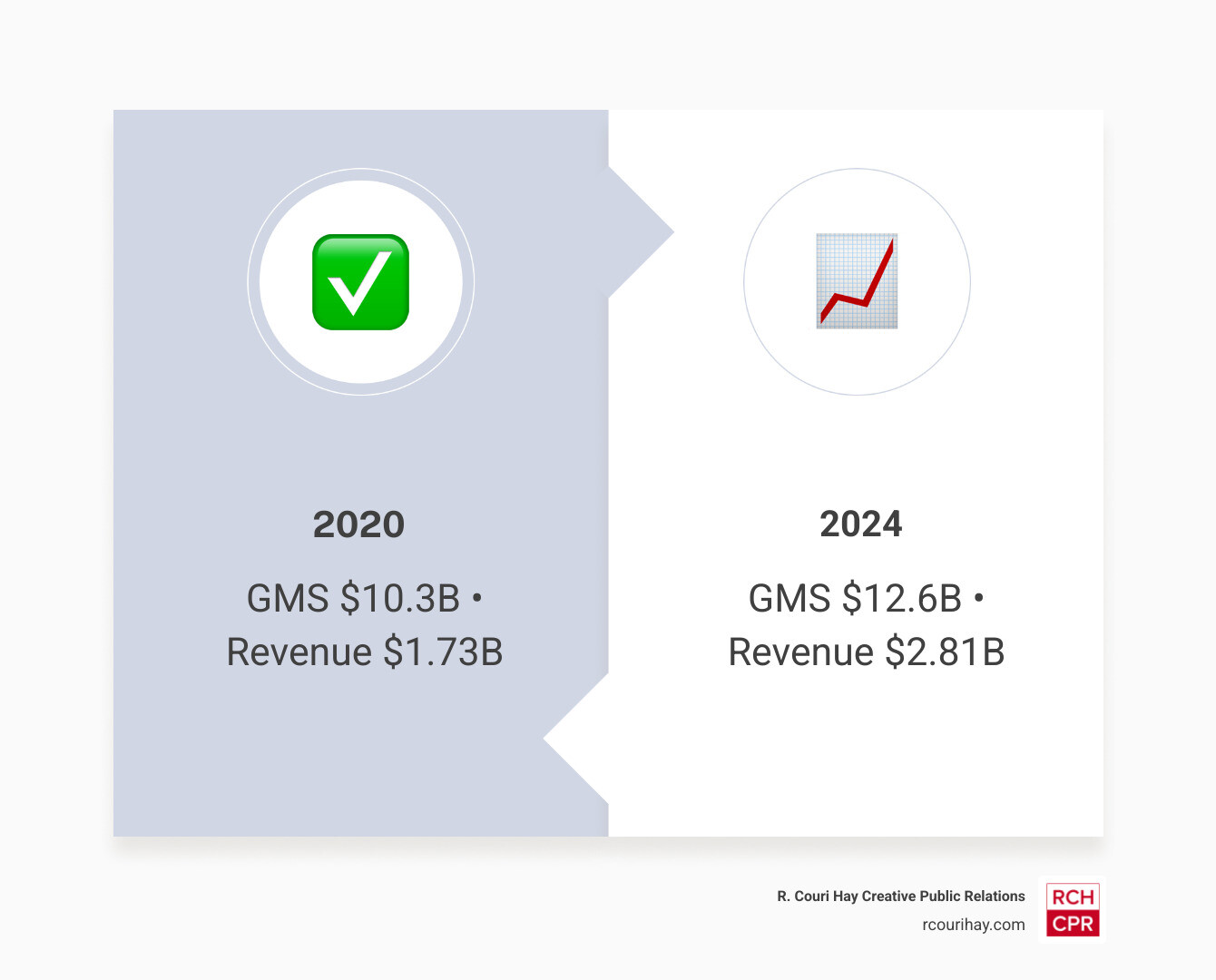
In 2024, Etsy reported Gross Merchandise Sales (GMS) of $12.6 billion. This represents the total dollar value of all items sold across the marketplace. From this, the company generated $2.81 billion in revenue, resulting in a net gain of $303 million. Supporting this massive operation is a dedicated team of approximately 2,400 employees who manage everything from site security to seller education.
To put this growth in perspective, consider the following data:
Understanding Etsy Fees and Revenue Streams
How does Etsy make its money? Unlike a traditional retailer that profits from a markup on goods, Etsy generates revenue through a variety of seller-focused fees. This “service-based” revenue model aligns the company’s success with the success of its sellers.
- Listing Fees: Sellers pay a flat fee (currently $0.20 USD) to list an item for four months.
- Transaction Fees: When an item sells, Etsy takes a percentage of the total sale price (including shipping and gift wrapping).
- Payment Processing: Fees for handling the financial transaction through Etsy Payments.
- Seller Services: This includes optional costs like “Etsy Ads,” which help sellers’ items appear higher in search results, and “Offsite Ads,” where Etsy pays to advertise items on external sites like Google and Facebook.
For creators in Canada and other international markets, these fees are adjusted for local currency but follow the same structural logic. It is a “pay-as-you-grow” model that lowers the barrier to entry for new entrepreneurs.
Navigating the Etsy Seller and Buyer Experience
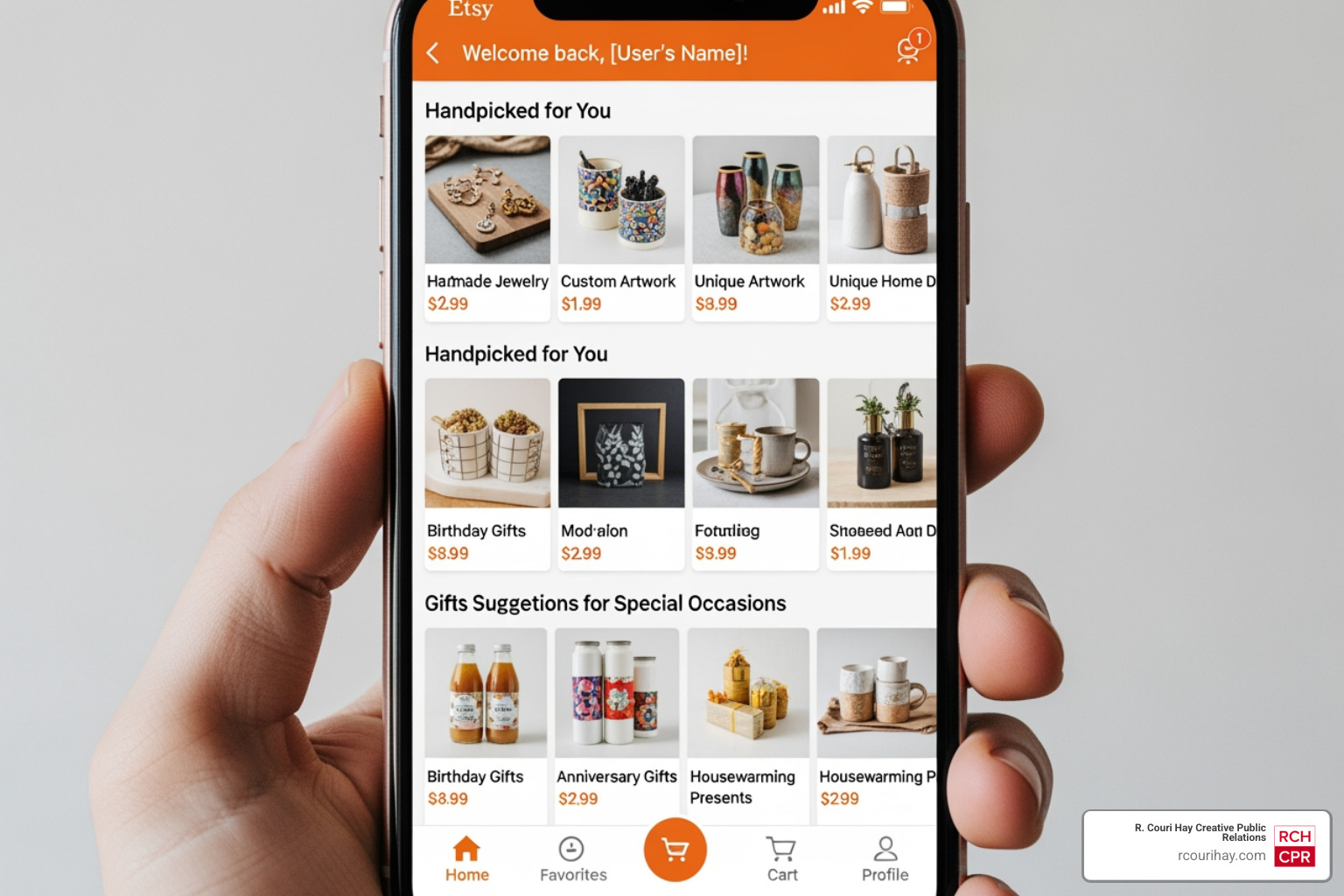
The modern Etsy experience is heavily centered around its mobile application. With a 4.8-star rating and over 50 million downloads, the app is the primary way many users interact with the brand. It isn’t just a shopping tool; it’s a communication hub.
Sellers use the app to manage orders and chat directly with customers, while buyers use it to track shipments and receive push notifications about sales in their favorite shops. One of the most popular recent features is the “Gift Teaser,” which allows a buyer to send a digital preview of a gift to a recipient—perfect for those last-minute situations where the physical item is still in transit.
For our clients who are often on the move, knowing how to pack light and stylish for vacations is essential, and many turn to Etsy for unique, travel-sized handmade organizers or custom jewelry cases that fit perfectly in a carry-on.
Curated Collections and Featured Interests
Part of Etsy’s charm is its ability to surface niche trends before they hit the mainstream. The platform’s search algorithm and editorial team curate “Featured Interests” that reflect current cultural moods.
- Goblincore & Dark Academia: These aesthetics—focusing on nature, vintage books, and a moody, scholarly vibe—have found a massive home on the platform.
- Aspen Art: For those decorating a mountain retreat, Aspen art on Etsy offers rustic yet refined pieces that capture the spirit of the Rockies.
- Palm Beach Party: Planning a high-society event? The Palm Beach party market provides everything from custom invitations to vibrant, tropical-themed decor.
- Southampton Chic: In the Hamptons, Southampton finds often include high-end linens, nautical vintage items, and bespoke outdoor accessories.
Sustainability Initiatives and Future Innovations
In an era where consumers are increasingly conscious of their environmental footprint, Etsy has taken a leadership role in sustainable e-commerce. The company was the first major online shopping destination to offset 100% of carbon emissions from shipping.
Etsy has set an ambitious goal to reach Net Zero emissions by 2030. This involves not only offsetting emissions through projects like forest conservation and wind farms but also working to reduce the primary footprint of its operations. This commitment to the planet resonates with luxury travelers who seek out the best times of year for a luxurious Galapagos adventure and want to ensure their lifestyle choices support global conservation.
Future Trends and AI-Powered Features
As we look toward the future, Etsy is leaning heavily into Artificial Intelligence to solve one of its biggest challenges: search. With over 100 million listings, finding the “perfect” item can sometimes feel like looking for a needle in a haystack.
Enter Gift Mode. Launched in early 2024, this feature utilizes OpenAI’s GPT-4 to act as a personal shopping assistant. Users can input a few details about the recipient—their interests, the occasion, and the “vibe”—and the AI generates a curated guide of items. This technology makes the platform more accessible to new users and helps sellers get their products in front of the right eyes.
For those looking to build their own brand, understanding these tech shifts is vital, much like learning how to become a travel influencer in 2025. Success on Etsy today requires a blend of traditional craftsmanship and modern digital savvy.
Challenges, Controversies, and the Competitive Landscape
No platform of this size is without its hurdles. Etsy has faced criticism from its seller community regarding fee increases and the “Offsite Ads” program, which some small-scale makers find difficult to budget for. There are also ongoing battles against copyright infringement and the “reselling” of mass-produced items masquerading as handmade.
Furthermore, the competitive landscape is shifting. While Etsy remains the leader in the handmade space, it now competes with:
- Amazon Handmade: A direct attempt by the retail giant to capture the artisan market.
- Social Commerce: TikTok and Instagram shops allow makers to sell directly through their social feeds.
- Niche Marketplaces: Etsy has addressed this by acquiring specialized platforms like Depop (for Gen Z fashion) and Reverb (for musical instruments).
Navigating these complexities requires the same kind of adaptability one needs when traveling abroad—like understanding the convenience of using an eSIM for international travel to stay connected to your business while on the go.
Frequently Asked Questions about Etsy
What is Etsy and how does it work?
Etsy is a global online marketplace for handmade, vintage, and unique items. It works by allowing individual sellers to create “shops” where they list their goods. Buyers purchase directly from these sellers, and Etsy facilitates the transaction, provides customer support, and offers a secure platform for the exchange.
How does Etsy address environmental sustainability?
Etsy offsets 100% of carbon emissions from its shipping and packaging. They invest in environmental projects such as wind and solar farms and forest protection. Their ultimate goal is to achieve net-zero carbon emissions by the year 2030.
What are the primary fees for selling on the platform?
The main fees include a $0.20 listing fee (per item), a transaction fee (a percentage of the sale price), and payment processing fees. There are also optional fees for advertising and advanced shop management tools.
Conclusion
Etsy has redefined what it means to be a global marketplace. By championing the independent creator and focusing on the “special,” it has carved out a space that even the biggest retail giants struggle to replicate. For the small business owner, it offers a gateway to a global audience. For the buyer, it offers a chance to own something with a story.
At R. Couri Hay, we believe that the most compelling stories are those of creativity, success, and the pursuit of the unique. Whether you are a seller looking to build an empire or a buyer looking for that perfect piece of Paris wall art, Etsy remains an essential part of the modern cultural and economic landscape.
For more stories on luxury living, art, and the people shaping our world, explore more info about gossip and lifestyle stories on our site. We are here to help you navigate the intersection of tradition and innovation in the world’s most vibrant cities.