

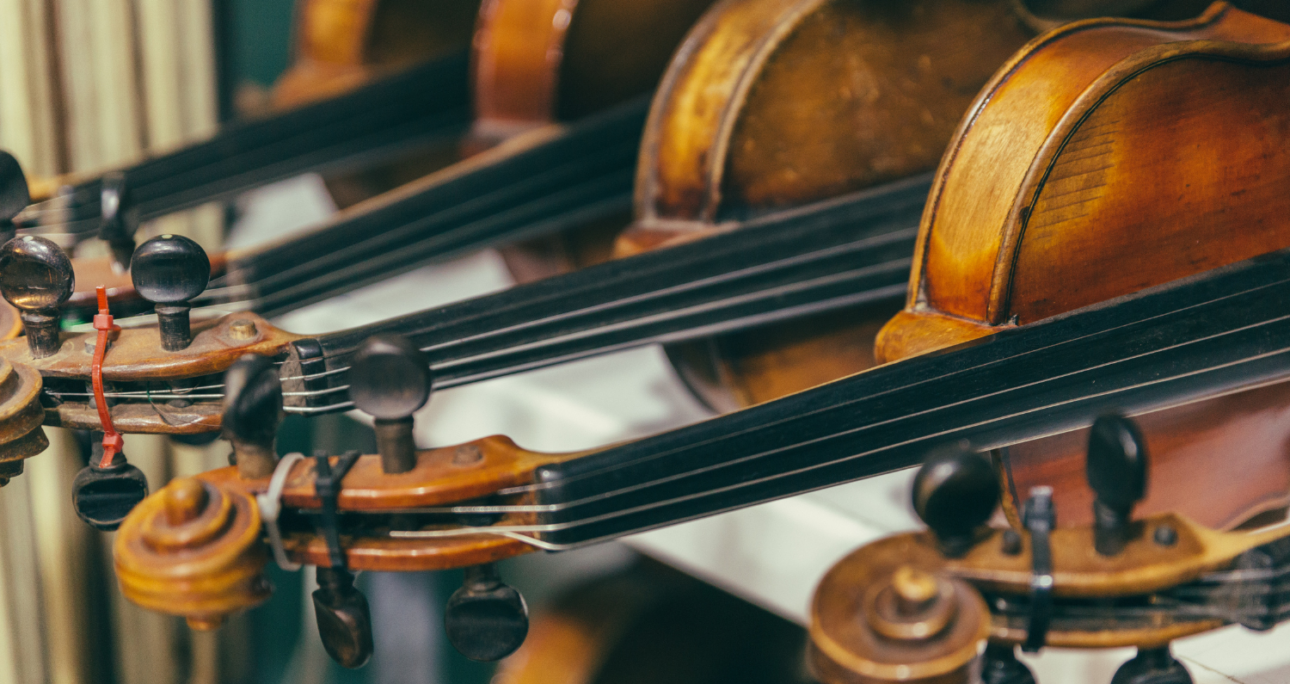
If you’re an aspiring violinist, you need to understand that your learning starts with the basics or the fundamentals, as we’d like to call it. You don’t begin playing notes right away or mastering a song early. The first thing you need to do is to familiarize yourself with the different parts of violins. You don’t just master the parts; you’ll also learn how each part affects the sound, comfort, and playability.
By knowing the parts of the violin, you’ll have an easier and wiser time when purchasing your own instrument someday.
1. The Head of the Violin
To better understand the parts of the violin, we’ll cut it into parts. The first part is the head of the violin, which includes the scroll, pegbox, and tuning pegs.
The scroll adds a traditional style to the violin, the pegbox keeps the strings safe and aligned, and the tuning pegs set the pitch. All these parts play a very important role in tuning and stability.
2. The Neck and Playing Surface
The second portion is the neck, strings, fingerboard, and nut, which are called the upper playing mechanism of the instrument. The neck supports the player’s hand while the fingerboard is the surface of the strings. The nut, on the other hand, spaces the strings and the strings are where you produce pitches (GDAE).
3. The Body of the Violin
Next is the main acoustic chamber of a violin. This includes the top plate, back plate, ribs, and F-holes. The top plate, which is typically made of spruce, catches the string vibrations to produce most of the sound. There’s also the hard maple back plate where the tone amplification happens.
On the side, you’ll find the ribs to hold the instrument together and create an air volume. Lastly, there are the f-holes to pump the air out, which is important in projecting music.
Without these parts, the sound is thin and quiet.
4. The Heart of the Sound
If previously we had the acoustic chamber, this time we have the core acoustic engine of the violin. The bridge transmits the energy, the soundpost connects the plates and balances tone, and lastly, the bass bar supports pressure and spreads vibration. All work together for great tone, volume, and balance across the strings.
5. The Bottom Section
The lower anchoring system of the violin is composed of the tailpiece, fine tuners, saddle, end button, and chin rest.
Together, they keep the string tension and anchor the violin safely to your body. Plus, it lets you adjust pitches precisely.
6. Why Every Violin Part Matters
Each violin part matters because it’ll determine how easy or difficult it is to play the instrument. The craftsmanship and quality of each component are a big deal when it comes to determining the violin’s playability.
Poor quality parts = poor playability.
This is why we always recommend beginners to familiarize themselves with the level of quality they should look for in a violin. Ebony fittings, carved solid woods, and a nicely cut bridge.
Conclusion
Each part exists for a reason, and that’s to serve sound and playability. You need to understand the role of each part and what quality is accepted for each part. Understanding the violin parts helps you maintain and care for your instrument with confidence.