

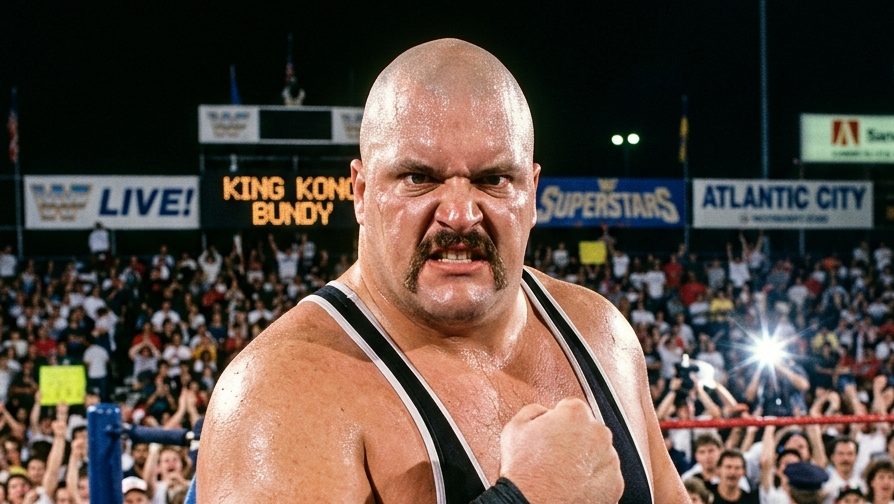
King Kong Bundy: The WWF Giant Who Shook Wrestling History

King Kong Bundy was one of the most imposing figures in professional wrestling history. Here’s a quick snapshot:
| Detail | Info |
|---|---|
| Real Name | Christopher Alan Pallies |
| Born | November 7, 1957, Atlantic City, NJ |
| Died | March 4, 2019 (aged 61), Glassboro, NJ |
| Height | 6 ft 4 in (193 cm) |
| Weight | Billed at 458 lb (208 kg) |
| Signature Move | The Avalanche Splash |
| Most Famous Match | Steel cage vs. Hulk Hogan, WrestleMania 2 (1986) |
| Cause of Death | Diabetes complications |
At 458 pounds, Bundy was the kind of wrestler who didn’t just win matches — he ended them. Commentator Gorilla Monsoon famously called him a “walking condominium,” and it wasn’t hard to see why.
He headlined WrestleMania 2, appeared in Married… with Children, and built a legacy that stretched far beyond the squared circle. His career ran from 1981 to 2007, touching every major era of professional wrestling.
Whether you remember him for his devastating Avalanche Splash, his five-count pin demands, or his villainous sneer, Bundy left a mark on pop culture that lasted long after his final match.

The Early Life and Physical Stature of King Kong Bundy
Before he was the “walking condominium” terrorizing the World Wrestling Federation (WWF), king kong bundy was Christopher Alan Pallies. Born on November 7, 1957, in Atlantic City, New Jersey, Pallies grew up with the kind of natural size that made a career in athletics almost inevitable.
Atlantic City is just a stone’s throw from our home base in New York City, and it was in this Northeast corridor that the legend of Bundy began to take shape. Even in high school, his physical presence was undeniable. He was a standout on the wrestling team, graduating from Washington Township High School in 1974. You can actually find early life and high school wrestling background records that show he was honing his grappling skills long before the bright lights of WrestleMania.
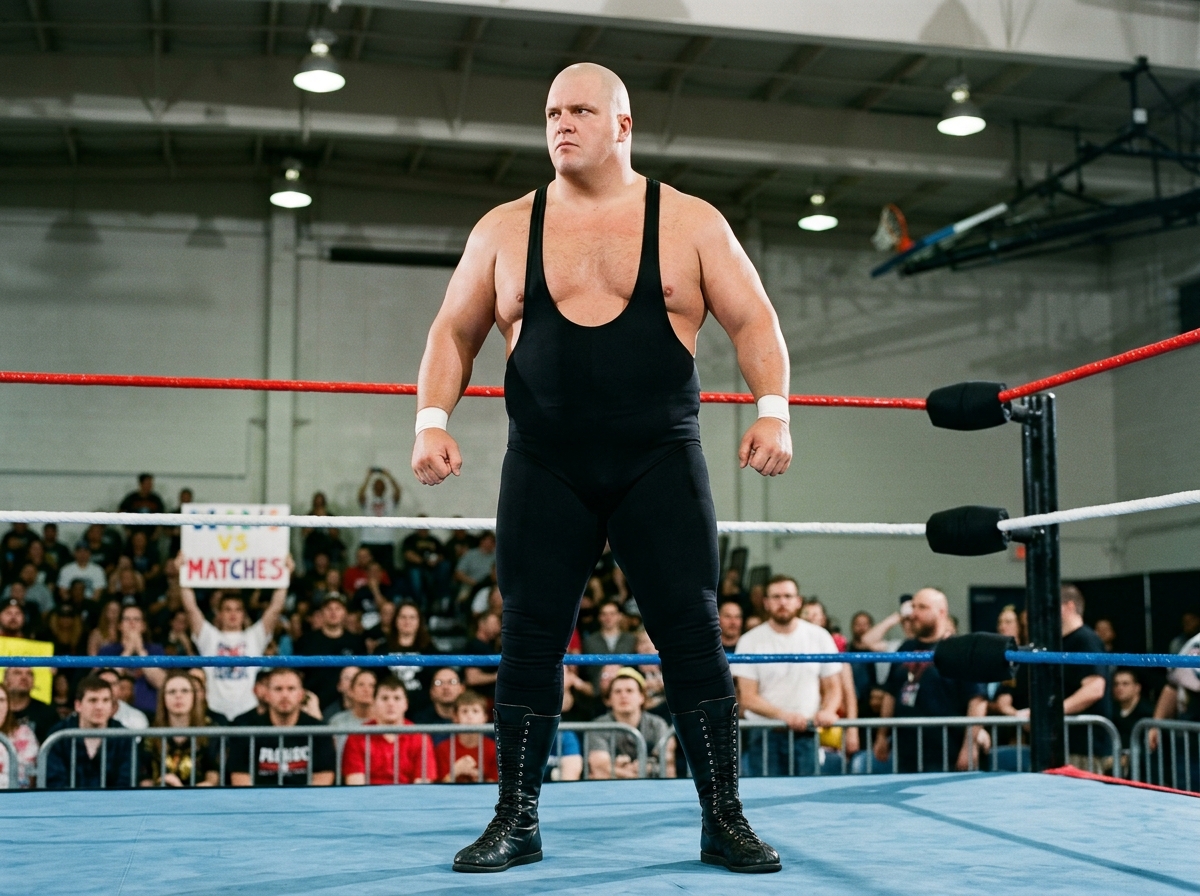
The Making of a Monster
To turn that raw size into professional polish, Pallies headed to the world-renowned “Monster Factory” in New Jersey. Under the tutelage of the legendary Larry Sharpe, he learned the “big man” style of wrestling—how to move his massive frame to maximize impact without injuring his opponents (most of the time).
Standing 6’4″ and weighing in at a billed 458 pounds—though he reportedly tipped the scales closer to 502 pounds at certain points in his career—he was a physical marvel. His look was iconic: a completely shaved head, a massive hairless chest, and a simple black singlet that made him look like a giant, unstoppable boulder.
| Stat Category | Billed Stats | Real-World Estimates |
|---|---|---|
| Height | 6’4″ | 6’4″ |
| Weight | 458 lbs | 440 – 502 lbs |
| Nickname | Walking Condominium | The Big Palooka |
| Training | Monster Factory | Larry Sharpe |
A Legendary Professional Wrestling Career
The journey of king kong bundy didn’t start at the top. Like many legends, he paid his dues in the territorial system. He originally competed under the name “Big Daddy Bundy,” a play on the famous British wrestler Big Daddy. However, it wasn’t until he turned “heel” (a wrestling villain) that his career truly exploded.
In the early 1980s, he moved through various promotions, including World Class Championship Wrestling (WCCW). It was here that he dropped the “Big Daddy” moniker in favor of the more aggressive king kong bundy. During this era, he established himself as a dominant force, securing the NWA American Heavyweight Title and making a name for himself as a man who could dismantle an entire roster.
The Five-Count Gimmick
One of Bundy’s most unique traits was his demand for a “five-count.” In professional wrestling, a pinfall usually requires the referee to count to three. Bundy, wanting to prove his total dominance over his “squashed” opponents, would demand that the ref count to five. This simple but effective bit of psychology made him stand out as an arrogant, unstoppable force. He also found success in the tag team division, adding to the Southern Tag Team Title history during his time in the Memphis territory.
The Golden Era: King Kong Bundy in the WWF (1985–1988)
When king kong bundy arrived in the WWF in 1985, he was treated as a top-tier monster. His debut at the very first WrestleMania is still talked about today. He faced “Special Delivery” Jones and defeated him in what was announced as a record-breaking nine seconds (though actual timing suggests it was closer to 17). Regardless of the stopwatch, the message was clear: Bundy was here to stay.
Managed by the legendary Bobby “The Brain” Heenan, Bundy became a cornerstone of the Heenan Family. He was the perfect foil for the era’s biggest heroes, most notably Hulk Hogan.
WrestleMania 2: The Steel Cage Showdown
The peak of Bundy’s career came at WrestleMania 2 in 1986. In the only WrestleMania main event to take place inside a steel cage during that era, Bundy challenged Hulk Hogan for the WWF World Heavyweight Championship.
The build-up was intense. On Saturday Night’s Main Event, Bundy had “broken” Hogan’s ribs with a series of splashes, forcing the Hulkster to wrestle the match with heavy bandages. While Hogan ultimately won the match to retain his title, Bundy proved he belonged in the main event spotlight. For those looking back at the history of the “Show of Shows,” the WrestleMania 2 Steel Cage Match remains a definitive moment for 80s wrestling.
Feuds with Giants and Midgets
Bundy’s WWF run wasn’t just about Hogan. He had a massive feud with André the Giant, where the two behemoths collided in a battle of the titans. Bundy even claimed to have “broken” André’s sternum during one of their encounters.
However, not every moment was a serious title hunt. At WrestleMania III, Bundy was involved in a mixed tag team match featuring midget wrestlers. In a moment that shocked the crowd, Bundy delivered an elbow drop to the 4-foot-tall Little Beaver. This led to a disqualification and, unfortunately, contributed to Little Beaver’s real-life retirement due to back injuries. Despite his villainous persona, Bundy later expressed regret over the incident, showing a softer side to the man behind the monster.
He capped off his first WWF run by headlining the inaugural Survivor Series in 1987, proving his value as a reliable “main event” attraction.
The Return and Late Career of King Kong Bundy
After a few years away from the spotlight—during which he pursued acting and semi-retirement—Bundy returned to the WWF in 1994. This time, he wasn’t with Heenan; he was a key member of Ted DiBiase’s “Million Dollar Corporation.”
While he was a bit older, he was no less menacing. He entered a high-profile feud with The Undertaker, leading to a match at WrestleMania XI. Although Bundy lost, he became a permanent part of wrestling history as the fourth victim in The Undertaker’s legendary 21-0 WrestleMania streak.
Throughout the mid-90s, Bundy remained a respected veteran, frequently appearing in the PWI 500 rankings. After leaving the WWF for the final time in 1995, he spent the next decade on the independent circuit. He continued to draw huge crowds at fan conventions and small-town shows, eventually wrestling his final match in 2007 against Richard Byrne.
Beyond the Ring: Acting and Stand-Up Comedy
We love a good crossover story, and king kong bundy was one of the first wrestlers to successfully transition into mainstream entertainment. His look was so distinct that casting directors couldn’t get enough of him.
His most famous role was on the hit sitcom Married… with Children. In a clever nod to his wrestling name, the creators named the main family “The Bundys” after him. Christopher Pallies appeared on the show twice: once as Peggy Bundy’s brother, Uncle Irwin, and once as himself. Seeing a 458-pound giant trading quips with Al Bundy was comedy gold.
Film and Commercials
Bundy’s official acting credits and filmography include several notable roles. He played “Gorgo” in the 1988 Richard Pryor comedy Moving, and later appeared in the independent film Fight the Panda Syndicate.
He was also a pitchman. One of his most memorable commercial spots was for Vendex computers. In the ad, Bundy—clad in his wrestling gear—threatened to “squash” anyone who didn’t buy a Vendex. It was a perfect use of his “Walking Condominium” persona to sell home electronics.
The Comedy Stage
Perhaps the most surprising chapter of his post-wrestling life was his career in stand-up comedy. Starting around the late 2000s, Bundy began performing at comedy clubs across the country, particularly in the New Jersey and New York areas.
He wasn’t just a “celebrity guest” either; he took the craft seriously. He often joked about his size, his wrestling career, and the absurdities of life as a giant. Many fans were surprised to find that the man who spent decades snarling at cameras was actually incredibly witty and charming. You can read more about the transition from wrestling to comedy to see how he won over audiences with a microphone instead of an elbow drop.
Personal Life, Legacy, and Controversies
Behind the scenes, Christopher Pallies was known as a private and often misunderstood individual. While his wrestling persona was that of a “pugnacious villain,” friends described him as a dry-witted man who loved his quiet life in New Jersey.
A Surprising Soft Spot
One of the most heartwarming details about Bundy was his love for animals—specifically cats. At the time of his death, he reportedly owned about ten cats. After his passing, the wrestling community rallied together to ensure King Kong Bundy’s love for cats lived on by finding them all new, loving homes. It’s a touching legacy for a man who spent his life being the “bad guy.”
Legal Battles and Health
Bundy’s later years were marked by some friction with the WWE. In 2016, he joined a class-action lawsuit against the company. The suit alleged that the WWE had concealed the risks of traumatic brain injuries and long-term neurological damage. While the concussion and CTE litigation was eventually dismissed by a judge, it created a rift between Bundy and the organization he helped build.
This tension is often cited as the reason why Bundy—despite being one of the most famous wrestlers of the 80s—has yet to be inducted into the WWE Hall of Fame. Many fans and peers, including Mick Foley, have called this a major snub that needs to be corrected.
Final Days
On March 4, 2019, the wrestling world lost a giant. Christopher Pallies passed away at the age of 61 due to complications from diabetes. His death prompted an outpouring of tributes from across the globe, with legends like Hulk Hogan and Triple H acknowledging his massive impact on the industry.
Frequently Asked Questions about King Kong Bundy
What was King Kong Bundy’s real name?
His real name was Christopher Alan Pallies. He was born in Atlantic City and spent most of his life in New Jersey.
How fast was his famous WrestleMania I win?
The official WWF time was 9 seconds, which stood as a record for many years. However, if you watch the tape with a stopwatch, the match actually lasted about 17 seconds. Still, it remains one of the fastest and most dominant victories in WrestleMania history.
Did King Kong Bundy ever win the WWF Championship?
Surprisingly, no. Despite headlining WrestleMania 2 and being a perennial top contender, Bundy never held the WWF World Heavyweight Championship. He did, however, win numerous regional titles in the NWA and AWA.
Conclusion
The legacy of king kong bundy is as massive as the man himself. He was a bridge between the old-school territorial days and the modern era of sports entertainment. He showed that a “monster heel” could be more than just a scary face—he could be a pop culture icon, a comedic actor, and a beloved figure to those who knew him best.
At R. Couri Hay Creative Public Relations, we deal with the biggest names in luxury, lifestyle, and celebrity news. We understand the power of a “larger-than-life” brand, and few brands were larger than Bundy’s. Whether he was headlining a stadium or cracking jokes in a comedy club, he lived life on his own terms.
Though he may no longer be with us, the image of that 458-pound giant in a black singlet, demanding a five-count, will forever be etched in the history of professional wrestling. For more on the icons who shaped our culture, be sure to check out more celebrity news and gossip on our site.