
Danny McBride has carved out one of the most distinctive lanes in modern comedy. With his gravelly voice, mullet-ready presence in early roles, and unmatched ability to make arrogant, self-sabotaging characters strangely magnetic, he has become a defining voice of irreverent, character-driven humor. From indie breakthroughs to HBO mainstays and big-screen supporting turns, Danny McBride’s career blends raunch, vulnerability, and sharp writing in a way few performers match.
This deep dive explores the life, work, and lasting impact of Danny McBride, covering his Southern roots, key collaborations, signature roles, and why audiences keep coming back to his larger-than-life yet deeply human creations.
Early Life and Southern Roots
Daniel Richard McBride was born on December 29, 1976, in Statesboro, Georgia. His family later settled in the Fredericksburg and Spotsylvania County area of Virginia, where he spent much of his childhood. Raised in a Baptist household, McBride has spoken about how church shaped his early storytelling instincts. His mother, Kathy, performed puppet ministry sermons for children, an experience he has credited with sparking his interest in narrative and performance.
McBride’s ancestry includes Irish, Scottish, English, and Jewish roots. Family life involved moves tied to work (including connections to Marine Corps Base Quantico through his mother and stepfather), and he has described a relatively grounded upbringing. He attended Courtland High School, where he was involved in activities that hinted at a future in performance and creativity.
After high school, McBride enrolled at the University of North Carolina School of the Arts in Winston-Salem. There he studied filmmaking and formed lifelong creative partnerships with classmates including Jody Hill, David Gordon Green, and Ben Best. These friendships would become the foundation of his career. The group’s shared sensibility, rooted in Southern culture, observational humor, and a willingness to push boundaries, later defined projects under their Rough House Pictures banner.
Before full-time Hollywood success, McBride worked various jobs, including as a substitute teacher. He has noted that real-life experiences with ordinary people and settings informed the authenticity he brings to even his most outrageous characters.
Breakthrough with The Foot Fist Way and Early Film Roles
McBride’s screen debut came in 2003 with a supporting role in David Gordon Green’s All the Real Girls. The indie drama marked the start of a long collaboration with Green. His true breakthrough arrived with The Foot Fist Way (2006). Co-written with Jody Hill and Ben Best, the low-budget mockumentary-style comedy cast McBride as Fred Simmons, a delusional strip-mall taekwondo instructor whose ego far exceeds his abilities.
Shot quickly on a modest budget in North Carolina, the film premiered at Sundance and generated strong buzz. Comedians and actors including Will Ferrell took notice. Ferrell’s production company helped get it wider attention, opening doors for McBride in mainstream comedy. The role established the template he would refine for years: the self-important underdog whose confidence is both ridiculous and oddly compelling.
Supporting turns followed in films such as Hot Rod (2007), The Heartbreak Kid, and Superbad. 2008 proved pivotal. In Pineapple Express, McBride played Red, the soft-hearted, stoner drug dealer whose loyalty and chaos drove key sequences. In Tropic Thunder, he appeared as Cody Underwood, the special-effects pyromaniac. These performances showcased his gift for physical comedy, improvisation, and making supporting characters unforgettable.
Other film work included Land of the Lost (2009), a dramatic turn in Up in the Air (2009) opposite George Clooney, the fantasy comedy Your Highness (which he co-wrote), This Is the End (playing a heightened version of himself), and later roles in Alien: Covenant (2017) and voice work in animated features. Voice credits include Despicable Me, Kung Fu Panda 2, The Angry Birds Movie films, Sausage Party, and The Mitchells vs. the Machines. He also contributed writing and producing to the Halloween reboot trilogy directed by David Gordon Green.
HBO Dominance: Eastbound & Down, Vice Principals, and The Righteous Gemstones
Television elevated Danny McBride from scene-stealer to creator and star. His first major series, Eastbound & Down (2009–2013), co-created with Jody Hill, starred him as Kenny Powers, a washed-up major league pitcher with explosive anger issues who returns home as a middle-school gym teacher. The HBO comedy mixed crude humor with surprising pathos across four seasons. Powers became a cultural touchstone, quotable, offensive, and somehow sympathetic in his endless self-destruction and occasional growth.
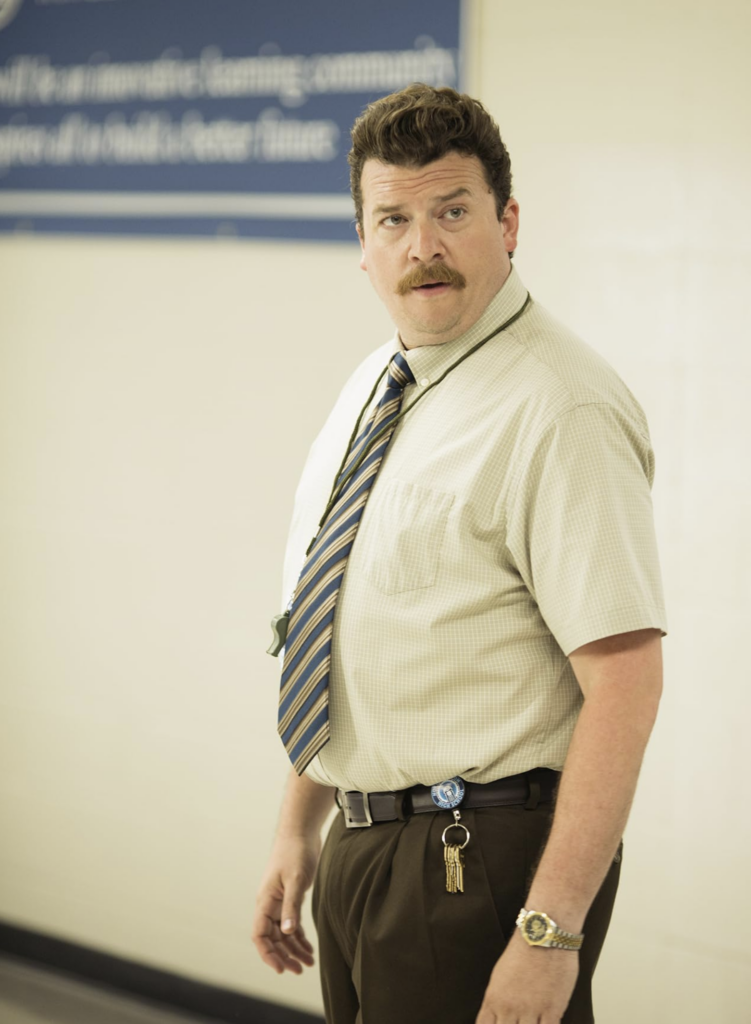
Vice Principals (2016–2017) continued the collaboration with Hill. McBride played Neal Gamby, an ambitious and deeply flawed high-school vice principal locked in a power struggle. Walton Goggins co-starred as his rival, and the series delivered dark, escalating comedy about status, resentment, and institutional dysfunction. McBride also directed episodes. The show was intentionally limited in scope, with a clear two-season arc.
His most expansive project, The Righteous Gemstones (2019–2025), was created by McBride and followed the dysfunctional Gemstone family of televangelists. He starred as Jesse Gemstone, the eldest son navigating greed, faith, family rivalry, and scandal alongside co-stars John Goodman, Edi Patterson, Adam DeVine, and Walton Goggins. Filmed largely in the Charleston, South Carolina area, the series blended satire of megachurch culture with soap-opera elements, action, and McBride’s signature mix of vulgarity and heart. It ran for multiple seasons and earned critical praise for its ensemble work and ambitious storytelling. McBride has described the difficulty of ending a project he poured so much into, while also expressing interest in new creative directions.
Across these HBO series, recurring themes emerge: Southern settings, characters whose bravado masks insecurity, and humor that refuses easy moralizing. Collaborators like Hill and Green appear frequently both behind and in front of the camera. McBride’s production company, Rough House Pictures (with Green and Hill), has been central to this body of work. He has also executive-produced projects such as the documentary series Telemarketers, which earned Emmy recognition.
Collaborations, Style, and Industry Impact
McBride’s creative circle from film school has proven remarkably enduring. The “Danny McBride Multiverse” of overlapping casts and tones rewards longtime fans while remaining accessible. His writing often receives credit as Danny R. McBride. Early in his career he used the middle initial for Screen Actors Guild reasons; he later dropped it for acting credits.
His style favors anti-heroes who are selfish, loud, and frequently wrong yet human enough to earn investment. Critics and audiences have noted how he humanizes characters others might dismiss as pure caricature. This approach has influenced a wave of dark, character-focused comedies. Awards recognition includes Satellite Award nominations for his television work and other industry nods, reflecting both commercial success and peer respect.
Beyond comedy, McBride has taken dramatic and genre risks, proving range while remaining best known for humor. He has appeared in commercials and maintained a relatively low public profile compared to some peers, focusing on work and family.
Personal Life
Danny McBride married art director Gia Ruiz in 2010 (some reports note October 9 or 15). The couple has two children: a son, Declan George (born around 2011), and a daughter. McBride has spoken about the challenges of balancing demanding shoots with family life, including a period of reflection during the filming of Alien: Covenant in Australia that contributed to relocating closer to Southern production bases. The family has lived in the Charleston area for several years, aligning with filming locations for his later series. Ruiz’s uncle is comedian Cheech Marin.
McBride keeps personal details relatively private but has shared that his Southern upbringing and family experiences continue to inform his writing. He has described maintaining friendships from his early career and valuing creative partnerships that feel like extended family.
Why Danny McBride Endures
In an entertainment landscape often dominated by polished heroes or pure cynicism, Danny McBride occupies valuable middle ground. His characters fail spectacularly, offend freely, and occasionally surprise with moments of sincerity or growth. Projects like Eastbound & Down and The Righteous Gemstones demonstrate that audiences respond to flawed people rendered with specificity and craft.
His path, from Georgia birth and Virginia upbringing through film school collaborations to HBO success and film roles, illustrates the power of persistent creative circles and a clear comedic point of view. Whether as Kenny Powers raging against mediocrity, Jesse Gemstone navigating family empire drama, or a scene-stealing supporting player in a stoner comedy, McBride consistently delivers performances that feel lived-in and unpredictable.
As he continues exploring new projects after The Righteous Gemstones, Danny McBride remains a vital force in comedy. Fans seeking bold, unapologetic humor with Southern flavor and unexpected depth will find plenty to revisit and celebrate in his growing body of work. From The Foot Fist Way to the Gemstone family’s final chapters, his career stands as a testament to the lasting appeal of characters who are as ridiculous as they are real.