


Oliver Tree, the American singer-songwriter known for hits like “Life Goes On” and “Miss You,” died at age 32 in a helicopter collision in Rio de Janeiro, Brazil, on June 14, 2026. In the months since, searches for “Oliver Tree autopsy” have surged as fans seek clarity on the cause of death, the condition of his remains, and the official findings.
Authorities have released no detailed public autopsy report that points to anything beyond fatal injuries from the crash itself. Brazilian officials and family statements focus on the identification process rather than granular medical findings.
The Helicopter Crash That Claimed Oliver Tree’s Life
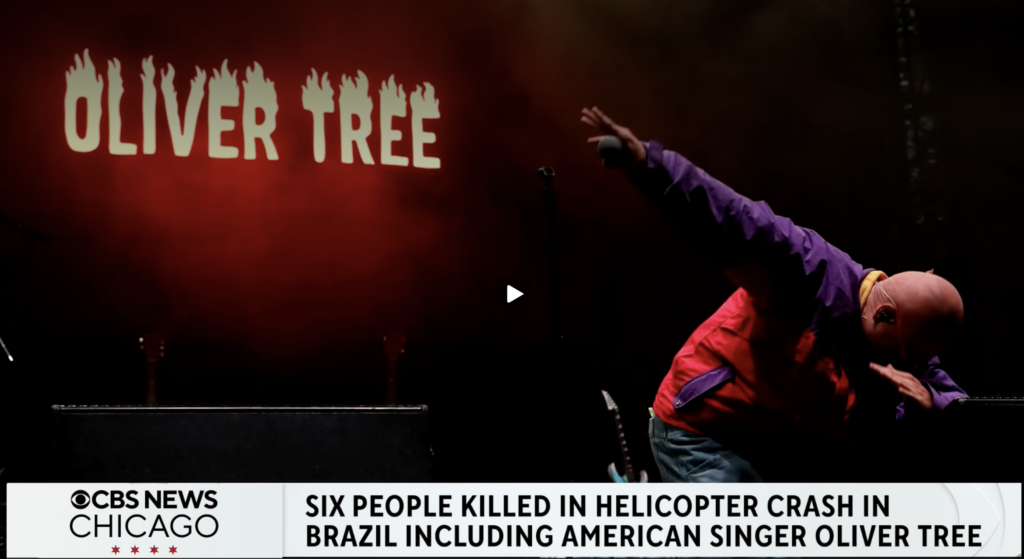
On the morning of June 14, 2026, two helicopters collided mid-air over the Recreio dos Bandeirantes neighborhood in Rio’s West Zone. Tree rode as a passenger in one of the aircraft (a Bell 206 JetRanger) along with Argentine YouTuber Gaspar Prim Díaz (known as Gaspi), Argentine film director Lucas A. Vignale, Brazilian music producer Lucas Brito Chaves (or Lucas Frota in some reports), and pilot Alexandre Souza. The second helicopter carried only its pilot, Charles Marsillac. All six people died.
One aircraft crashed into a car dealership parking lot and triggered a large fire that damaged multiple vehicles. Tree was touring Brazil in support of his final album, Love You Madly Hate You Badly, which he released independently in April 2026 after a public split from Atlantic Records. He performed in São Paulo on June 6.
Oliver Tree Autopsy and Identification Challenges
The post-crash fire severely burned the remains—reports describe them as carbonized. This damage made visual identification impossible and delayed formal confirmation for Tree compared to the other victims.
Brazilian authorities at the Instituto Médico-Legal (IML) and the 42nd Police Station confirmed Tree’s identity with dental records and medical history from the United States. Radiological analysis of the dental arch played a key role. Investigators identified Tree as the last of the six victims, with confirmation reported around June 16–17, 2026.
Official statements and family communications indicate no public autopsy findings that suggest foul play, poisoning, or causes unrelated to the traumatic injuries and fire from the collision. Brazil’s Aeronautical Accidents Investigation and Prevention Center (CENIPA) and local police continue investigating the mid-air collision, with preliminary indications pointing toward possible human error rather than mechanical failure or external factors. Authorities have confirmed no evidence of criminal activity.
Officials later repatriated Tree’s remains to California. An official Instagram post from his account confirmed the return of his body and shared a remembrance that noted his final wish related to spreading joy, love, and art through a planned foundation.
Addressing Online Speculation and Conspiracy Theories
The difficult identification process and the artist’s distinctive public persona fueled online rumors. Some claimed he faked his death, that the crash was staged, or that hidden autopsy results pointed to murder or other causes. These theories circulate widely but lack supporting evidence from authorities or the family. Brazilian police, aviation investigators, and official confirmations attribute the deaths to the collision and resulting fire. Family statements and the repatriation of remains further contradict hoax narratives.
Oliver Tree’s Career and Legacy
Born Oliver Tree Nickell on June 29, 1993, in Santa Cruz, California, Tree built a career that blended alternative pop, hip-hop, and eccentric visuals. He rose with viral tracks, signed to Atlantic, and released albums including Ugly Is Beautiful (2020), Cowboy Tears (2022), Alone in a Crowd (2023), and his final project Love You Madly Hate You Badly (2026). His music mixed humor, vulnerability, and high-energy production and earned a dedicated global following.
In the wake of his death, streams of songs like “Life Goes On” surged as fans revisited his catalog. His family and representatives emphasize continuing his creative spirit through planned initiatives.
As of late September 2026, the aviation investigation remains ongoing, and authorities have released no additional detailed autopsy or forensic reports beyond the identification process and crash-related trauma. Fans seeking updates should turn to official family statements and verified news sources rather than unverified social media claims.
Oliver Tree’s music and unconventional approach left a lasting mark. The focus remains on remembering his work while respecting the facts that authorities confirmed about the circumstances of his death.
Oliver Tree Autopsy FAQs
What were the Oliver Tree autopsy results?
No detailed public autopsy report has been released. Official information confirms that Tree died from injuries sustained in the helicopter collision and subsequent fire. There are no published findings indicating any cause of death beyond trauma related to the crash.
Was an autopsy performed on Oliver Tree?
Yes. As with all victims of the crash, forensic examination was carried out by Brazilian authorities at the Instituto Médico-Legal (IML). However, the primary public focus has been on the identification process rather than a full release of autopsy details.
How was Oliver Tree identified after the crash?
Due to the severe burning of the remains (described as carbonized), visual identification was not possible. Authorities used dental records and medical history sent from the United States, including radiological analysis of the dental arch. Tree was the last of the six victims to be formally identified.
What was the official cause of death in the Oliver Tree autopsy?
The cause of death is attributed to fatal injuries from the mid-air helicopter collision and the intense post-crash fire. No public documents have suggested alternative causes such as foul play or pre-existing medical conditions.
Why was the Oliver Tree autopsy and identification delayed?
The extreme thermal damage from the fire made traditional identification methods impossible. Investigators required time to obtain and compare U.S. dental and medical records, which delayed formal confirmation compared to the other victims.
Is there a public Oliver Tree autopsy report available?
No. As of September 2026, no full autopsy report or detailed forensic findings beyond the identification process and confirmation of crash-related injuries have been released to the public.
Did the Oliver Tree autopsy rule out murder or foul play?
Yes. Brazilian authorities and investigators have found no evidence supporting claims of murder, staging, or other non-accidental causes. The official investigation centers on the circumstances of the helicopter collision, with early indications pointing to possible human error.