

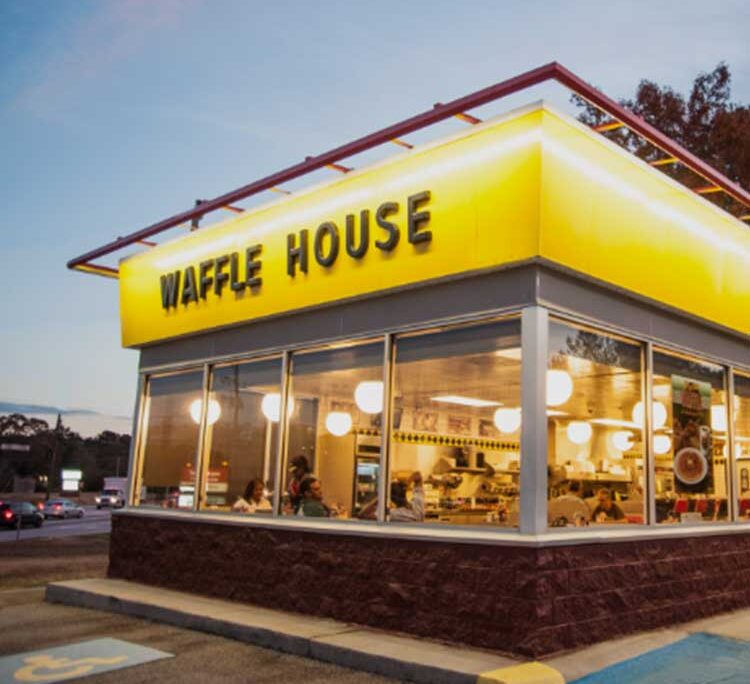
Few restaurant chains occupy the same cultural space as Waffle House. For millions of Americans, especially across the South and Midwest, the bright yellow sign is more than a place to eat — it is a reliable landmark, a late-night refuge, a post-concert gathering spot, a hurricane recovery indicator, and a consistent source of affordable comfort food available every hour of every day. With more than 2,000 locations in 25 states and a history stretching back to 1955, Waffle House has earned its status as a genuine American institution.
The Origins of Waffle House: A Simple Idea That Endured
Waffle House began on Labor Day weekend in 1955 when Joe Rogers Sr. and Tom Forkner opened the first location at 2719 East College Avenue in Avondale Estates, Georgia, a quiet suburb just east of Atlanta. Rogers had restaurant experience managing short-order diners, while Forkner worked in real estate. The two neighbors decided their community needed a place that served good food quickly and stayed open around the clock.
They chose the name Waffle House because waffles were the most profitable item on the original 16-item menu. The concept was straightforward: offer table service in a casual setting, keep the doors open 24 hours a day, and focus on Southern breakfast staples prepared to order. The first year produced modest results — about $50,000 in sales and a small staff — but the idea clearly resonated.
By the end of the 1960s the company had expanded to dozens of locations. Growth continued steadily through the following decades. Today the original Avondale Estates restaurant no longer serves food as a regular Waffle House; instead it operates as the Waffle House Museum, where visitors can tour the restored space and see historical artifacts by appointment. Across the street sits a modern location that continues the legacy.
Waffle House remains privately held. It is headquartered in Norcross, Georgia, and employs approximately 40,000 people. Unlike many national chains that rely heavily on franchising, the company has maintained significant control over operations to preserve consistency in food quality, service style, and the overall experience.
The Waffle House Menu: Simple, Customizable, and Timeless
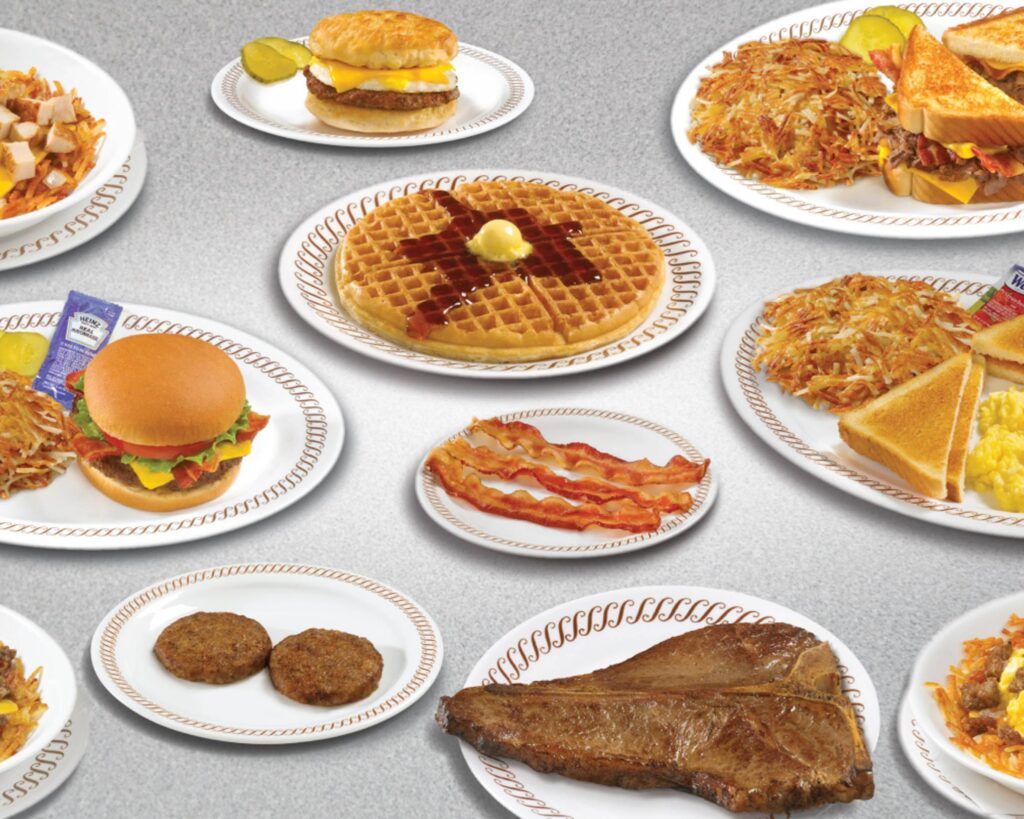
One of the most remarkable aspects of Waffle House is how little the core menu has changed. While occasional limited-time items appear, the foundation remains the same Southern comfort food that has been served for generations. Breakfast is available all day, and the restaurant also offers sandwiches, steaks, and other diner classics.
The Famous Waffles
The namesake waffle is made from a proprietary mix that includes eggs and half-and-half, giving it a distinctive sweet, slightly rich flavor and tender texture. Guests can order the classic plain waffle or add pecans for extra crunch. Toppings such as butter, syrup, and whipped topping complete the experience. Waffle House serves hundreds of millions of waffles each year, and the recipe has remained a closely guarded point of pride.
Hash Browns: The True Signature Item
Ask most regulars what defines Waffle House and they will mention the hash browns. These shredded potatoes are cooked on a flat-top grill and can be customized with an extensive system of toppings and preparations that has developed its own unique vocabulary.
The classic terms include:
- Scattered — spread out on the grill for maximum crispiness
- Smothered — topped with grilled onions
- Covered — topped with melted American cheese
- Chunked — with diced ham
- Diced — with tomatoes
- Peppered — with jalapeños
- Capped — with grilled mushrooms
- Topped — with chili
- Country — covered in sausage gravy
Guests can combine these options in nearly endless ways. Ordering “scattered, smothered, and covered” has become a cultural shorthand for the classic preparation. Hash brown bowls offer another popular variation that packages the potatoes with various mix-ins.
The All-Star Special and Other Favorites
The All-Star Special remains one of the most ordered items. It typically includes a waffle, two eggs cooked to order, toast, hash browns or grits, and a choice of bacon, sausage, or ham. Other popular choices include Cheese ’n’ Eggs, Texas melts served on thick toast, T-bone steaks, and various egg platters. Coffee is a constant presence, with the chain going through millions of pounds of beans annually.
Prices have risen over the decades, yet Waffle House continues to deliver strong value. Many full meals remain accessible compared with other sit-down options, which helps explain the chain’s broad appeal across age groups and income levels.
The Culture of Waffle House: More Than Just Food
Waffle House is famous for its atmosphere as much as its menu. The open kitchen design lets customers watch cooks work the grill in real time. Orders are called out loudly and clearly. The jukebox (or digital equivalent) often plays a mix of country, rock, and classic hits. Staff members develop long-term relationships with regulars, and many locations function as informal community hubs.
The restaurant has inspired its own folklore. Stories about dramatic late-night scenes, celebrity visits, and memorable customer interactions circulate widely online and in conversation. The chain has even appeared in songs, television shows, films, and stand-up comedy routines. Its no-frills honesty and consistency give it a blue-collar authenticity that many larger brands struggle to match.
Valentine’s Day has become an unexpected tradition at participating locations. Some restaurants transform with decorations, special table settings, and heart-shaped hash browns, turning an ordinary night into a playful date-night experience that draws couples year after year.
The Waffle House Index: An Unofficial Measure of Disaster Severity
One of the most fascinating aspects of Waffle House culture is its role in emergency response. Former FEMA administrator Craig Fugate popularized the “Waffle House Index” after observing that the restaurants rarely close and often remain open during severe weather when other businesses shut down.
The informal scale works as follows:
- Green — The location is open and serving the full menu. Basic infrastructure is largely intact.
- Yellow — The restaurant is open but operating on a limited menu, often powered by generators. Power, water, or supply issues may exist in the surrounding area.
- Red — The location is closed. Conditions are severe enough that even this resilient business cannot operate safely.
Because Waffle House locations are widespread across storm-prone regions of the South, the index provides a quick, practical signal of conditions on the ground. Emergency managers and residents alike have referenced it during hurricanes and other major weather events. The company itself activates internal storm centers and carefully plans operations when severe weather approaches.
This reliability has reinforced Waffle House’s reputation as a dependable presence in both everyday life and difficult times.
Where to Find Waffle House and What the Numbers Reveal
Waffle House operates in 25 states, with the heaviest concentration in the Southeast. Georgia leads by a wide margin with more than 400 locations, followed by strong numbers in Florida, North Carolina, South Carolina, Tennessee, Alabama, Texas, and other Southern and Midwestern states. The chain has expanded carefully rather than chasing rapid national coverage, which has helped maintain operational standards.
Annual statistics illustrate the scale of the operation. Waffle House serves hundreds of millions of eggs, hash brown orders, and waffles every year. These volume figures underscore both the popularity of the brand and the efficiency of its systems.
Why Waffle House Continues to Thrive
Several factors explain the lasting success of Waffle House in a competitive restaurant industry:
- Consistency — The core menu and experience remain recognizable across locations and decades.
- Accessibility — 24-hour service and relatively affordable prices remove barriers for many customers.
- Customization — The hash brown system and made-to-order approach give guests a sense of control.
- Cultural resonance — The brand has become woven into Southern identity and broader American popular culture.
- Operational resilience — The ability to stay open during challenging conditions builds trust and loyalty.
- People-focused approach — Founders emphasized that the company is in the “people business,” a philosophy that still shapes service culture.
While many restaurant concepts chase trends, Waffle House has largely stuck to what works. Occasional menu experiments appear, but the fundamentals stay intact. That steadiness has proven to be a competitive advantage.
Tips for the Best Waffle House Experience
First-time visitors and seasoned regulars alike can enhance their visit with a few practical tips. Arrive during off-peak hours if you prefer a quieter atmosphere, though the energy of a busy late-night shift is part of the charm for many people. Learn the hash brown vocabulary so you can order with confidence. Try the All-Star Special if you want the classic full experience. Bring cash in case a location has temporary card issues, although most now accept electronic payments. Most importantly, treat the staff with respect — the open kitchen and close quarters make positive interactions especially meaningful.
Many locations sit near interstate highways, making them convenient stops for road trips. Others serve as neighborhood anchors where locals gather regularly. Both roles contribute to the brand’s enduring presence.
The Enduring Appeal of Waffle House in 2026 and Beyond
Seventy years after its founding, Waffle House remains remarkably true to its original vision. The yellow signs still light up the night, the grills still sizzle, and the coffee is still poured by the pot. In an era of rapid change in the restaurant industry, the chain’s commitment to simplicity, reliability, and accessibility continues to resonate.
Whether you stop in for a quick meal after a long drive, celebrate a milestone with heart-shaped hash browns, or simply enjoy the familiarity of a well-prepared waffle and eggs, Waffle House delivers a consistent experience that few other brands can match. It is more than a restaurant. It is a cultural touchstone that has earned its place in American life through decades of quiet, dependable service.
The next time you see that familiar yellow sign, you will know you are not just visiting a diner. You are stepping into a living piece of American restaurant history — one that remains open, welcoming, and ready to serve at any hour of the day or night.
Visit your local Waffle House to experience the classic menu and atmosphere for yourself. Good food, fast service, and a uniquely American tradition await.
Also read: WingStop Locations Near you