
Dollar General Corporation (NYSE: DG) stands as one of America’s largest discount retailers, serving rural and suburban communities with everyday low prices on essential goods. With thousands of stores across the United States, Dollar General has carved a unique niche by focusing on convenience, value, and accessibility where larger competitors often overlook. This comprehensive 2026 company research guide examines Dollar General’s business model, financial performance, growth strategies, competitive landscape, and future outlook.
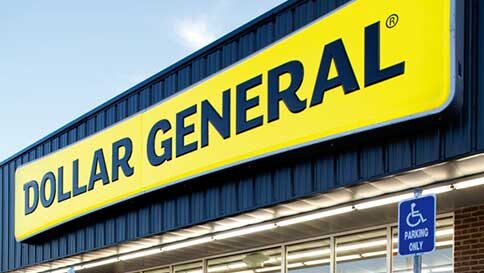
Whether you’re an investor analyzing retail stocks, a student researching discount retailing, or a consumer curious about the company behind the familiar yellow-and-black signage, this analysis provides clear, actionable insights into Dollar General’s operations and trajectory.
Company Overview and History
Dollar General traces its roots to 1939 when J.L. Turner and his son Cal Turner Sr. opened the first store in Scottsville, Kentucky. Originally focused on dry goods and basic necessities, the company formalized as Dollar General in 1955 and went public in 1968. After a period of private ownership, it re-listed on the NYSE in 2009.
Today, Dollar General operates approximately 20,000 stores in 47 states, primarily in small towns and underserved markets. The company’s mission centers on “Serving Others” by providing affordable essentials close to home. Its “DG Easy” store format emphasizes quick shopping trips for groceries, household items, apparel, and seasonal goods.
Dollar General’s private brands (e.g., Clover Valley, DG Home) play a significant role in driving margins and customer loyalty. The retailer has expanded into fresh produce, frozen foods, and health & beauty categories to capture more of the weekly shopping trip.

Business Model and Revenue Streams
Dollar General’s success relies on a lean, efficient operating model tailored to its core customer base:
- Convenience Focus: Smaller store footprints (typically 7,000–10,000 square feet) enable placement in smaller communities.
- Everyday Low Prices: Emphasis on value across consumables (the largest category), seasonal, apparel, and home products.
- Private Label Growth: Higher-margin owned brands reduce reliance on national suppliers.
- Omnichannel Efforts: DG Pickup, delivery partnerships, and e-commerce expansion complement physical stores.
Revenue primarily comes from same-store sales growth, new store openings, and category expansion. In recent years, Dollar General has accelerated fresh and refrigerated offerings to compete more directly with traditional grocery retailers. The company also tests larger “Dollar General Market” formats in select locations.
Financial Performance in 2026
Dollar General has shown resilience amid economic pressures, though it faces margin challenges from inflation and wage costs. Key highlights include:
- Revenue Growth: Driven by new store openings and comparable store sales.
- Margins: Pressure from higher product costs and labor expenses, partially offset by private brand mix and efficiency initiatives.
- Store Count: Consistent expansion targeting 1,000+ net new stores annually in recent plans.
- Cash Flow and Capital Return: Strong free cash flow supports dividends, share repurchases, and reinvestment.
Analysts monitor same-store sales closely, as comp growth indicates health in existing locations. Dollar General’s rural and small-town focus provides some insulation from urban retail saturation but exposes it to regional economic variations. Leadership emphasizes cost discipline and productivity improvements through technology and supply chain enhancements.
Competitive Landscape and Differentiation
Dollar General competes with:
- Dollar Tree/Family Dollar: Similar price points but different product mixes.
- Walmart: Broader selection and scale advantages.
- Aldi and Regional Grocers: Stronger in fresh foods.
- Amazon and Online Retail: Convenience for non-essentials.
Dollar General differentiates through:
- Hyper-local store placement in underserved markets.
- Fast, easy shopping experience for quick trips.
- Strong private label penetration.
- Community involvement and job creation in small towns.
The company’s “DG Easy” remodel program refreshes stores with better lighting, wider aisles, and improved signage to enhance the customer experience while maintaining low operating costs.
Growth Strategies for 2026 and Beyond
Dollar General’s long-term plan includes:
- Store Expansion: Continued opening of new locations, particularly in the Midwest, South, and emerging markets.
- Category Expansion: Deeper penetration into fresh, frozen, and health categories.
- Digital and Omnichannel: Enhancing DG Pickup, delivery options, and e-commerce capabilities.
- Technology Investments: Inventory management, pricing optimization, and labor efficiency tools.
- Sustainability Initiatives: Waste reduction, energy efficiency, and responsible sourcing.
The company also explores adjacent opportunities like larger-format stores and partnerships with national brands for exclusive products. Leadership remains focused on disciplined growth rather than aggressive acquisitions.
Challenges and Risks
Dollar General faces several headwinds:
- Inflation and Consumer Pressure: Lower-income customers are sensitive to price increases.
- Labor Market: Wage competition and staffing in rural areas.
- Shrink and Theft: Industry-wide issue requiring investment in security.
- Competition Intensification: Dollar Tree’s rebranding of Family Dollar and Walmart’s neighborhood market push.
- Regulatory and Reputation Risks: Labor practices, product safety, and community relations.
Management addresses these through targeted investments, employee training programs, and community engagement. Strong balance sheet provides flexibility during challenging periods.
Why Dollar General Matters in American Retail
Dollar General plays a vital role serving “forgotten” America — small towns and rural communities often ignored by big-box retailers. By providing jobs, tax revenue, and convenient access to essentials, the company contributes significantly to local economies. Its success demonstrates the enduring power of the value retail segment even as e-commerce grows.
For investors, Dollar General offers exposure to defensive consumer spending with growth potential through expansion. For communities, it represents accessibility and affordability. The company’s ability to adapt while staying true to its roots will determine its trajectory in the coming decade.
Final Thoughts on Dollar General Company Research
Dollar General Corporation exemplifies resilient, customer-focused retailing. Its laser focus on value, convenience, and underserved markets has built a formidable retail network. While facing typical industry pressures, the company’s disciplined approach, strong balance sheet, and expansion pipeline position it well for continued success.
As retail evolves toward omnichannel and experiential models, Dollar General’s blend of physical dominance and digital investment makes it a fascinating case study. Continue monitoring quarterly results, store growth metrics, and competitive responses for the latest developments.
What aspect of Dollar General’s strategy interests you most? Share your thoughts below. For more retail company research, explore our guides on Target, Walmart, and other sector leaders.
Originally written by renowned publicist R. Couri Hay.