


Few true-crime stories of the past few years have generated as much sustained search interest as the case of Mackenzie Shirilla. What began as a fatal car crash in a quiet Cleveland suburb turned into a headline-grabbing murder trial, and more recently, a Netflix documentary that reignited public debate about what really happened on that July morning in 2022. This article breaks down who Mackenzie Shirilla is, what she was convicted of, and where the case stands today.
Who Is Mackenzie Shirilla?
Mackenzie Shirilla was a 17-year-old high school student from Strongsville, Ohio, at the time of the incident that made her name widely known. She is now in her early twenties and serving a life sentence at the Ohio Reformatory for Women in Marysville. Before the crash, she was, by most accounts, an ordinary teenager, a detail that has fueled much of the public fascination with her case, since the events that unfolded seem so far removed from a typical suburban upbringing.
What Happened on July 31, 2022?
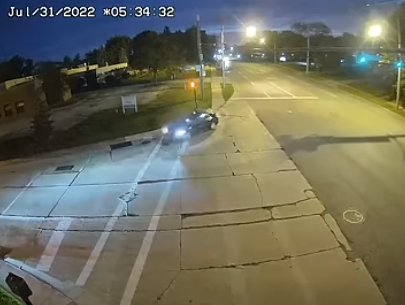
In the early morning hours of July 31, 2022, Shirilla was behind the wheel of her Toyota Camry on Progress Road in Strongsville, Ohio, with two passengers: her boyfriend, 20-year-old Dominic Russo, and their mutual friend, 19-year-old Davion Flanagan. According to prosecutors, the car accelerated to nearly 100 miles per hour before slamming into the side of a commercial building without ever braking.
Both Russo and Flanagan were killed in the crash. Shirilla survived with injuries. Investigators later pulled data from the vehicle’s event data recorder, commonly known as the “black box”, which authorities said showed the accelerator pedal pressed fully down while the brake was not engaged in the moments before impact. That data point became one of the most consequential pieces of evidence in the case, forming the backbone of the state’s argument that the crash was not an accident.
The Murder Trial
Shirilla was charged with multiple counts, including murder, felonious assault, and aggravated vehicular homicide. Prosecutors in Cuyahoga County argued that she deliberately drove the car into the building to end what they characterized as a volatile, “toxic” relationship with Russo, and that Flanagan’s death was an unintended consequence of that decision; he simply happened to be a passenger at the time.
The defense pushed back throughout the proceedings, and the case has since drawn renewed scrutiny over a medical condition called Postural Orthostatic Tachycardia Syndrome (POTS), which her legal team argues could have caused her to briefly lose consciousness before the crash, a theory they say was never adequately investigated at trial.
Notably, Shirilla did not testify in her own defense and was never formally interviewed by police, either before or after her arrest. That silence became a defining, and often debated, feature of the public narrative surrounding the case.
In August 2023, a judge found Shirilla guilty on all charges, including four counts of murder. She was subsequently sentenced to life in prison, with eligibility for parole after serving 15 years, a sentence that, at the time, drew a public statement from Cuyahoga County Prosecutor Michael C. O’Malley expressing sympathy for the Russo and Flanagan families while acknowledging that no punishment could undo the loss.
The Victims: Dominic Russo and Davion Flanagan
It’s worth remembering that behind the headlines are two families who lost young men with their own futures ahead of them. Dominic Russo, raised in Strongsville, was close with his siblings and had interests in music and basketball. Davion Flanagan had recently graduated from high school, worked as a part-time youth swim coach, and had plans to attend barber college that fall. Their deaths remain the human core of a case that is too often discussed purely in terms of legal drama.
The Appeals Process
Since her conviction, Shirilla’s legal team has pursued multiple avenues to overturn the verdict or secure a new trial:
- Postconviction relief petition: Her attorneys filed a petition arguing ineffective assistance of counsel, partly tied to the POTS diagnosis theory. A trial court dismissed the petition as untimely, having been filed one day past the statutory deadline.
- Appellate review: The Eighth District Court of Appeals in Ohio upheld that dismissal in early 2026, agreeing that the filing was late and that the trial court lacked jurisdiction to consider it on the merits.
- Ohio Supreme Court: Shirilla’s team asked the state’s highest court to take up the case. The Ohio Supreme Court declined to accept jurisdiction, closing off that particular path.
- Federal habeas corpus petition: Most recently, Shirilla filed a petition for a writ of habeas corpus in U.S. District Court for the Northern District of Ohio, asking a federal judge to overturn her conviction. The filing cites several alleged constitutional violations, including ineffective assistance of counsel and insufficient evidence.
As of now, none of these efforts have succeeded in overturning her conviction, though the federal petition remains an active, unresolved avenue.
Why the Case Resurfaced: The Netflix Documentary
Much of the recent search interest in Mackenzie Shirilla traces back to a Netflix true-crime documentary, The Crash, which reconstructs the case through interviews with the victims’ families, friends, investigators, and, notably, Shirilla herself. It marked the first time she publicly addressed the events of that night, having never spoken to police or testified at trial.
The filmmakers also reviewed roughly 32,000 text messages between Shirilla, Russo, and others that were released by the Strongsville Police Department, examining correspondence dating back roughly a year before the crash to understand how investigators built their case and how the relationships involved had evolved.
The documentary’s release pushed the case back into mainstream conversation, prompting a wave of new coverage across true-crime outlets, podcasts, and legal commentary channels, and renewing the appeals activity described above.
Where Things Stand Now
As of mid-2026, Mackenzie Shirilla remains incarcerated at the Ohio Reformatory for Women, where she reportedly holds a job as a food service worker. Her legal team continues to pursue relief through the federal court system, while public opinion on the case remains sharply divided, some viewing her as a calculated killer who intentionally ended two lives, others questioning whether the full medical and psychological picture was ever properly presented at trial.
Frequently Asked Questions
Is Mackenzie Shirilla still in prison? Yes. She is serving two concurrent sentences of 15 years to life at the Ohio Reformatory for Women.
Did Mackenzie Shirilla ever explain what happened? She did not testify at trial and was never interviewed by police, but she did speak on camera for the first time in the Netflix documentary The Crash.
Has her conviction been overturned? No. State appeals courts and the Ohio Supreme Court have declined to grant her a new trial. A federal habeas corpus petition is currently pending.
What is POTS, and why does it matter to the case? Postural Orthostatic Tachycardia Syndrome is a condition affecting blood flow regulation that can cause fainting or loss of consciousness. Shirilla’s defense argues it may have caused her to black out before the crash, a theory they say wasn’t fully explored during the original trial.