


Few venues in American sports have hosted as many marquee events as MetLife Stadium. Home to both the New York Giants and New York Jets, the East Rutherford, New Jersey venue has spent more than a decade building a reputation as one of the premier stadiums in the country. In 2026, that legacy reached new heights when MetLife Stadium played host to the FIFA World Cup Final, cementing its place among the most significant sporting venues in the world. Here’s a complete look at the stadium, its World Cup transformation, and what made this summer so historic.
A Brief History of MetLife Stadium
MetLife Stadium opened in 2010 as part of the Meadowlands Sports Complex in East Rutherford, New Jersey, replacing the previous Giants Stadium on the same site. With a seating capacity exceeding 82,000, it stands as one of the largest sports venues in the United States and has served as the shared home of both NFL franchises based in the New York metropolitan area.
Beyond football, MetLife Stadium has built a reputation as a premier host site for major sporting and entertainment events, including Super Bowl XLVIII, the Copa América Centenario final, and numerous high-profile concerts and international soccer matches over the years. That track record made it a natural choice when FIFA began selecting venues for the 2026 World Cup.
MetLife Stadium Becomes New York New Jersey Stadium
As part of FIFA’s standard tournament regulations, stadiums hosting World Cup matches are given neutral names during the tournament, avoiding potential conflicts with official sponsors and ensuring venue names don’t promote unrelated commercial brands. As a result, MetLife Stadium was officially referred to as New York New Jersey Stadium throughout the 2026 World Cup, with the name reflecting both the stadium’s location in New Jersey and its proximity to New York City.
Transforming the Stadium for World Cup Play
Hosting World Cup matches required significant physical changes to MetLife Stadium. FIFA regulations mandate that World Cup matches be played on natural grass rather than artificial turf, primarily due to natural grass’s role in reducing lower-body injuries among players. Installing a FIFA-compliant natural grass pitch inside a stadium originally built for NFL football represented one of the most significant operational challenges of the stadium’s transformation.
Beyond the playing surface, the stadium also underwent structural changes to accommodate international soccer’s different field dimensions. The east side of the field was widened in 2024, followed by the west side in the spring of 2025, requiring the removal and reconstruction of several rows of seating to make room for the wider soccer pitch. Additional updates included new stadium branding, updated entrances, and infrastructure changes designed to handle the scale of a World Cup crowd, described by stadium officials as dramatically larger in scope than even a typical NFL game or major concert event.
MetLife Stadium’s 2026 World Cup Match Schedule
MetLife Stadium hosted a total of eight matches during the 2026 FIFA World Cup, more than any other U.S. venue, reflecting its status as the tournament’s most prominent American stage. The stadium’s match schedule included:
- Group Stage: Brazil vs. Morocco (June 13), France vs. Senegal (June 16), Norway vs. Senegal (June 22), Ecuador vs. Germany (June 25), and Panama vs. England (June 27)
- Round of 32: June 30
- Round of 16: July 5
- Final: July 19
This slate of matches placed MetLife Stadium at the center of the tournament’s East Coast presence, alongside other regional host cities including Philadelphia, Boston, Toronto, Miami, and Atlanta.
The 2026 World Cup Final
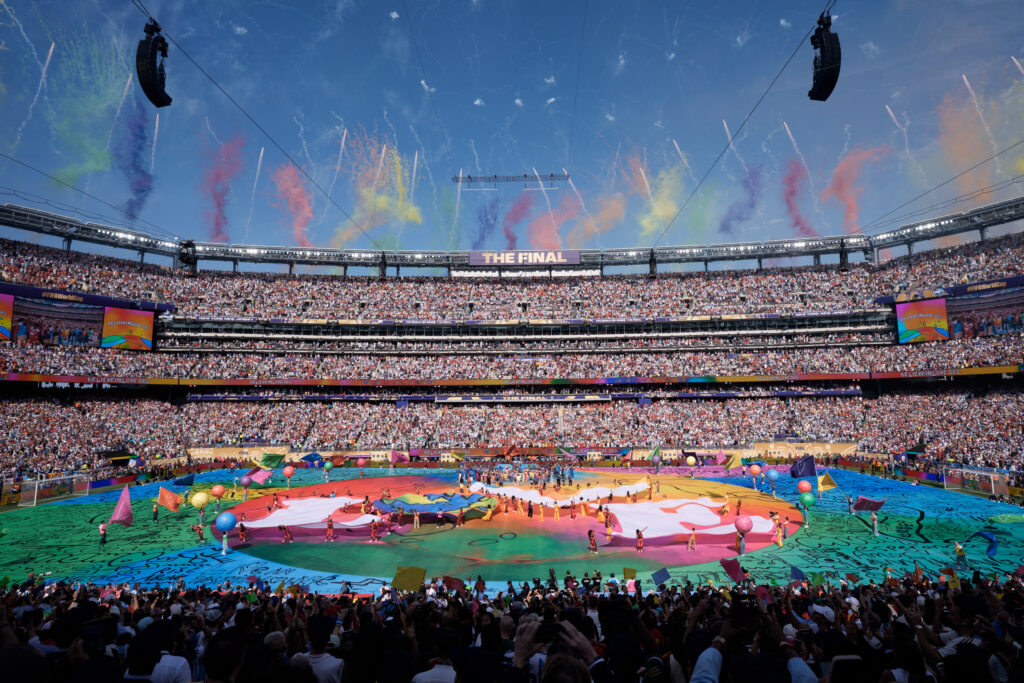
The centerpiece of MetLife Stadium’s World Cup run came on July 19, 2026, when the stadium hosted the tournament’s championship match. Spain defeated Argentina 1-0 in extra time, with Ferran Torres scoring the decisive goal to secure the title in front of roughly 82,500 fans. The match also featured a dramatic moment when Argentina’s Enzo Fernández was sent off late in the contest, while goalkeeper Emiliano Martínez set a new World Cup Final record with 11 saves in the loss.
The final marked a historic moment not just for MetLife Stadium, but for the United States more broadly, representing the country’s first time hosting a men’s World Cup Final since the tournament was last held in the U.S. in 1994. The 2026 tournament itself was historic in its own right, as the first World Cup to feature an expanded 48-team format and the first jointly hosted by three nations: the United States, Canada, and Mexico.
A Massive Undertaking for the Region
Hosting World Cup matches, including the tournament’s final, required significant coordination well beyond the stadium itself. Local and state officials, including New York City and New Jersey leadership, championed the tournament’s economic and cultural impact on the region well before a ball was kicked, citing the anticipated boost to local business, tourism, and long-term regional visibility.
To manage the scale of fans traveling to and from MetLife Stadium throughout the tournament, transportation infrastructure was expanded specifically for World Cup events, including the use of the Meadowlands Rail Line, a shuttle train not typically in regular service, along with a newly built busway designed to help move large volumes of fans efficiently on match days.
The surrounding region also embraced the tournament well beyond the stadium itself, with extensive fan zones, watch parties, and cultural programming held throughout New York City and New Jersey, including dedicated fan villages, youth soccer clinics, and community watch events held in neighborhoods across the metropolitan area during the tournament’s biggest matches.
Why MetLife Stadium Was the Right Choice
MetLife Stadium’s selection as the World Cup Final venue reflected both its physical capacity and its symbolic significance as a stage within the broader New York City metropolitan area, one of the largest and most internationally connected media markets in the world. Combined with its modern infrastructure, prior experience hosting major global sporting events, and significant seating capacity, the stadium offered FIFA a venue capable of matching the scale and prestige expected of a World Cup Final.
Final Thoughts
MetLife Stadium’s role in the 2026 FIFA World Cup, culminating in hosting the tournament’s historic final between Spain and Argentina, marked one of the defining moments in the venue’s history. From a full playing-surface transformation to serving as the centerpiece of North America’s first World Cup since 1994, MetLife Stadium’s summer of 2026 cemented its place among the most significant sporting venues on the planet. As the dust settles on the tournament, the stadium’s legacy as host of one of the most-watched sporting events in history is likely to remain part of its story for years to come.