

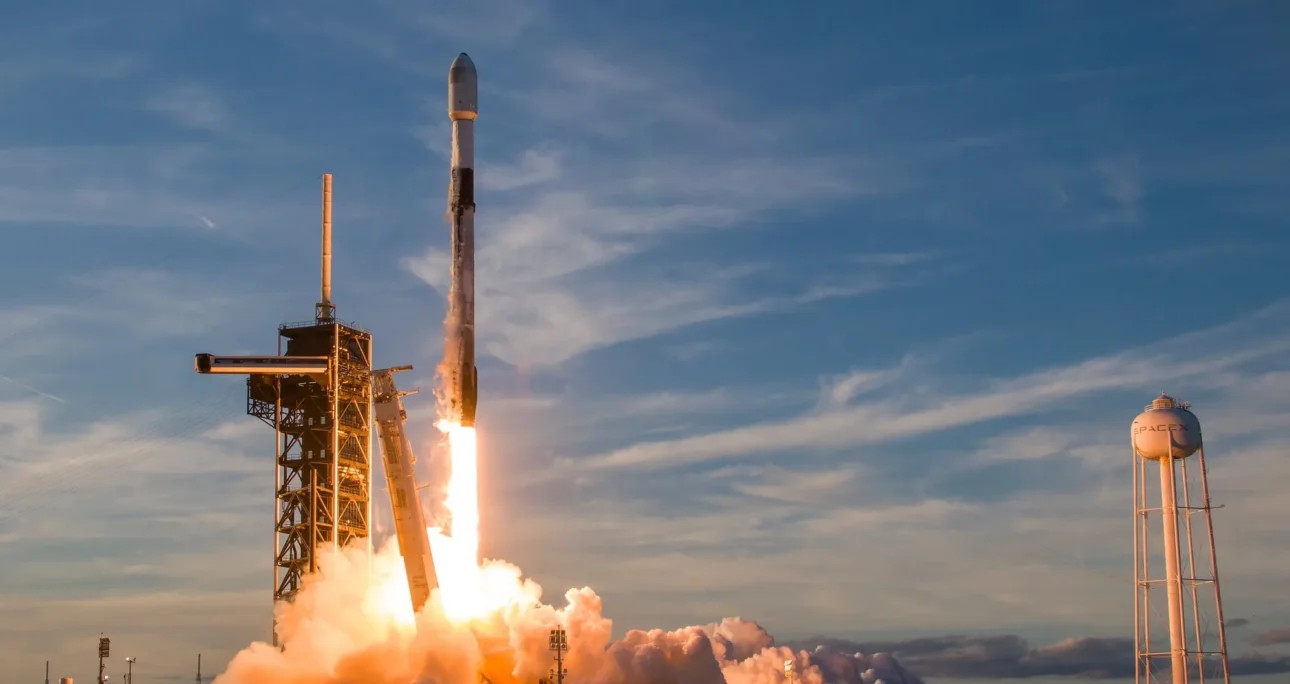
SpaceX continues to redefine access to space and satellite connectivity in 2026. As a privately held company focused on reusable launch vehicles, broadband satellite networks, and long-term multiplanetary ambitions, it generates intense interest among investors, analysts, policymakers, and the public. Searches for SpaceX reports often seek clarity on performance, strategy, and trajectory rather than isolated announcements. This evergreen analysis examines the company’s foundations, operating model, financial characteristics, competitive standing, persistent challenges, and forward outlook. It prioritizes structural trends and positioning over short-term news cycles, providing a durable reference for understanding SpaceX in the mid-2020s environment.
Company Overview and History
Space Exploration Technologies Corp., known as SpaceX, was founded in 2002 by Elon Musk with the explicit goal of reducing the cost of space transportation and ultimately enabling human settlement of Mars. Early years focused on developing the Falcon 1 rocket, which achieved the first successful private liquid-fueled orbital launch in 2008. That milestone unlocked contracts with NASA and commercial customers, funding further development of the Falcon 9 and Falcon Heavy vehicles.
Reusability became the defining technical and economic breakthrough. By recovering and re-flying first stages, SpaceX dramatically lowered the marginal cost of access to orbit compared with traditional expendable rockets. The Dragon spacecraft expanded capabilities into cargo and crew transportation to the International Space Station. Parallel development of the Starlink satellite constellation created a second major business line: global broadband internet delivered from low Earth orbit.
By 2026, SpaceX operates the world’s most active orbital launch system, maintains a large and growing Starlink network, and advances the fully reusable Starship vehicle intended for heavy-lift missions, lunar landings, and eventual Mars transport. The company remains privately held, with equity owned by founders, employees, and institutional investors. Its dual focus, commercial launch and satellite services alongside longer-horizon exploration, continues to shape culture, capital allocation, and public perception. The historical progression from a startup facing repeated early failures to a dominant launch provider illustrates both technical persistence and an aggressive iterative development style that remains central to operations.
Business Segments and Revenue Model
SpaceX’s revenue model rests primarily on two mature or maturing pillars, with a third in advanced development. The launch services segment provides orbital transportation for government and commercial customers. Contracts with NASA for crew and cargo missions, Department of Defense national-security launches, and a wide range of commercial satellite operators generate the bulk of traditional aerospace revenue. Pricing benefits from high flight rates and reusability, allowing competitive bids while still supporting margins that improve with cadence and reliability.
The Starlink segment operates a low-Earth-orbit satellite constellation delivering high-speed broadband. Revenue comes from consumer, enterprise, maritime, aviation, and government subscriptions, plus related hardware sales. As the constellation densifies and user terminals improve, average revenue per user and total subscriber growth drive the economics. Starlink also creates internal demand for launches, providing a captive market that supports the rocket business.
Starship development represents the longer-term growth engine. Once operational at scale, it is intended to lower costs further for heavy payloads, enable point-to-point Earth transport concepts, support lunar missions under NASA’s Artemis program, and open pathways to Mars cargo and crew flights. Near-term revenue from Starship remains limited, but the vehicle is designed to transform both cost structures and addressable markets.
Ancillary activities include spacecraft manufacturing, ground infrastructure, and technology licensing or partnerships. The overall model emphasizes vertical integration: SpaceX designs, manufactures, launches, and in many cases operates the end services. This control over the stack supports rapid iteration and cost discipline but requires substantial ongoing capital for R&D, production facilities, and constellation replenishment. Cash generation from high-cadence Falcon launches and expanding Starlink subscriptions increasingly funds the more speculative Starship and exploration work.
Financial Performance and Key Metrics (2026 Update)
Because SpaceX is private, detailed audited financial statements are not publicly released in the manner of listed corporations. Analysis of SpaceX reports and related disclosures therefore relies on funding-round valuations, management commentary, customer contract data, launch manifests, and third-party estimates of Starlink subscribers and revenue. In 2026, the company is widely viewed as having transitioned from pure cash-burn development toward a mix of profitable core operations and continued heavy investment in next-generation systems.
Key metrics that matter include annual launch cadence and success rate, Falcon 9 and Heavy reflights per booster, Starlink active terminals and ARPU trends, backlog of launch contracts, and progress toward Starship flight cadence and payload capability. Valuation in secondary markets and private funding rounds has reflected confidence in both near-term cash flows from launches and Starlink and the option value of Starship-enabled markets. Capital intensity remains high: building satellites, rockets, ground stations, and test infrastructure absorbs significant resources even as operating cash flow from established lines grows.
Profitability discussions typically separate the mature Falcon/Dragon launch business and the scaling Starlink network from the still-developing Starship program. The former two are expected to generate positive contributions that support overall corporate sustainability, while Starship continues to require multi-year investment before full commercial returns materialize. Debt usage has been selective; equity funding and internal cash remain primary sources. Observers tracking SpaceX reports in 2026 focus less on any single quarter and more on multi-year trends in launch frequency, satellite deployment rates, subscriber growth, and demonstrated Starship reliability improvements.
Competitive Landscape and SpaceX’s Positioning
The launch market features traditional incumbents such as United Launch Alliance, newer entrants including Rocket Lab and Relativity, and well-funded rivals such as Blue Origin. International providers from Europe, China, India, and elsewhere add capacity and geopolitical alternatives. In satellite broadband, Starlink competes with other LEO constellations under development, established geostationary operators, and terrestrial broadband and 5G networks in densely populated areas.
SpaceX’s positioning is defined by flight rate, demonstrated reusability, vertical integration, and first-mover scale in LEO broadband. High cadence creates both cost advantages and schedule reliability that many competitors struggle to match. The ability to launch its own Starlink satellites provides demand stability and learning-curve benefits unavailable to pure-play launch providers. Brand recognition and a track record of crewed missions further strengthen government and commercial relationships.
Competitors respond with their own reusable designs, smaller dedicated vehicles for rideshare markets, or differentiated satellite architectures. Blue Origin’s focus on heavy-lift and lunar systems, Rocket Lab’s emphasis on responsive small-satellite launches, and various national programs all chip away at addressable segments. Yet SpaceX’s combination of proven medium-lift workhorse vehicles, a large operational constellation, and an advancing super-heavy system remains unique at global scale. Market share in orbital launches has been substantial for years; sustaining it requires continuous cost reduction and capacity expansion as overall demand grows with satellite megaconstellations, national-security needs, and eventual deep-space logistics.
Challenges Facing SpaceX in 2026
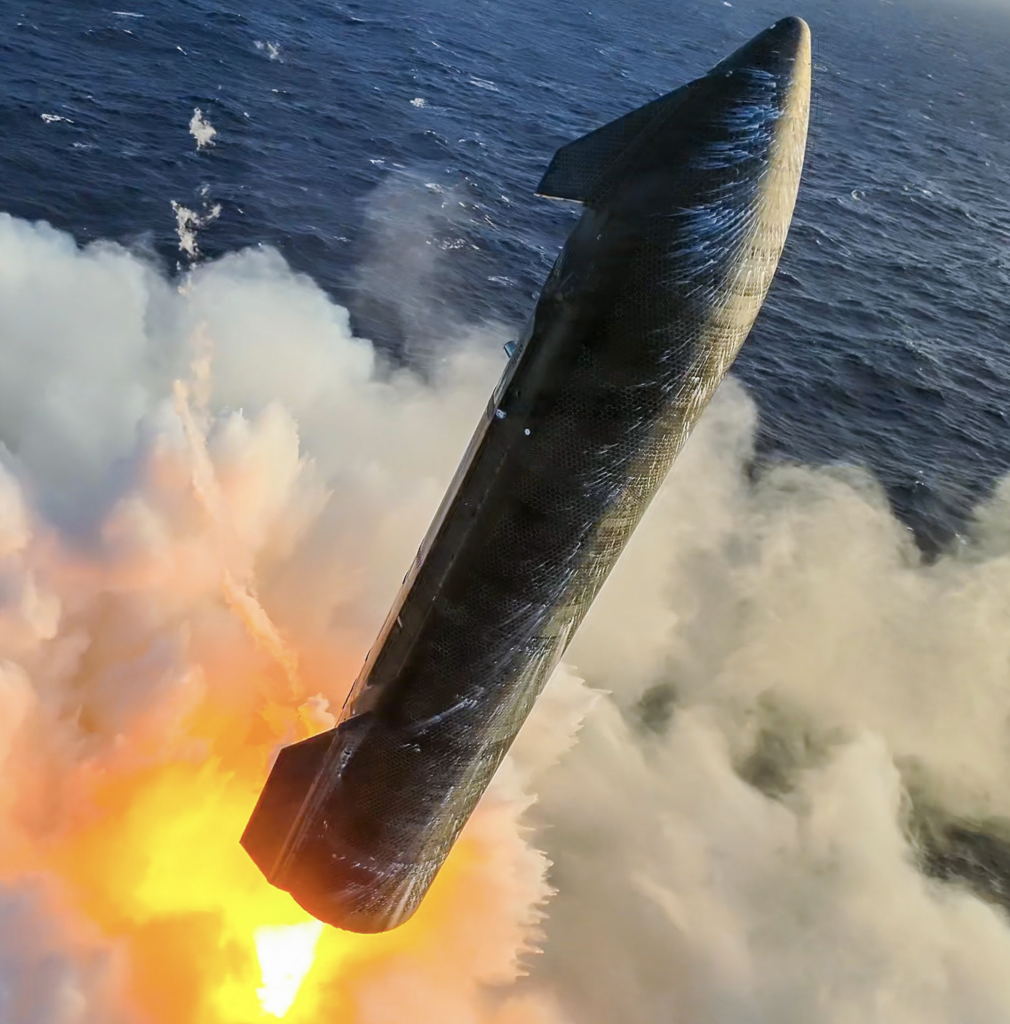
Technical risk around Starship remains prominent. Achieving routine, rapid reusability of both booster and ship at the performance levels required for ambitious missions involves solving complex engineering, materials, and operational problems. Delays or anomalies can shift timelines for NASA commitments and commercial heavy-lift offerings.
Regulatory and environmental scrutiny affects launch licensing, spectrum use for Starlink, orbital debris mitigation, and environmental reviews at increasing flight rates. Local community concerns near launch sites, international coordination on space traffic management, and evolving rules for satellite brightness and collision avoidance all require ongoing attention and resources.
Capital and execution demands are intense. Scaling production of vehicles and satellites, building additional launch and recovery infrastructure, and funding R&D compete for internal cash and external capital. Any slowdown in Starlink subscriber growth or launch demand could pressure the self-funding model.
Competition and geopolitical factors introduce uncertainty. Rival systems may capture specific market niches, while export controls, trade restrictions, or shifting government priorities can affect both commercial and civil contracts. Talent retention in a competitive aerospace and technology labor market, supply-chain resilience for specialized components, and the inherent risks of high-energy flight operations round out the challenge set.
These issues are structural rather than transient. Success in 2026 and beyond depends on disciplined iteration, regulatory navigation, and continued demonstration that cost and reliability advantages expand faster than the obstacles.
Growth Strategies and Future Outlook
SpaceX’s growth strategy centers on increasing launch cadence, expanding Starlink coverage and applications, and maturing Starship into a reliable, high-volume transportation system. Higher flight rates lower unit costs and free capacity for both internal satellite deployment and external customers. Starlink growth targets underserved regions, mobile platforms, and enterprise verticals while improving performance through next-generation satellites and inter-satellite links.
Starship development aims to unlock orders-of-magnitude improvements in payload mass and cost, supporting lunar landers, large space-station modules, propellant depots, and eventual Mars missions. Near-term milestones focus on operational reliability, rapid turnaround, and integration with existing customer roadmaps, including NASA’s Artemis architecture.
Capital allocation prioritizes production scale-up, test infrastructure, and constellation sustainment while preserving flexibility for opportunistic contracts. Partnerships with government agencies and select commercial players provide both revenue and technical validation.
Longer-term outlook discussions frequently reference broader industry analyses. Perspectives published by outlets such as Forbes have examined how reusable launch economics and satellite broadband are reshaping space-industry business models, capital flows, and national competitiveness. Those assessments align with the view that companies able to combine low-cost access to orbit with scalable in-space services will capture disproportionate value as the space economy expands.
In 2026, the base-case trajectory points to continued leadership in launch frequency, steady Starlink scaling, and incremental Starship progress rather than overnight transformation. Upside scenarios involve faster-than-expected reliability gains and new markets enabled by heavy-lift capacity; downside scenarios involve prolonged development timelines or intensified regulatory and competitive pressure. The company’s private status allows multi-year investment horizons that public markets sometimes constrain, supporting persistence through technical setbacks.
Why SpaceX Matters in American Aerospace and Innovation
SpaceX occupies a central role in U.S. space capabilities. It provides the majority of domestic orbital launches, supplies critical crew and cargo transportation for NASA, supports national-security missions, and operates the largest LEO broadband network. This combination influences everything from scientific research access and commercial satellite deployment to rural connectivity and strategic resilience.
The company’s emphasis on reusability and iterative development has shifted industry cost curves and forced competitors and government programs to adapt. Its success demonstrates that private capital and engineering culture can deliver complex aerospace systems at pace and scale previously associated mainly with national programs. At the same time, reliance on a single dominant provider raises questions about competition, redundancy, and long-term industrial base health, questions that policymakers continue to weigh.
For the broader American innovation ecosystem, SpaceX serves as both inspiration and case study: high technical ambition paired with commercial discipline, rapid learning from flight data, and willingness to pursue goals measured in decades. Its trajectory affects talent flows, supplier networks, university research priorities, and public expectations about what is possible in space. In that sense, understanding SpaceX is essential to understanding the current phase of American aerospace leadership and the economic opportunities emerging beyond Earth.
Final Thoughts on SpaceX Company Research
SpaceX in 2026 stands as a rare combination of operational launch dominance, scaling satellite services, and still-maturing next-generation transportation technology. Its history of overcoming early skepticism through persistent engineering and reusability breakthroughs provides the foundation for current scale. Financial characteristics reflect a private company balancing cash-generative businesses with heavy investment in transformative systems. Competitive advantages in flight rate and vertical integration are real, yet technical, regulatory, and market challenges remain substantial.
An evergreen examination of SpaceX reports and related analysis suggests the company will continue shaping the economics of space access and connectivity for years ahead. Progress will be measured less by any single milestone and more by sustained improvements in cost, reliability, and addressable markets. For researchers, potential investors, policymakers, and industry participants, the enduring questions center on execution speed for Starship, the ultimate profitability and reach of Starlink, and the company’s ability to convert technical leadership into durable strategic and economic advantage. Those themes ensure that rigorous SpaceX company research retains relevance well beyond the present year.